

Aquarium & Pond Ultraviolet Sterilization
Water Clarification to True Level 1 & 2 UVc Sterilization (Category A, B, & C)
Water Clarification to True Level 1 & 2 UVc Sterilization (Category A, B, & C)
Forward: Uv Sterilizer Use
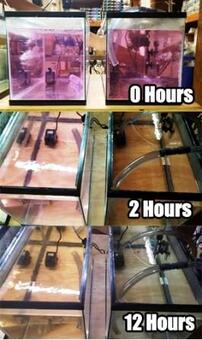
This first picture above demonstrates the anti-oxidizing abilities of a true level one capable UV Sterilizer utilizing a HO UVC Lamp (note that the majority of lamps sold now are medium pressure UV lamps with 1/4 the UVC output). Using Potassium Permanganate, which is an oxidizer in both a control tank (left tank) and one utilizing an AAP Compact UV with a HO UVC Lamp (right tank). It is noteworthy that a "Category B" UV Sterilizer was used for this experiment. A "Category A" such as the AAP/TMC Vecton Titan or Advantage would have cleared/reduced the oxidizer quicker.
Product Resource:
AAP Compact UVs
What happens is, as Potassium Permanganate is reduced, it goes from red to brown to clear. It is easy to see that the UV Sterilizer tank goes through these stages well ahead of the control tank.
The implications demonstrate a true UV Sterilizer's ability to lower oxidative stress on fish and other inhabitants (including plants & corals) and work to provide a better Redox balance as well as known disease prevention & clarification abilities
Product Resource:
AAP Compact UVs
What happens is, as Potassium Permanganate is reduced, it goes from red to brown to clear. It is easy to see that the UV Sterilizer tank goes through these stages well ahead of the control tank.
The implications demonstrate a true UV Sterilizer's ability to lower oxidative stress on fish and other inhabitants (including plants & corals) and work to provide a better Redox balance as well as known disease prevention & clarification abilities
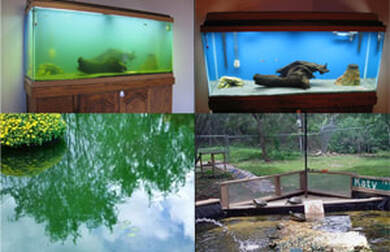
The second picture demonstrates clarification with a before and after picture of an aquarium with green water; As well as a comparison between a green pond without UV Sterilization and one of our client's ponds with a "Category A" UV Sterilizer/Clarifier.
The picture below further pictorially displays how a TRUE UV Sterilizer can help not only with clarification of an aquarium/pond with an assumed healthy bio filter (which should be but a minor reason to own a TRUE UV Sterilizer). It is noteworthy that clarification/green water control is much more effectively accomplished via a True UV Sterilizer over the majority of UV Clarifiers marketed as UV Sterilizers.
HOWEVER, and more importantly, a TRUE UV Sterilizer helps with disease prevention & Redox Balance (via proven lowering of oxidative stress) when properly connected (meaning flow rate, pre-filtration, etc.) and properly maintained by replacing with high output UV lamps/bulbs (not the economy replacement lamps/bulbs sold by discounters that have as little as 25% of the necessary UVC as a HO UV lamp).
This is the thrust of this article, as while it is certainly a good tool for green/cloudy water especially in ponds (assuming the bio filter is healthy), it is this Sterilization/Redox Balance aspect that years of professional hands on use in 1000s of applications has shown to really make the difference and why so many true aquarium professionals in the industry support the use of a true UV Sterilizer as a tool to improve long term fish keeping results.
Please note that I said it is a tool, as even the best True UV Sterilizer does NOT take the place of good fish/aquarium husbandry. As well, please do not confuse this aspect with the use of a UV clarifier (not sterilizer) for aquarium use in an often-misguided attempt to make up for poor aquarium husbandry for algae control too.
This is why, even for Pond use, you are better off with a Category A UV Sterilizer over an economy Category C UV Clarifier.
Further Reading:
• Aquarium Disease Prevention
This of course is a simplification, so please read the ENTIRE article along with cited references for a better understanding so as to make a more educated decision of whether a true high dwell time level 1 or 2 capable UV Sterilizer is for you or maybe just a basic Clarifier or nothing at all!
The picture below further pictorially displays how a TRUE UV Sterilizer can help not only with clarification of an aquarium/pond with an assumed healthy bio filter (which should be but a minor reason to own a TRUE UV Sterilizer). It is noteworthy that clarification/green water control is much more effectively accomplished via a True UV Sterilizer over the majority of UV Clarifiers marketed as UV Sterilizers.
HOWEVER, and more importantly, a TRUE UV Sterilizer helps with disease prevention & Redox Balance (via proven lowering of oxidative stress) when properly connected (meaning flow rate, pre-filtration, etc.) and properly maintained by replacing with high output UV lamps/bulbs (not the economy replacement lamps/bulbs sold by discounters that have as little as 25% of the necessary UVC as a HO UV lamp).
This is the thrust of this article, as while it is certainly a good tool for green/cloudy water especially in ponds (assuming the bio filter is healthy), it is this Sterilization/Redox Balance aspect that years of professional hands on use in 1000s of applications has shown to really make the difference and why so many true aquarium professionals in the industry support the use of a true UV Sterilizer as a tool to improve long term fish keeping results.
Please note that I said it is a tool, as even the best True UV Sterilizer does NOT take the place of good fish/aquarium husbandry. As well, please do not confuse this aspect with the use of a UV clarifier (not sterilizer) for aquarium use in an often-misguided attempt to make up for poor aquarium husbandry for algae control too.
This is why, even for Pond use, you are better off with a Category A UV Sterilizer over an economy Category C UV Clarifier.
Further Reading:
• Aquarium Disease Prevention
This of course is a simplification, so please read the ENTIRE article along with cited references for a better understanding so as to make a more educated decision of whether a true high dwell time level 1 or 2 capable UV Sterilizer is for you or maybe just a basic Clarifier or nothing at all!
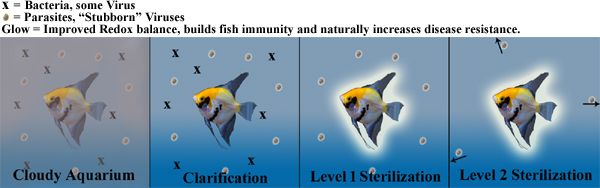
A Little Background: I started using UV Sterilizers in 1977 (I have been in the hobby since 1968) and started experimenting with these devices in 1978. This includes designing my own to experiment with theories to explain certain results. I also used control groups with many of my larger aquarium maintenance clients (one alone, the Bahooka Restaurant, had over 100 aquariums).
I also have read much research, including research outside the often-anecdotal aquarium keeping hobby, which often explained results I was getting in some experiments in the 1990s that explained the role in Redox and UVC and how True UV Sterilizers can lower oxidative stress. One way I measured results in testing specific UV devices was to use a murky slurry of water with bacteria grown from decomposing fish food and back yard dirt, and then time how long certain UV devices would clear the aquarium this was added too.
I have used most every type of UV Sterilizer & Clarifier over the years, including the Nektonics UG Filter UV, the Lifeguard, Aqua UV, Emperor UV, Terminator UV, AquaTop UV, TMC UVs, Tetra UVs, and the list goes on!
For more, see my business bio:
• C. Strohmeyer: Aquarium Keeping Bio
Here are a few BASIC points as to what a Properly Installed, Well Designed TRUE UV Sterilizer (or Sterilizer) Can Do for your POND or AQUARIUM:
• Clear Green Water in Aquariums or Ponds when run in parameters for clarification. Clarification is the simplest use of a UV Sterilizer and in fact many if not most UV Sterilizers are ONLY capable of clarification, which is why many are misnamed "UV Sterilizer" when in fact these lower end models are actually just "UV Clarifiers". It is noteworthy that a true level 1 capable UV Sterilizer will also clear green water in ponds much more quickly and maintain water clarity MUCH better than a basic UV Clarifier!!!
• Kill most suspended bacteria and many viruses in the water column when run at level 1 or 2 Sterilization, while not affecting bacterial colonies in filter media and substrate
• Kill Epistylis in the water column which feed on bacteria in the water column before attaching to fish. The Epistylis is ciliate distantly related to Ich, which it is commonly confused with. My experience with Epistylis is that in an aquarium utilizing true level one or higher UV Sterilization, is that Epistylis infestations are 99.9% nonexistent!
• Improve Redox Balance in aquarium or pond in part by lowering oxidative stress and thus improve the fish’ ability to fight disease (this has been proven in well researched human studies too)
• AID in the control of parasites such as Ich or Cryptocaryon by improving immune function and at very low flows can more directly aid in parasite control in the water column, although not on fish directly (that requires Level 2 Sterilization; under 8-12 gph per watt, which is still not 100%).
I also have read much research, including research outside the often-anecdotal aquarium keeping hobby, which often explained results I was getting in some experiments in the 1990s that explained the role in Redox and UVC and how True UV Sterilizers can lower oxidative stress. One way I measured results in testing specific UV devices was to use a murky slurry of water with bacteria grown from decomposing fish food and back yard dirt, and then time how long certain UV devices would clear the aquarium this was added too.
I have used most every type of UV Sterilizer & Clarifier over the years, including the Nektonics UG Filter UV, the Lifeguard, Aqua UV, Emperor UV, Terminator UV, AquaTop UV, TMC UVs, Tetra UVs, and the list goes on!
For more, see my business bio:
• C. Strohmeyer: Aquarium Keeping Bio
Here are a few BASIC points as to what a Properly Installed, Well Designed TRUE UV Sterilizer (or Sterilizer) Can Do for your POND or AQUARIUM:
• Clear Green Water in Aquariums or Ponds when run in parameters for clarification. Clarification is the simplest use of a UV Sterilizer and in fact many if not most UV Sterilizers are ONLY capable of clarification, which is why many are misnamed "UV Sterilizer" when in fact these lower end models are actually just "UV Clarifiers". It is noteworthy that a true level 1 capable UV Sterilizer will also clear green water in ponds much more quickly and maintain water clarity MUCH better than a basic UV Clarifier!!!
• Kill most suspended bacteria and many viruses in the water column when run at level 1 or 2 Sterilization, while not affecting bacterial colonies in filter media and substrate
• Kill Epistylis in the water column which feed on bacteria in the water column before attaching to fish. The Epistylis is ciliate distantly related to Ich, which it is commonly confused with. My experience with Epistylis is that in an aquarium utilizing true level one or higher UV Sterilization, is that Epistylis infestations are 99.9% nonexistent!
• Improve Redox Balance in aquarium or pond in part by lowering oxidative stress and thus improve the fish’ ability to fight disease (this has been proven in well researched human studies too)
• AID in the control of parasites such as Ich or Cryptocaryon by improving immune function and at very low flows can more directly aid in parasite control in the water column, although not on fish directly (that requires Level 2 Sterilization; under 8-12 gph per watt, which is still not 100%).
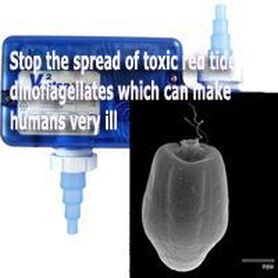
• Stop the spread of toxic red tide dinoflagellates which can make humans very ill and has recently been shown to infect home/office marine aquariums. These red tide dinoflagellates have been shown to be effectively destroyed by either level one or higher UV Sterilization or an ozonizer connected to a Protein Skimmer (much more so than by chlorine).
Reference:
• Red tide toxins found in home aquarium
Unfortunately, many of the UV Sterilizers flooding the market for under $50 including "Hang on Back" (HOB) and many "In Tank" Submersible UVs at best can ONLY control algae and very limited bacterial blooms, these CANNOT perform the level one Sterilization needed for true disease control and aid to Redox Balance due to flow rate & design as well many utilize lower cost medium pressure UV bulbs.
See these articles about the use of medium pressure versus the better but more expensive low pressure UV Bulb:
• UV (UVC) Lamps (Bulbs) used in Aquariums and Ponds and how they work
• Actual UV-C Emission from a UV Bulb: Aquarium or Pond
These low-end UVs often have very limited life times due to design, such as ballasts/transformers that last as little as 8 months.
The UVs I promote cover different niches from lower end to higher end. One thing they all have in common is they work within their niche. This does not mean an AAP Compact (with HO UVC Lamp) is as good as an AAP/TMC Vecton, Aqua Classic, or any other premium high dwell time UV, but it is the best or equal to the best of the Compact UV niche. Some of those I do not promote simply do not work.
In many cases other UVs, I do not promote do work well, however after years of experience, I found a better product in terms of either effectiveness (in part due to dwell time), value, or parts availability the better choice for my maintenance clients (example the TMC line over the Aqua or Emperor line of UVs).
Reference:
• Red tide toxins found in home aquarium
Unfortunately, many of the UV Sterilizers flooding the market for under $50 including "Hang on Back" (HOB) and many "In Tank" Submersible UVs at best can ONLY control algae and very limited bacterial blooms, these CANNOT perform the level one Sterilization needed for true disease control and aid to Redox Balance due to flow rate & design as well many utilize lower cost medium pressure UV bulbs.
See these articles about the use of medium pressure versus the better but more expensive low pressure UV Bulb:
• UV (UVC) Lamps (Bulbs) used in Aquariums and Ponds and how they work
• Actual UV-C Emission from a UV Bulb: Aquarium or Pond
These low-end UVs often have very limited life times due to design, such as ballasts/transformers that last as little as 8 months.
The UVs I promote cover different niches from lower end to higher end. One thing they all have in common is they work within their niche. This does not mean an AAP Compact (with HO UVC Lamp) is as good as an AAP/TMC Vecton, Aqua Classic, or any other premium high dwell time UV, but it is the best or equal to the best of the Compact UV niche. Some of those I do not promote simply do not work.
In many cases other UVs, I do not promote do work well, however after years of experience, I found a better product in terms of either effectiveness (in part due to dwell time), value, or parts availability the better choice for my maintenance clients (example the TMC line over the Aqua or Emperor line of UVs).
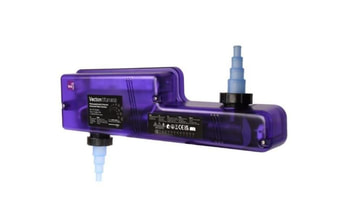
SUGGESTED PRODUCT BY AAP: The most effective medication BAR NONE for the treatment of Columnaris in an aquarium when used as part of the four-step program of Columnaris treatment. More synergistic when combined with AAP/SeaChem Kanaplex.
Overview
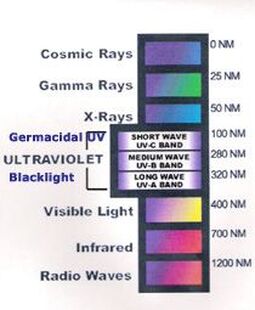
Ultraviolet radiation, referred to as UV or UVC irradiation for sterilization purposes is a form of ionizing and non-ionizing radiation. UV light energy is classified as such: UVA 400 nm - 320 nm, UVB 320 nm - 290 nm, and UVC 290 nm - 100 nm.
All light is made of photons, or vice-versa. The frequency the photons vibrate at determines the color/wavelength of the light. Infrared light is wavelengths over 1000nm, while UVA is around 400nm, and UVC is around 250nm. That covers the visible spectrum and immediate neighbors, all the colors are between about 450 (blue)-700nm (deep red to near IR). The most important thing here is that the shorter the wavelength, the higher "energy" each photon has. To the extreme, even shorter wavelength/higher frequency photons are the commonly known X-Rays (0.01 nm-10 nm) and Gamma rays (less than 0.01 nm).
Since photons are subatomic particles without mass, they can disturb chemical bonds, from bumping an electron off a molecule (Visible) to breaking apart molecular bonds (UVC), to modifying the makeup of each atom directly (Gamma Rays). All photons have a "Chance" to do any of the above, but the higher energy events are far more likely to happen with a high energy/high frequency photon interaction over a longer wavelength/visible spectrum photon.
UVA and UVB that can reach the Earth’s surface are primarily non-ionizing and do not have enough energy to ionize atoms. However, the longer wave UVA and UVB can cause molecules to vibrate and rotate resulting in heating up. The shorter wave UVC (used in UV Sterilization) light will ionize many atoms and molecules as compared to the even shorter wave Gamma Rays which will ionize most atoms.
UVC is better at breaking molecular bonds as well as rearranging electron configurations, this is how UVC sterilizes, and why Dwell Time is important. The longer the substance is exposed to UVC light, the greater the chance that all molecular bonds will have been hit by several high energy photons, causing the molecular bond, from simple weak chemical bonds to stronger ones in simple celled DNA material to be broken, rendering the pathogen/organism inert or dead. Hence the reason sunlight causes skin cancer, and sunblock/sunglasses block light of wavelengths shorter than UVA to protect your eyes and skin, UVA tans well, UVC mostly causes damage, burns, and cancer. Near the limits, at X-Ray to Gamma Ray Sources are used medically to "disrupt" cancerous tumors, with the same interactions mentioned in this post, but at far, far higher energies.
Ultraviolet sterilization is an effective tool especially when combined with other tools such as new fish quarantine (or new fish baths) for disease prevention in aquariums, ponds. Also, for general water quality control such as Green Ponds or Cloudy Aquariums. As well the use of UVC Sterilization is useful in home, office, hospital air purification & even UVC/Redox Blood therapy.
For this reason, a properly installed & designed High Dwell Time 'TRUE' UV Sterilizer helps improves a fish’ chances in fighting bacterial diseases or even parasitic diseases such as Ich that UV Sterilization is less effective in destroying directly.
Part of the reason for true UV Sterilization is that the UVC irradiation which is contained in a a high dwell time UV Sterilizer will break down oxidizers in the water column (via Redox Balance) that would otherwise lower a fish’ immunity, this aspect is often missed as many only focus on the clarification/algaecidal properties of UV Sterilizers, which is why many persons now purchase low price UV clarifiers from discounters not realizing that there is a difference between what is marketed as a UV Sterilizer by in reality is only a UV clarifier.
Please read this article for more about this subject:
• Fish Immune System and UV Sterilization, Sterilizer use
All light is made of photons, or vice-versa. The frequency the photons vibrate at determines the color/wavelength of the light. Infrared light is wavelengths over 1000nm, while UVA is around 400nm, and UVC is around 250nm. That covers the visible spectrum and immediate neighbors, all the colors are between about 450 (blue)-700nm (deep red to near IR). The most important thing here is that the shorter the wavelength, the higher "energy" each photon has. To the extreme, even shorter wavelength/higher frequency photons are the commonly known X-Rays (0.01 nm-10 nm) and Gamma rays (less than 0.01 nm).
Since photons are subatomic particles without mass, they can disturb chemical bonds, from bumping an electron off a molecule (Visible) to breaking apart molecular bonds (UVC), to modifying the makeup of each atom directly (Gamma Rays). All photons have a "Chance" to do any of the above, but the higher energy events are far more likely to happen with a high energy/high frequency photon interaction over a longer wavelength/visible spectrum photon.
UVA and UVB that can reach the Earth’s surface are primarily non-ionizing and do not have enough energy to ionize atoms. However, the longer wave UVA and UVB can cause molecules to vibrate and rotate resulting in heating up. The shorter wave UVC (used in UV Sterilization) light will ionize many atoms and molecules as compared to the even shorter wave Gamma Rays which will ionize most atoms.
UVC is better at breaking molecular bonds as well as rearranging electron configurations, this is how UVC sterilizes, and why Dwell Time is important. The longer the substance is exposed to UVC light, the greater the chance that all molecular bonds will have been hit by several high energy photons, causing the molecular bond, from simple weak chemical bonds to stronger ones in simple celled DNA material to be broken, rendering the pathogen/organism inert or dead. Hence the reason sunlight causes skin cancer, and sunblock/sunglasses block light of wavelengths shorter than UVA to protect your eyes and skin, UVA tans well, UVC mostly causes damage, burns, and cancer. Near the limits, at X-Ray to Gamma Ray Sources are used medically to "disrupt" cancerous tumors, with the same interactions mentioned in this post, but at far, far higher energies.
Ultraviolet sterilization is an effective tool especially when combined with other tools such as new fish quarantine (or new fish baths) for disease prevention in aquariums, ponds. Also, for general water quality control such as Green Ponds or Cloudy Aquariums. As well the use of UVC Sterilization is useful in home, office, hospital air purification & even UVC/Redox Blood therapy.
For this reason, a properly installed & designed High Dwell Time 'TRUE' UV Sterilizer helps improves a fish’ chances in fighting bacterial diseases or even parasitic diseases such as Ich that UV Sterilization is less effective in destroying directly.
Part of the reason for true UV Sterilization is that the UVC irradiation which is contained in a a high dwell time UV Sterilizer will break down oxidizers in the water column (via Redox Balance) that would otherwise lower a fish’ immunity, this aspect is often missed as many only focus on the clarification/algaecidal properties of UV Sterilizers, which is why many persons now purchase low price UV clarifiers from discounters not realizing that there is a difference between what is marketed as a UV Sterilizer by in reality is only a UV clarifier.
Please read this article for more about this subject:
• Fish Immune System and UV Sterilization, Sterilizer use
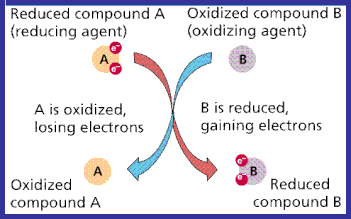
As for the Redox Balance, this is an often-overlooked aspect of both freshwater and saltwater aquarists. The Redox Balance is basically the oxidation and reduction properties of water (the oxidation side of Redox). Most experts now agree that the Redox should be +300 to -100 mV for marine or +125 to -200 mV for freshwater for healthy fish immunity, which a UV Sterilizer can help maintain this balance.
Reference:
• Copyright Devon Trigg
In fact, a tidal wave of new research (mostly outside the aquatic community) is demonstrating just this aspect of UV Sterilization, including the use of UV-C to demonstrate water quality.
This does not mean a properly installed UV Sterilizer will kill all pathogens, as it certainly cannot and really you would not want this anyway just as you would not want to live in a bubble unless you have no immunity whatsoever. The UV simply improves the fish' own ability to ward off infection by both lowering pathogens (better; by weakening), and lowering oxidizers which naturally improves a fish' ability to fight off any disease.
For more information about the Redox Potential, including much more in-depth explanations of this process:
• THE REDOX POTENTIAL IN AQUARIUMS (& PONDS) AND HOW IT RELATES TO PROPER AQUATIC HEALTH
There is a lot of new evidence as to the benefits of UV sterilization for ALL fish, and many myths have been dispelled such as “UV Sterilizers destroying beneficial nitrifying bacteria”. I am also constantly researching this subject, so this article may not be the same article in three months, so please check back.
UV Sterilization is also effective for controlling suspended algae (green water) in ponds in part by clumping the algae which then falls to the bottom or is filtered out (along with proper filtration such as Veggie Filters/pressurize filters which are just as important as a UV Clarifier/Sterilizer). This of course assumes your aquarium or pond has a healthy bio filter.
Please see this article:
• A Clear Pond: Pond Information
UVs are also useful in Reef aquaria, especially new ones where the chance of disease introduction is high, and the UVs help in keeping a balanced Redox Potential is useful as well. While it is also noteworthy that a UV Sterilizer does NOT take the place of a new fish quarantine or fish bath, NOR does the quarantine take the place of a properly installed UV Sterilizer for overall total aquarium/pond water quality & disease prevention fish husbandry. For those who prefer, the sterilizer can be placed on a timer or turned on and off as needed once the aquaria have aged.
One argument against UV Sterilizers in ponds is that they are not natural, but for the clarity most persons want out of their pond, this is not possible without either UV sterilization or many other pond configurations. Many articles I have read state that a UV is not that beneficial to an established aquarium as a healthy aquarium depends on beneficial bacteria typically growing on media in your filter which neutralize ammonia. Unfortunately, the problem with this statement is beneficial bacteria belongs in the filter, not in the open water. Also, the lack of a UV Sterilizer may be fine for some advanced aquarists who are not adding fish and have a healthy Redox Potential/Balance, but not in the real world of average and above average aquarists that I have dealt with in the 100s of aquariums I have serviced.
To be even more blunt, I conducted several controlled studies in the 1990’s using some of my many contracted aquariums (for which my ongoing research is to explain some of the results, such as improved immunity). In these studies where I mostly used goldfish (Orandas & Ryukins), the results were clear in that the incidence of disease was lower, longevity was longer, and over all vitality was better. The results were even better yet when improved feeding, improved cleaning, improved mineralization (positive mineral ions) is thrown into the equation.
These results were facts that are also backed up by years prior and after in anecdotal experience with the 1000s of aquariums I have had under my company's care. This is not "hand wavy" hocus pocus as some aquarium forums run by disrespectful persons with little actual experience that hide behind computer screens would have you believe.
What this means is a true level one capable UV Sterilizer is a useful tool, but also NOT the solution to all your aquarium or pond problems. It will not eradicate all dinoflagellates in your marine aquarium, no matter how good your UV Sterilizer or how slow your water is run through the device. Nor will it make up for poor pond or aquarium filtration, feeding, water chemistry, etc.!!!
Reference:
• Aquarium Chemistry: Mineralization (positive mineral ions)
Product Reference:
• Pond & Aquarium UV Sterilizers: From good to best
Reference:
• Copyright Devon Trigg
In fact, a tidal wave of new research (mostly outside the aquatic community) is demonstrating just this aspect of UV Sterilization, including the use of UV-C to demonstrate water quality.
This does not mean a properly installed UV Sterilizer will kill all pathogens, as it certainly cannot and really you would not want this anyway just as you would not want to live in a bubble unless you have no immunity whatsoever. The UV simply improves the fish' own ability to ward off infection by both lowering pathogens (better; by weakening), and lowering oxidizers which naturally improves a fish' ability to fight off any disease.
For more information about the Redox Potential, including much more in-depth explanations of this process:
• THE REDOX POTENTIAL IN AQUARIUMS (& PONDS) AND HOW IT RELATES TO PROPER AQUATIC HEALTH
There is a lot of new evidence as to the benefits of UV sterilization for ALL fish, and many myths have been dispelled such as “UV Sterilizers destroying beneficial nitrifying bacteria”. I am also constantly researching this subject, so this article may not be the same article in three months, so please check back.
UV Sterilization is also effective for controlling suspended algae (green water) in ponds in part by clumping the algae which then falls to the bottom or is filtered out (along with proper filtration such as Veggie Filters/pressurize filters which are just as important as a UV Clarifier/Sterilizer). This of course assumes your aquarium or pond has a healthy bio filter.
Please see this article:
• A Clear Pond: Pond Information
UVs are also useful in Reef aquaria, especially new ones where the chance of disease introduction is high, and the UVs help in keeping a balanced Redox Potential is useful as well. While it is also noteworthy that a UV Sterilizer does NOT take the place of a new fish quarantine or fish bath, NOR does the quarantine take the place of a properly installed UV Sterilizer for overall total aquarium/pond water quality & disease prevention fish husbandry. For those who prefer, the sterilizer can be placed on a timer or turned on and off as needed once the aquaria have aged.
One argument against UV Sterilizers in ponds is that they are not natural, but for the clarity most persons want out of their pond, this is not possible without either UV sterilization or many other pond configurations. Many articles I have read state that a UV is not that beneficial to an established aquarium as a healthy aquarium depends on beneficial bacteria typically growing on media in your filter which neutralize ammonia. Unfortunately, the problem with this statement is beneficial bacteria belongs in the filter, not in the open water. Also, the lack of a UV Sterilizer may be fine for some advanced aquarists who are not adding fish and have a healthy Redox Potential/Balance, but not in the real world of average and above average aquarists that I have dealt with in the 100s of aquariums I have serviced.
To be even more blunt, I conducted several controlled studies in the 1990’s using some of my many contracted aquariums (for which my ongoing research is to explain some of the results, such as improved immunity). In these studies where I mostly used goldfish (Orandas & Ryukins), the results were clear in that the incidence of disease was lower, longevity was longer, and over all vitality was better. The results were even better yet when improved feeding, improved cleaning, improved mineralization (positive mineral ions) is thrown into the equation.
These results were facts that are also backed up by years prior and after in anecdotal experience with the 1000s of aquariums I have had under my company's care. This is not "hand wavy" hocus pocus as some aquarium forums run by disrespectful persons with little actual experience that hide behind computer screens would have you believe.
What this means is a true level one capable UV Sterilizer is a useful tool, but also NOT the solution to all your aquarium or pond problems. It will not eradicate all dinoflagellates in your marine aquarium, no matter how good your UV Sterilizer or how slow your water is run through the device. Nor will it make up for poor pond or aquarium filtration, feeding, water chemistry, etc.!!!
Reference:
• Aquarium Chemistry: Mineralization (positive mineral ions)
Product Reference:
• Pond & Aquarium UV Sterilizers: From good to best
Editorial
By using low end equipment such as "Killing Machines" that might ONLY clear the water and then claiming these did nothing to protect the health of their fish is NOT a scientific argument against these devices.
As well despite these long term observable and researched facts, many still will deny these benefits other than clarification. This problem of denying facts while often making "Ad Hominem" attacks such as claiming articles like this are "based on selling this equipment" is unfortunately still quite common, often in anecdotal or poorly moderated, "cut & paste information" forums that are unfortunately quite popular.
Such "Ad Hominem" attacks are akin to this example Reference from this web site - Logical Fallacies:
PERSON 1: “I think Volvos are fine automobiles.”
PERSON 2: “Of course you’d say that; you’re from Sweden.”
This of course does not mean Volvos are "fine automobiles", however an argument against the person making the statement by personally going after the author rather than providing evidence that the Volvo is not a "fine automobile" (by whatever measure this might be, since a different measure might produce different results), is by definition the logical fallacy of an Ad Hominem attack. More about the effect of an Ad Hominem attack to smear a person's reputation: Definition of Ad Hominem.
What is also noteworthy throughout this article is I DO provide references, and yes, a lot of information is based on my own vast experience, consultations, and experiments whereby I then arrived at product I would recommend.
My goal with my large aquarium/pond maintenance company was to be more profitable by cutting back on disease incidence, water clarity issues and more, as most of my clients were under a contract that included replacement of livestock. So, in the end if you were to "follow the money", my financial incentive was NOT to sell UVs, rather to put together a system that worked and which included far more than UV sterilizers, such as quarantine, feeding, water parameters, etc.
So, for those rude individuals who use "appeal to authority" logical fallacies and call this article "hand wavy", fine, but for those who have more respect for other's decades of work and experience as well as continued ongoing research, I am simply reporting on my findings, both researched and anecdotal (but anecdotal based on 1000s of aquariums).
As a reader, please follow the references cited, please also apply common sense logic too, as many of the concepts applied in this article do NOT require parking one's brain. For the critics of what products are promoted, of course I promote products, as I run a business.
HOWEVER, I have professional experience dating back to 1978 (longer in the hobby), and I have used and experimented with most well known brands with literally over 1000 applications. This includes the Aquanetics UV, Aqua UV, Lifeguard, Tetra UV Turbo Twist UV, Laguna UV, Emperor UV, and MANY others.
In other words, for me to sell anything other than what I know to be the best would be dishonest which is why the TMC line of TRUE UV Sterilizers is what I recommend far and away above all else!!!
Please read on for further understanding of functions, facts and myths, maintenance, & more in depth information as the article progresses!
Also see this excellent Blog with many posts dealing with UV Sterilizer/Clarifier, Purifier Questions, Answers and Myths:
• UV Sterilizer Review: Clarifier, Purifier Use Articles
As well despite these long term observable and researched facts, many still will deny these benefits other than clarification. This problem of denying facts while often making "Ad Hominem" attacks such as claiming articles like this are "based on selling this equipment" is unfortunately still quite common, often in anecdotal or poorly moderated, "cut & paste information" forums that are unfortunately quite popular.
Such "Ad Hominem" attacks are akin to this example Reference from this web site - Logical Fallacies:
PERSON 1: “I think Volvos are fine automobiles.”
PERSON 2: “Of course you’d say that; you’re from Sweden.”
This of course does not mean Volvos are "fine automobiles", however an argument against the person making the statement by personally going after the author rather than providing evidence that the Volvo is not a "fine automobile" (by whatever measure this might be, since a different measure might produce different results), is by definition the logical fallacy of an Ad Hominem attack. More about the effect of an Ad Hominem attack to smear a person's reputation: Definition of Ad Hominem.
What is also noteworthy throughout this article is I DO provide references, and yes, a lot of information is based on my own vast experience, consultations, and experiments whereby I then arrived at product I would recommend.
My goal with my large aquarium/pond maintenance company was to be more profitable by cutting back on disease incidence, water clarity issues and more, as most of my clients were under a contract that included replacement of livestock. So, in the end if you were to "follow the money", my financial incentive was NOT to sell UVs, rather to put together a system that worked and which included far more than UV sterilizers, such as quarantine, feeding, water parameters, etc.
So, for those rude individuals who use "appeal to authority" logical fallacies and call this article "hand wavy", fine, but for those who have more respect for other's decades of work and experience as well as continued ongoing research, I am simply reporting on my findings, both researched and anecdotal (but anecdotal based on 1000s of aquariums).
As a reader, please follow the references cited, please also apply common sense logic too, as many of the concepts applied in this article do NOT require parking one's brain. For the critics of what products are promoted, of course I promote products, as I run a business.
HOWEVER, I have professional experience dating back to 1978 (longer in the hobby), and I have used and experimented with most well known brands with literally over 1000 applications. This includes the Aquanetics UV, Aqua UV, Lifeguard, Tetra UV Turbo Twist UV, Laguna UV, Emperor UV, and MANY others.
In other words, for me to sell anything other than what I know to be the best would be dishonest which is why the TMC line of TRUE UV Sterilizers is what I recommend far and away above all else!!!
Please read on for further understanding of functions, facts and myths, maintenance, & more in depth information as the article progresses!
Also see this excellent Blog with many posts dealing with UV Sterilizer/Clarifier, Purifier Questions, Answers and Myths:
• UV Sterilizer Review: Clarifier, Purifier Use Articles
Factors to Optimum UV
FACTORS DETERMINING THE BEST UV STERILIZER FOR LEVEL 1 STERILIZATION: Understanding the following points is ESSENTIAL prior to purchasing ANY UV Sterilizer regardless of brand or stated capacity (as most stated capacities are incorrect, even by the better units). It is also noteworthy that many UV Sterilizers CANNOT achieve these points & in Fact are ONLY clarifiers and thus are a waste of money if one desires TRUE level 1 UV Sterilization (or higher)!!!
• Flow rate.
• Dwell time (related to flow rate).
• Minimum Water Turnover in pond or aquarium per hour (As well the circulation pattern can affect UV Sterilization effectiveness).
• Distance of UV Lamp from UV Sterilizer containment 'wall'.
• Temperature of water.
• Pre-Filtration including Turbidity of water & a healthy bio filter. If turbidity is high and bio filtration is low, you could require double rated UV. In ponds in particular, it often takes double the normal rated size UV Sterilizer if bio filtration is poor and turbidity if high just to clear green water.
This is easily the most important simple aspect of proper UV Sterilizer set up and all the gimmicks (like “twists” and “wipers”) will not help a poorly installed UV with high flow rates of water passing through the unit without proper exposure time at the correct distance from the UVC Lamp/Bulb.
In fact, this is where most UV Sterilizers installed in ponds fall short as pond keepers will place (as an example) a 9-watt UV powered with a 1000 gph pump which is 2-4 times the effective flow rate for a pond installation (often as per very poor directions by the manufacturer). This problem is also common among reef aquarists with high flow rate sump pumps attached to UV Sterilizers incompatible with the flow rate, resulting in the common and incorrect statement that "the UV Sterilizer was useless".
Admittedly flow rate is a generalization expressed to simplify mW/cm2 that is absorbed/transmitted to pathogens/algae (please read further in this section of the article for more in depth explanation of E: UVC Penetration/mW/cm2).
I use this flow calculation as a simplified method as it has tested well over the years and PROVEN effective when other aspects of UV Sterilization are factored in. Obviously, there are other factors such as distance from the UV Sterilizer wall, water turbidity, quartz sleeve cleanliness, UV bulb condition/age, and more (again that are explained in this article).
As well many UV manufacturers will over state their UV Sterilizer abilities as per maximum flow rates (although this does not necessarily make such a UV Sterilizer a poor/inferior product as some other web sites claim). I will state based on many years of experience and experimentation that will the calculations provided here are THE MOST accurate, not exaggerated claims by many UV manufacturers.
Dwell/ Exposure Time is closely related to water flow, however with many of the compact UV Sterilizers and even more so pressurized pond or aquarium canister filters with UVs the difference IS important.
Put simply if you have a 9-Watt compact UVC Bulb with approximately 5 inches of lamp exposure versus an 8-watt HO Straight tube with approximately 11 inches; the 8-watt UVC Sterilizer is going to have a higher mW/cm2 even with one less watt of energy. This is a very simple explanation, and there is more to this including sterilizer design, etc., however this is where a High Dwell/Exposure Time UV Sterilizer will beat any compact UV Sterilizer. More in this section further down about UVC Penetration.
An example of design having an effect on exposure/dwell time is having water deflection shields where the water enters and exists the UV Sterilizer at the connections/hose barbs (such as in TMC UVs). These shields will not only help move water the entire length of the Sterilizer body, but also keep the water flow less linear and thus keep any particulates we wish to sterilize in the unit longer (more about design later in the article)
A newer technology (as of late 2022) is the use of photocatalytic material used exclusively in the AAP/TMC Vecton Titan UVs. This is vastly superior compared to previously used "gimmicks" some manufacturers such as wipers and "twists". The Vecton Titan UV has been produced using specially selected photocatalytic material. The photocatalytic reaction provides a safer alternative to ozone for even cleaner water. Thanks to this Titan UV technology, the Vecton Titan UV is 1.3 times more effective than a standard UV sterilizer, making it more energy efficient. The photocatalytic lining also protects and further improves the lifespan of the high UV resistant plastic body.
Product Reference:
• TMC High Dwell Time UV Sterilizers
Please read this section for more on this important subject:
• DWELL TIME: A Controlled Experiment (This is a MUST READ for any pond or aquarium keeper serious about UV Sterilization and/or Clarification!).
The key to success is CORRECT water flow: Including Contact Time (Dwell/Exposure Time), Cleanliness of the Bulb and/or Quartz Sleeve, water particulates, and water temperature.
Most UV Sterilizers are "non-directional", meaning the there is no specific inlet or outlet, and water can flow either direction (the exception would be the Internal UV Pumps/Filters).
Please see the flow rate/turnover later in this article which further explains flow for Sterilization or clarification for aquariums, ponds or even pools. Also note that the given flow rates are generalizations, with many Compact UV Sterilizers requiring the slower flow rate given over a standard length UV (such as the TMC Pond Advantage/Vecton) As well when ALL these Basic Factors are taken together (dwell, flow, distance, etc.), most internal/submersible, HOB UVs, Canister UVs fail at TRUE UV Sterilization (level 1 or 2) and these types of so-called UV Sterilizers in reality are at best UV Clarifiers!
As a Clarifier: For Algae Control (Green Water and some Cloudy Water), 40-50 gph per watt is effective to maintain effective exposure for effective UVC sterilization/radiation (depending on model UV’s design). High Efficiency (High Dwell/Exposure) UV Sterilizers such as the TMC Pond Advantage with long contact time as per the wattage and lamp can easily run as high as 50-60 gph per watt. The even higher efficiency (& dwell time) Pro Clear UV 30 can go 70+ gph per watt.
Generally even the lower end models commonly sold at discounters such as Amazon can perform Clarification, albeit at much lower flow rates, which is why many of these models are incorrectly named and inappropriately come up in Google Searches as UV Sterilizers when in FACT these are UV Clarifiers ONLY, NOT Level 1 or Higher UV Sterilizers!
Simply put, in clarification, algae cells are not killed (as the UVC strength and dwell time is not enough to kill), rather they are clumped by the UV energy, which causes the algae "clumps" to either fall out of the water column into the substrate or get picked by the filter(s). For this reason, this is why in my controlled tests, I have had Level 1 Sterilizers clear and aquarium in less than an hour that it took a UV Clarifier as long as ONE DAY TO CLEAR!!!
It should be also noted that the TMC Advantage and Pro Pond UVs are designed first as a pond UV Clarifier, not just as a UV Sterilizer such as the Vecton models. This difference is these pond models are designed to allow higher flow volumes conducive to UV Clarifcation, not level one or two Sterilization.
This does not mean at the proper flow rate that this article demonstrates that these cannot be used as a UV Sterilizer, it simply means if run at "manufacturer flow rate numbers" you will only be achieving UV Clarification.
This is also what sets the TMC UV line apart from others as most all other UVs are designed for higher flow volumes and often advertise this to sell product, but if run at these volumes and in many cases even if throttled back, they will not and do not provide UV Sterilization. TMC gives you a choice with the either the Vecton or the Pond models (the Vectons technically can be used in a pond too, but just not at the high water volumes most would use as the design will simply not permit this flow rate).
It is noteworthy that if you pond or aquarium does not have a healthy bio filter, this aspect should be explored first. Further Reading:
• Veggie/Bog Filters for Biologically Healthy Ponds
• Aquarium Algae Control: Brown Diatom, Hair, Marine, BBA, Green Spot & Water
In the end, even of clarification is all you seek, using one of the many UV Clarifiers sold (again often masquerading as a UV Sterilizer), you will still achieve MUCH BETTER results with a True level 1 capable or higher UV Sterilizer!
Product Resources:
• TMC Pond Advantage & Pro Clear UV Sterilizers
As a TRUE Level One Sterilizer: Generally, for bacterial control (& many virus), as well as improved Redox Balance a flow rate of 15-25 gph per watt (75-95 liters per hour, per watt), sometimes as high as 30-35 gph per watt for high efficiency UV Sterilizers such as the TMC Vecton UV.
Product Resource:
TMC Vecton UV 25 Watt
TMC Titan UVs
As a Level Two Sterilizer: For single cell parasite control (such as Cryptocaryon) as well as a few “stubborn” viruses, a flow under 10 gph (or even less) is necessary. This is often not 100% for all parasites of this type, so a UV Sterilizer should not be relied on as the sole preventative for these parasites!
My observations and tests over the years has shown about a 10-15% improvement of level two over level one Sterilization. While level one provides a definite difference over clarification for overall fish/aquarium health, the difference from level one to two is not as noteworthy. It is also noteworthy the incidences of Ich/Crytocaryon are lower with level one over clarification or no UV at all, not because this level kills the parasite, but only that the fish is generally in better health to fend off the infestation. See the Facts/Myths section later in this article for more about parasite control.
Please see the section (“What Size UV Is Best”) further down in the article for more about flow rate. Admittedly this is a VERY basic and simplistic rule, with other factors such as flow design, interior wall gap from UV bulb, & even actual output of UVC per watt (Versus other wave lengths).
The design of the unit should only allow a gap of 3 cm or less between the bulb or quartz sleeve and the wall of the unit for effective contact and temperature.
This is where Aquarium Canister UVs, 'Hang-On Back' UV Filters, Most Submersible/Internal UVs, and Pressurized Pond Filters (such as the Aquael, Nursery Pro, even the newer Via Aqua) fail miserably as there is too large a gap, and in general a poor flow design around the bulb/quartz sleeve (as well as flow rates far exceeding UVC bulb wattage capabilities).
When figuring the flow (gph) of a water pump, consider the flow of water AFTER it passes through the UV clarifier and reaches the aquarium or top of water feature in a pond. For instance, water pump or filter rated at 400 gph at 0 head pressure & 6 feet maximum head pressure (which is how all pumps are rated), will likely only push about 200 gph after being lifted 3 feet from a sump or up a water feature.
For a positive check of flow rate, simply use a stop watch (many cell phones have this feature), and place a container under the outlet. For example if one gallon is filled within 10 seconds, this is 6 gallons per minute or 360 gph. Many people are surprised how slow their pump actually is after applying head pressure.
Some pumps or filters lose head pressure more quickly than others (such as the Hagen Fluval), while other pumps are specifically designed to maintain higher head pressure over greater vertical distances (such as the Rio HF Series Water Pumps).
See also this article about head pressure:
• Head Pressure in Aquarium and Pond Water Pumps
Size of pipe/tubing on water flow: Another consideration is the size of the PVC pipe or tubing coming from the pump. For instance, a pump with a 1-inch outlet port that is rated at 2000 gph (for 0 head pressure) will likely not have an output of 2000 gph if the pipe/tubing used is ¾ inch or less. This same thought goes for the UV Sterilizer itself, in fact the Custom UV I have built only uses ½ inch hose barbs so as to restrict the flow to under 350 gph which is the maximum effective rate.
It is also noteworthy that the flow rates I have already noted is not an exact rule, as reflection within the UV Sterilization chamber, the distance between bulb (or sleeve) and the walls of the unit, and the length of the bulb as per wattage of UVC output all affect this general guide (this is explained later in more depth).
The point as to bulb length is noteworthy, as I have found that increasing wattage with the same length bulb does NOT increase effectiveness proportionally to a given wattage. In fact, a popular Pond UV that uses HO (High Output) UVC Bulbs (50 watt and 100-watt models) does not double the amount of water flow you can run through the unit even though it is double the wattage of comparable length UVC bulbs of half the wattage.
The TMC 110-Watt Pro Pond UV is much more effective than the popular HO UVs of 100 watts (each use two bulbs, the TMC uses two 55-watt of 36 inches while the “smart” HO UV uses two 50-watt bulbs of 18 inches), yet these HO UV Clarifiers cost much more which often leaves me scratching my head as to “why?” spend the money?
Product Reference:
• TMC 110-Watt Pro Pond/Large Aquarium System UV
• Flow rate.
• Dwell time (related to flow rate).
• Minimum Water Turnover in pond or aquarium per hour (As well the circulation pattern can affect UV Sterilization effectiveness).
• Distance of UV Lamp from UV Sterilizer containment 'wall'.
• Temperature of water.
• Pre-Filtration including Turbidity of water & a healthy bio filter. If turbidity is high and bio filtration is low, you could require double rated UV. In ponds in particular, it often takes double the normal rated size UV Sterilizer if bio filtration is poor and turbidity if high just to clear green water.
This is easily the most important simple aspect of proper UV Sterilizer set up and all the gimmicks (like “twists” and “wipers”) will not help a poorly installed UV with high flow rates of water passing through the unit without proper exposure time at the correct distance from the UVC Lamp/Bulb.
In fact, this is where most UV Sterilizers installed in ponds fall short as pond keepers will place (as an example) a 9-watt UV powered with a 1000 gph pump which is 2-4 times the effective flow rate for a pond installation (often as per very poor directions by the manufacturer). This problem is also common among reef aquarists with high flow rate sump pumps attached to UV Sterilizers incompatible with the flow rate, resulting in the common and incorrect statement that "the UV Sterilizer was useless".
Admittedly flow rate is a generalization expressed to simplify mW/cm2 that is absorbed/transmitted to pathogens/algae (please read further in this section of the article for more in depth explanation of E: UVC Penetration/mW/cm2).
I use this flow calculation as a simplified method as it has tested well over the years and PROVEN effective when other aspects of UV Sterilization are factored in. Obviously, there are other factors such as distance from the UV Sterilizer wall, water turbidity, quartz sleeve cleanliness, UV bulb condition/age, and more (again that are explained in this article).
As well many UV manufacturers will over state their UV Sterilizer abilities as per maximum flow rates (although this does not necessarily make such a UV Sterilizer a poor/inferior product as some other web sites claim). I will state based on many years of experience and experimentation that will the calculations provided here are THE MOST accurate, not exaggerated claims by many UV manufacturers.
Dwell/ Exposure Time is closely related to water flow, however with many of the compact UV Sterilizers and even more so pressurized pond or aquarium canister filters with UVs the difference IS important.
Put simply if you have a 9-Watt compact UVC Bulb with approximately 5 inches of lamp exposure versus an 8-watt HO Straight tube with approximately 11 inches; the 8-watt UVC Sterilizer is going to have a higher mW/cm2 even with one less watt of energy. This is a very simple explanation, and there is more to this including sterilizer design, etc., however this is where a High Dwell/Exposure Time UV Sterilizer will beat any compact UV Sterilizer. More in this section further down about UVC Penetration.
An example of design having an effect on exposure/dwell time is having water deflection shields where the water enters and exists the UV Sterilizer at the connections/hose barbs (such as in TMC UVs). These shields will not only help move water the entire length of the Sterilizer body, but also keep the water flow less linear and thus keep any particulates we wish to sterilize in the unit longer (more about design later in the article)
A newer technology (as of late 2022) is the use of photocatalytic material used exclusively in the AAP/TMC Vecton Titan UVs. This is vastly superior compared to previously used "gimmicks" some manufacturers such as wipers and "twists". The Vecton Titan UV has been produced using specially selected photocatalytic material. The photocatalytic reaction provides a safer alternative to ozone for even cleaner water. Thanks to this Titan UV technology, the Vecton Titan UV is 1.3 times more effective than a standard UV sterilizer, making it more energy efficient. The photocatalytic lining also protects and further improves the lifespan of the high UV resistant plastic body.
Product Reference:
• TMC High Dwell Time UV Sterilizers
Please read this section for more on this important subject:
• DWELL TIME: A Controlled Experiment (This is a MUST READ for any pond or aquarium keeper serious about UV Sterilization and/or Clarification!).
The key to success is CORRECT water flow: Including Contact Time (Dwell/Exposure Time), Cleanliness of the Bulb and/or Quartz Sleeve, water particulates, and water temperature.
Most UV Sterilizers are "non-directional", meaning the there is no specific inlet or outlet, and water can flow either direction (the exception would be the Internal UV Pumps/Filters).
Please see the flow rate/turnover later in this article which further explains flow for Sterilization or clarification for aquariums, ponds or even pools. Also note that the given flow rates are generalizations, with many Compact UV Sterilizers requiring the slower flow rate given over a standard length UV (such as the TMC Pond Advantage/Vecton) As well when ALL these Basic Factors are taken together (dwell, flow, distance, etc.), most internal/submersible, HOB UVs, Canister UVs fail at TRUE UV Sterilization (level 1 or 2) and these types of so-called UV Sterilizers in reality are at best UV Clarifiers!
As a Clarifier: For Algae Control (Green Water and some Cloudy Water), 40-50 gph per watt is effective to maintain effective exposure for effective UVC sterilization/radiation (depending on model UV’s design). High Efficiency (High Dwell/Exposure) UV Sterilizers such as the TMC Pond Advantage with long contact time as per the wattage and lamp can easily run as high as 50-60 gph per watt. The even higher efficiency (& dwell time) Pro Clear UV 30 can go 70+ gph per watt.
Generally even the lower end models commonly sold at discounters such as Amazon can perform Clarification, albeit at much lower flow rates, which is why many of these models are incorrectly named and inappropriately come up in Google Searches as UV Sterilizers when in FACT these are UV Clarifiers ONLY, NOT Level 1 or Higher UV Sterilizers!
Simply put, in clarification, algae cells are not killed (as the UVC strength and dwell time is not enough to kill), rather they are clumped by the UV energy, which causes the algae "clumps" to either fall out of the water column into the substrate or get picked by the filter(s). For this reason, this is why in my controlled tests, I have had Level 1 Sterilizers clear and aquarium in less than an hour that it took a UV Clarifier as long as ONE DAY TO CLEAR!!!
It should be also noted that the TMC Advantage and Pro Pond UVs are designed first as a pond UV Clarifier, not just as a UV Sterilizer such as the Vecton models. This difference is these pond models are designed to allow higher flow volumes conducive to UV Clarifcation, not level one or two Sterilization.
This does not mean at the proper flow rate that this article demonstrates that these cannot be used as a UV Sterilizer, it simply means if run at "manufacturer flow rate numbers" you will only be achieving UV Clarification.
This is also what sets the TMC UV line apart from others as most all other UVs are designed for higher flow volumes and often advertise this to sell product, but if run at these volumes and in many cases even if throttled back, they will not and do not provide UV Sterilization. TMC gives you a choice with the either the Vecton or the Pond models (the Vectons technically can be used in a pond too, but just not at the high water volumes most would use as the design will simply not permit this flow rate).
It is noteworthy that if you pond or aquarium does not have a healthy bio filter, this aspect should be explored first. Further Reading:
• Veggie/Bog Filters for Biologically Healthy Ponds
• Aquarium Algae Control: Brown Diatom, Hair, Marine, BBA, Green Spot & Water
In the end, even of clarification is all you seek, using one of the many UV Clarifiers sold (again often masquerading as a UV Sterilizer), you will still achieve MUCH BETTER results with a True level 1 capable or higher UV Sterilizer!
Product Resources:
• TMC Pond Advantage & Pro Clear UV Sterilizers
As a TRUE Level One Sterilizer: Generally, for bacterial control (& many virus), as well as improved Redox Balance a flow rate of 15-25 gph per watt (75-95 liters per hour, per watt), sometimes as high as 30-35 gph per watt for high efficiency UV Sterilizers such as the TMC Vecton UV.
Product Resource:
TMC Vecton UV 25 Watt
TMC Titan UVs
As a Level Two Sterilizer: For single cell parasite control (such as Cryptocaryon) as well as a few “stubborn” viruses, a flow under 10 gph (or even less) is necessary. This is often not 100% for all parasites of this type, so a UV Sterilizer should not be relied on as the sole preventative for these parasites!
My observations and tests over the years has shown about a 10-15% improvement of level two over level one Sterilization. While level one provides a definite difference over clarification for overall fish/aquarium health, the difference from level one to two is not as noteworthy. It is also noteworthy the incidences of Ich/Crytocaryon are lower with level one over clarification or no UV at all, not because this level kills the parasite, but only that the fish is generally in better health to fend off the infestation. See the Facts/Myths section later in this article for more about parasite control.
Please see the section (“What Size UV Is Best”) further down in the article for more about flow rate. Admittedly this is a VERY basic and simplistic rule, with other factors such as flow design, interior wall gap from UV bulb, & even actual output of UVC per watt (Versus other wave lengths).
The design of the unit should only allow a gap of 3 cm or less between the bulb or quartz sleeve and the wall of the unit for effective contact and temperature.
This is where Aquarium Canister UVs, 'Hang-On Back' UV Filters, Most Submersible/Internal UVs, and Pressurized Pond Filters (such as the Aquael, Nursery Pro, even the newer Via Aqua) fail miserably as there is too large a gap, and in general a poor flow design around the bulb/quartz sleeve (as well as flow rates far exceeding UVC bulb wattage capabilities).
When figuring the flow (gph) of a water pump, consider the flow of water AFTER it passes through the UV clarifier and reaches the aquarium or top of water feature in a pond. For instance, water pump or filter rated at 400 gph at 0 head pressure & 6 feet maximum head pressure (which is how all pumps are rated), will likely only push about 200 gph after being lifted 3 feet from a sump or up a water feature.
For a positive check of flow rate, simply use a stop watch (many cell phones have this feature), and place a container under the outlet. For example if one gallon is filled within 10 seconds, this is 6 gallons per minute or 360 gph. Many people are surprised how slow their pump actually is after applying head pressure.
Some pumps or filters lose head pressure more quickly than others (such as the Hagen Fluval), while other pumps are specifically designed to maintain higher head pressure over greater vertical distances (such as the Rio HF Series Water Pumps).
See also this article about head pressure:
• Head Pressure in Aquarium and Pond Water Pumps
Size of pipe/tubing on water flow: Another consideration is the size of the PVC pipe or tubing coming from the pump. For instance, a pump with a 1-inch outlet port that is rated at 2000 gph (for 0 head pressure) will likely not have an output of 2000 gph if the pipe/tubing used is ¾ inch or less. This same thought goes for the UV Sterilizer itself, in fact the Custom UV I have built only uses ½ inch hose barbs so as to restrict the flow to under 350 gph which is the maximum effective rate.
It is also noteworthy that the flow rates I have already noted is not an exact rule, as reflection within the UV Sterilization chamber, the distance between bulb (or sleeve) and the walls of the unit, and the length of the bulb as per wattage of UVC output all affect this general guide (this is explained later in more depth).
The point as to bulb length is noteworthy, as I have found that increasing wattage with the same length bulb does NOT increase effectiveness proportionally to a given wattage. In fact, a popular Pond UV that uses HO (High Output) UVC Bulbs (50 watt and 100-watt models) does not double the amount of water flow you can run through the unit even though it is double the wattage of comparable length UVC bulbs of half the wattage.
The TMC 110-Watt Pro Pond UV is much more effective than the popular HO UVs of 100 watts (each use two bulbs, the TMC uses two 55-watt of 36 inches while the “smart” HO UV uses two 50-watt bulbs of 18 inches), yet these HO UV Clarifiers cost much more which often leaves me scratching my head as to “why?” spend the money?
Product Reference:
• TMC 110-Watt Pro Pond/Large Aquarium System UV
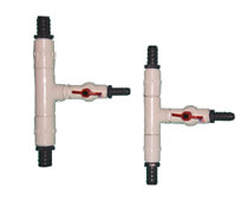
Diverters/By-pass Valves: For pond UV applications (or high flow rate aquariums such as sump systems) it is usually best to have a ‘T’ with a ball valve to split the return line to the pond from the filter, this will allow the aquarium/pond keeper to slow down the flow to the UV to the correct rate as per gph and wattage. This method will allow the proper flow through your UV Sterilizer while maintaining flow rate with the remaining filter system with no added back pressure. This is better than adding just a ball valve which will add back pressure and then also slow flow rates making the filter system less efficient.
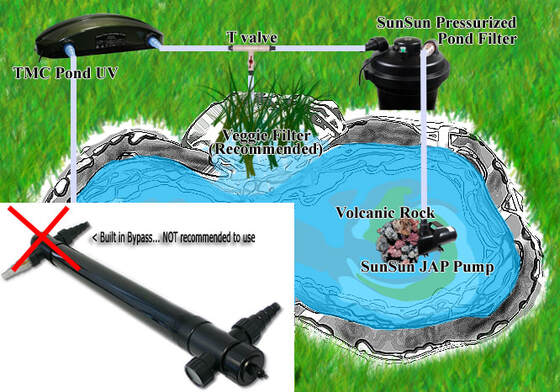
A diverter of this method using a PVC T or Poly Insert Hose Barb 'T's is preferable to the use of a direct flow diverter built into the UV Sterilizer itself, whether it be a pond or high flow aquarium system. The reason is these flow through diverters cause turbulence where the water enters the UV, and the result is a poor flow rate through the UV even if the valve bypassing the UV is partly closed. The picture above displays how to properly divert water in a pond as well as display popular UVs with these built in diverters that SHOULD NOT be used. This principle applies to aquarium systems too!
It is noteworthy that this does not mean you cannot use the UV Sterilizers that have this feature (which includes a couple of the AAP Compact UVs), just to not utilize this feature and to plumb as with a PVC or hose barb diverter (as shown in the picture).
(B) Aquarium or Pond Water Turnover Rate: It is important to have a flow rate that will turn over the pond or aquarium at least once every 2 to 3 hours for green algae control, once every 1 to 1.5 times per hour for disease prevention (Level One Sterilization), or 2 to 3 times per hour for stage 2 sterilization (I have achieved effective level one disease sterilization as tested with a bacterial cloud with as little as once per two hours with a good installation in an otherwise well maintained aquarium).
It is also noteworthy that turnover can even be higher yet than 3 times per hours, however both my own observations and professional consultations have shown that increasing flow rate beyond 3 times per hour does not proportionally increase the benefit in a healthy established aquarium (or pond), this includes for algae control on the side of ponds or seasoned live rock in a marine aquarium.
While higher turnover rates compared to slower flow rates in the UV might seem counterintuitive, it is not when one looks at the reason why. The reason for higher turn rates for higher levels of UV Sterilization is to provide a better chance for all pathogens to get proper UVC exposure and to not recover before passing back through the UV Sterilizer once again.
Said another way, UVC light prevents that normal bacterial or other pathogen DNA splitting, and the resulting DNA is so damaged that it cannot possibly combine with another strand of DNA to form a new organism. So by having a higher turnover, along with longer dwell time, this more readily prevents the recovery of these pathogens.
When applied, this means the same UV Sterilizer that might work for level one sterilization will not work for level two sterilization and a larger size is needed. As one example, a Vecton 8 watt with a flow rate of 100 gallons per hour might work great for 30-gallon aquarium for level two sterilization with a turnover of approximately 3 times; however, a 60-gallon aquarium will only have an approximate turnover of approximately 1.5 times even if the flow rate is still OK, so a larger UV with a higher flow rate of 180 gallons per hour will be needed.
This is explained with more examples in the What size UV is best section of this article.
As a side note, from my experiments and use of many different UV Sterilizers and configurations over the years, flow rate is still more important than turn over, so as long as you are reasonably close, I would not get overly stressed on this parameter (there are other considerations too, so please read on).
It is noteworthy that this does not mean you cannot use the UV Sterilizers that have this feature (which includes a couple of the AAP Compact UVs), just to not utilize this feature and to plumb as with a PVC or hose barb diverter (as shown in the picture).
(B) Aquarium or Pond Water Turnover Rate: It is important to have a flow rate that will turn over the pond or aquarium at least once every 2 to 3 hours for green algae control, once every 1 to 1.5 times per hour for disease prevention (Level One Sterilization), or 2 to 3 times per hour for stage 2 sterilization (I have achieved effective level one disease sterilization as tested with a bacterial cloud with as little as once per two hours with a good installation in an otherwise well maintained aquarium).
It is also noteworthy that turnover can even be higher yet than 3 times per hours, however both my own observations and professional consultations have shown that increasing flow rate beyond 3 times per hour does not proportionally increase the benefit in a healthy established aquarium (or pond), this includes for algae control on the side of ponds or seasoned live rock in a marine aquarium.
While higher turnover rates compared to slower flow rates in the UV might seem counterintuitive, it is not when one looks at the reason why. The reason for higher turn rates for higher levels of UV Sterilization is to provide a better chance for all pathogens to get proper UVC exposure and to not recover before passing back through the UV Sterilizer once again.
Said another way, UVC light prevents that normal bacterial or other pathogen DNA splitting, and the resulting DNA is so damaged that it cannot possibly combine with another strand of DNA to form a new organism. So by having a higher turnover, along with longer dwell time, this more readily prevents the recovery of these pathogens.
When applied, this means the same UV Sterilizer that might work for level one sterilization will not work for level two sterilization and a larger size is needed. As one example, a Vecton 8 watt with a flow rate of 100 gallons per hour might work great for 30-gallon aquarium for level two sterilization with a turnover of approximately 3 times; however, a 60-gallon aquarium will only have an approximate turnover of approximately 1.5 times even if the flow rate is still OK, so a larger UV with a higher flow rate of 180 gallons per hour will be needed.
This is explained with more examples in the What size UV is best section of this article.
As a side note, from my experiments and use of many different UV Sterilizers and configurations over the years, flow rate is still more important than turn over, so as long as you are reasonably close, I would not get overly stressed on this parameter (there are other considerations too, so please read on).
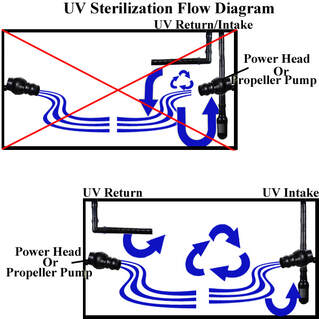
A turnover rate can also be less than accurate based on your method of plumbing: For instance, if your water inlet and return are situated immediately adjacent to each other you will have areas of the aquarium or pond that are not well circulated.
Based on "house calls" I have made, adding additional power heads or other circulation devices do NOT make up for a poor flow pattern!!!
The picture above shows the point I am making.
Based on "house calls" I have made, adding additional power heads or other circulation devices do NOT make up for a poor flow pattern!!!
The picture above shows the point I am making.
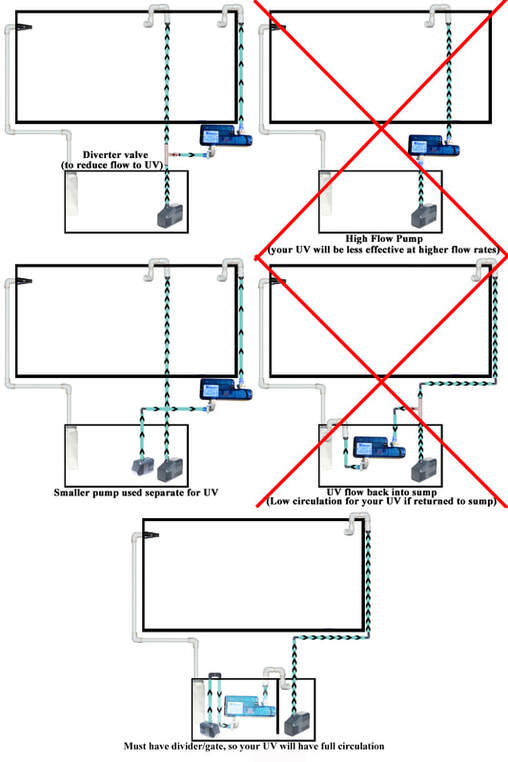
With sump use, many will simply place a UV Sterilizer in a loop circulating within the sump. This too results in re-circulation of UVC irradiated water while most of the aquarium does not benefit from the use of the UV Sterilizer. This is also why a submersible UV Sterilizer will never work correctly when placed in a sump, especially for level 1 or higher UV Sterilization (unless you find a way to move the outlet to the immediate water return pick up to the main aquarium). While a well-designed submersible UV (such as the AAP CUP series) might be OK for in tank operation, they are mostly useless in a sump!
With a sump the water needs to be returned directly to the aquarium after passing through the UV Sterilizer for maximum efficiency not connected with pick up and return from the sump). HOWEVER, I will point out one exception; A long sump (such as 24 plus inches) or really any shape that allows the outlet pump to be isolated on the opposite side of the sump via a "gate" or similar from the inlet of water from the aquarium may work. The test is simple, by placing a dye into the inlet and watching to see if the water goes directly from the inlet to the pump, without any circular motion within the sump. If this checks out, then connect the UV Sterilizer with a separate pump placed near the inlet and the outlet from the UV near the pump that is returning water to the aquarium (Please click on the pictures to enlarge).
Often this seeming contradiction of low flow rate versus higher turn over rate confuses some persons, but it is logical when one thinks about it, hopefully the table below or the more in depth sections further in this article will shed more light on this important aspect of correct UV Sterilization.
Another way to look at this is if you have a 75-gallon aquarium with a 25-gallon sump and you desire level 2 sterilization, you have a combined 100 gallons of water, so three-time turnover per hour equals 300 gph. Then if using a high dwell time UV such as the TMC Vecton Titan or Aqua Ultraviolet, a 25-watt model x 12 gph per watt also equals 300 gph; so, 300 gph is your magic number in this example. Keep in mind that two 25-watt UVs can be placed on line or on separate loops at opposite ends of the aquarium for larger aquariums. Also note that this example is for level 2 Sterilization, and that most situations call for only level 1 Sterilization for which a high dwell time UV as small as 8 watts would be all that is needed.
Another key in sump use as per turnover is then using multiple UVs together. Make sure that if you connect one to another inline, that the flow is increased per the combined wattage to correspond to the minimum turnover rate needed. An example would be if level two UV Sterilization is being sought, two Vecton 25 Watt UVs (which makes basically becomes a 50-watt UV) in a 200-gallon aquarium would need at the very least 400 gph when used inline (500-600 gph would my recommendation based on the math given elsewhere in the article). Otherwise, these same two Vecton 25-watt UVs would best be plumbed with a separate pump within the sump running at 200-300 gph each.
Also, many connect their Aquarium UVs to high flow sump pump that provides a flow rate well above level one sterilization. Make sure to either use a ball valve (if the pump only needs minor adjustments in flow, a diverter valve, or simply use a second lower flow rate pump to attach your UV Sterilizer in-line from your sump back to your aquarium.
See this link for ball valves & diverters:
• Aquarium & Pond Plumbing Parts
With a sump the water needs to be returned directly to the aquarium after passing through the UV Sterilizer for maximum efficiency not connected with pick up and return from the sump). HOWEVER, I will point out one exception; A long sump (such as 24 plus inches) or really any shape that allows the outlet pump to be isolated on the opposite side of the sump via a "gate" or similar from the inlet of water from the aquarium may work. The test is simple, by placing a dye into the inlet and watching to see if the water goes directly from the inlet to the pump, without any circular motion within the sump. If this checks out, then connect the UV Sterilizer with a separate pump placed near the inlet and the outlet from the UV near the pump that is returning water to the aquarium (Please click on the pictures to enlarge).
Often this seeming contradiction of low flow rate versus higher turn over rate confuses some persons, but it is logical when one thinks about it, hopefully the table below or the more in depth sections further in this article will shed more light on this important aspect of correct UV Sterilization.
Another way to look at this is if you have a 75-gallon aquarium with a 25-gallon sump and you desire level 2 sterilization, you have a combined 100 gallons of water, so three-time turnover per hour equals 300 gph. Then if using a high dwell time UV such as the TMC Vecton Titan or Aqua Ultraviolet, a 25-watt model x 12 gph per watt also equals 300 gph; so, 300 gph is your magic number in this example. Keep in mind that two 25-watt UVs can be placed on line or on separate loops at opposite ends of the aquarium for larger aquariums. Also note that this example is for level 2 Sterilization, and that most situations call for only level 1 Sterilization for which a high dwell time UV as small as 8 watts would be all that is needed.
Another key in sump use as per turnover is then using multiple UVs together. Make sure that if you connect one to another inline, that the flow is increased per the combined wattage to correspond to the minimum turnover rate needed. An example would be if level two UV Sterilization is being sought, two Vecton 25 Watt UVs (which makes basically becomes a 50-watt UV) in a 200-gallon aquarium would need at the very least 400 gph when used inline (500-600 gph would my recommendation based on the math given elsewhere in the article). Otherwise, these same two Vecton 25-watt UVs would best be plumbed with a separate pump within the sump running at 200-300 gph each.
Also, many connect their Aquarium UVs to high flow sump pump that provides a flow rate well above level one sterilization. Make sure to either use a ball valve (if the pump only needs minor adjustments in flow, a diverter valve, or simply use a second lower flow rate pump to attach your UV Sterilizer in-line from your sump back to your aquarium.
See this link for ball valves & diverters:
• Aquarium & Pond Plumbing Parts
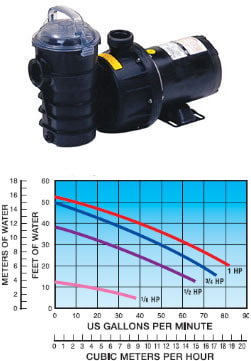
In ponds, again I want to emphasize that many manufacturers will make claims of certain UV Sterilizers/Clarifier per pond size; however, the flow rate through the UV and turnover rate is more important. As well many will correctly install a UV Sterilizer for their pond, ignoring the importance of good filtration combined with UV Sterilization. A correctly installed UV Clarifier often will not overcome poor filtration and circulation.
The diagram/picture above provides some flow rates for high pressure pond/pool pumps rated in HP (horsepower) rather than flow rates that are occasionally used in larger ponds. This diagram can help determine flow rates at certain head pressures if you own such a pump. It is noteworthy that these pumps in 1/2 HP or higher do not even loose flow to head pressure until after 12 feet of head.
The diagram/picture above provides some flow rates for high pressure pond/pool pumps rated in HP (horsepower) rather than flow rates that are occasionally used in larger ponds. This diagram can help determine flow rates at certain head pressures if you own such a pump. It is noteworthy that these pumps in 1/2 HP or higher do not even loose flow to head pressure until after 12 feet of head.
For Algae Control on side of pond or on "live rock" in marine aquariums (not green water): 2.5 to 3 times per hour is generally all that is needed. However often what would come out to six times per hour has been recommended by some with little professional experience and consultation. It is noteworthy that this is often more than is necessary assuming a flow rate at a parasite level (see our flow table in the article) AND assuming a truly established pond or seasoned live rock in a marine aquarium. What is missed is what has been demonstrated as "old rock" by some making this case is clearly NOT truly seasoned live rock which is very easy to spot. Just as importantly, in a video I viewed on the subject, it appeared they were confusing flow rate with turnover.
BETTER is rather than spend more than is needed for an extra-large or a couple of UVs just to battle some extra algae growth is to simply establish your marine aquarium with truly seasoned live rock and also practice some patience. Ditto a pond, allow for maturing of the pond, add a Veggie Filter, use some Pond Stability and Enzymes and save your money in UV Sterilizer "overkill".
An example for a marine aquarium for algae control on live rock would be a Vecton Titan 600 for a 60-gallon aquarium or a TMC 110 Advantage for a 500-gallon aquarium (whereas 50 watts of Category A UV would normally be enough for a 500-gallon aquarium).
Flow Rate & Turnover Rate TableThis table assumes:
1. Low water turbidity, meaning pre-filtration & a healthy bio filter. A UV Sterilizer will easily work twice as hard or more (requiring double the normal wattage or more) if your bio filter is not adequate and water turbidity is high; this is especially a common problem with ponds.
2. A water temperature between 20 C (68 F) and 40 C (104 F).
3. A gap of 3 cm or less between the bulb or quartz sleeve and the wall of the unit (which affects dwell time).
4. A reasonable dwell time, as most low cost, filter equipped UVs, and submersible UVs have poor dwell time. Reference: UV Sterilizer Dwell Time.
5. A GOOD water flow pattern inside the aquarium or pond (this includes reasonable dwell time).
6. A clean Quartz sleeve/lamp.
7. A hot cathode Low Pressure UV bulb/lamp with less than 6 months continuous use (NOT an old or cheap medium pressure UV bulb now so often sold on the Internet for $10 or less!!!). If a medium pressure bulb is used (commonly sold at discounters), you will need divide the maximum flow rate by 1/3 to 1/4.
Example: If you use a 9 watt UV lamp commonly sold on eBay for $6-$12, an optimum flow rate goes from 225 gph to under 75 gph for minimum level one sterilization!
8. If photocatalytic material is used in the UV Chamber design as is exclusively done in the AAP Vecton Titan UV Sterilizers, then these numbers can be multiplied by 1.3, meaning a larger aquarium with higher flow rates can be achieved compared to similar designed UVs with the same wattage.
9. Then of course to note as per previously stated in this article that flow rates are maximums while turnover rates are minimums!!!
Otherwise, lower flow rates and higher turnover WILL be required.
BETTER is rather than spend more than is needed for an extra-large or a couple of UVs just to battle some extra algae growth is to simply establish your marine aquarium with truly seasoned live rock and also practice some patience. Ditto a pond, allow for maturing of the pond, add a Veggie Filter, use some Pond Stability and Enzymes and save your money in UV Sterilizer "overkill".
An example for a marine aquarium for algae control on live rock would be a Vecton Titan 600 for a 60-gallon aquarium or a TMC 110 Advantage for a 500-gallon aquarium (whereas 50 watts of Category A UV would normally be enough for a 500-gallon aquarium).
Flow Rate & Turnover Rate TableThis table assumes:
1. Low water turbidity, meaning pre-filtration & a healthy bio filter. A UV Sterilizer will easily work twice as hard or more (requiring double the normal wattage or more) if your bio filter is not adequate and water turbidity is high; this is especially a common problem with ponds.
2. A water temperature between 20 C (68 F) and 40 C (104 F).
3. A gap of 3 cm or less between the bulb or quartz sleeve and the wall of the unit (which affects dwell time).
4. A reasonable dwell time, as most low cost, filter equipped UVs, and submersible UVs have poor dwell time. Reference: UV Sterilizer Dwell Time.
5. A GOOD water flow pattern inside the aquarium or pond (this includes reasonable dwell time).
6. A clean Quartz sleeve/lamp.
7. A hot cathode Low Pressure UV bulb/lamp with less than 6 months continuous use (NOT an old or cheap medium pressure UV bulb now so often sold on the Internet for $10 or less!!!). If a medium pressure bulb is used (commonly sold at discounters), you will need divide the maximum flow rate by 1/3 to 1/4.
Example: If you use a 9 watt UV lamp commonly sold on eBay for $6-$12, an optimum flow rate goes from 225 gph to under 75 gph for minimum level one sterilization!
8. If photocatalytic material is used in the UV Chamber design as is exclusively done in the AAP Vecton Titan UV Sterilizers, then these numbers can be multiplied by 1.3, meaning a larger aquarium with higher flow rates can be achieved compared to similar designed UVs with the same wattage.
9. Then of course to note as per previously stated in this article that flow rates are maximums while turnover rates are minimums!!!
Otherwise, lower flow rates and higher turnover WILL be required.
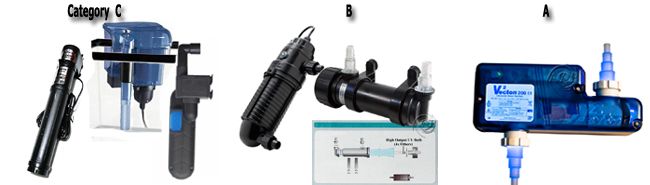
UV Clarifier/Sterilizer Categories used in this table:
Category C™: Basic Economy UV Clarifiers commonly sold via discounters, Amazon, Chewy.com, etc. with low dwell time, low output UVC (7%) lamps, poor contact design (especially HOB UVs), often or little no pre-filtration (examples include Mr Aqua UV, Submariner, Green Killing Machine, PF-15 HOB UV Filter, & many more). This includes the vast majority of UVs now sold often with simply different names on the same product without improving the UV lamp to HO, dwell time, and/or prefiltration.
Category B™: Many Compact UVs such as the AAP Compact Uv & CUP, Tetra, Turbo Twist with reasonable dwell time, HO 35% UVC lamps, assumed pre filtration.
Category A™: High Dwell time UVs such as the AAP Vecton Titan & Advantage with the highest dwell time, HO 35% UVC lamps, & assumed pre filtration.
Note: The Titan is 33% more effective than the Vecton line UV, which can be factored. It's the highest UVc per watt ouput UV currently out.
• (TM) The use of Category is proprietary to Carl Strohmeyer's extensive research & experience into aquarium/pond UV Sterilization and MAY NOT be used without permission.
Category C™: Basic Economy UV Clarifiers commonly sold via discounters, Amazon, Chewy.com, etc. with low dwell time, low output UVC (7%) lamps, poor contact design (especially HOB UVs), often or little no pre-filtration (examples include Mr Aqua UV, Submariner, Green Killing Machine, PF-15 HOB UV Filter, & many more). This includes the vast majority of UVs now sold often with simply different names on the same product without improving the UV lamp to HO, dwell time, and/or prefiltration.
Category B™: Many Compact UVs such as the AAP Compact Uv & CUP, Tetra, Turbo Twist with reasonable dwell time, HO 35% UVC lamps, assumed pre filtration.
Category A™: High Dwell time UVs such as the AAP Vecton Titan & Advantage with the highest dwell time, HO 35% UVC lamps, & assumed pre filtration.
Note: The Titan is 33% more effective than the Vecton line UV, which can be factored. It's the highest UVc per watt ouput UV currently out.
• (TM) The use of Category is proprietary to Carl Strohmeyer's extensive research & experience into aquarium/pond UV Sterilization and MAY NOT be used without permission.
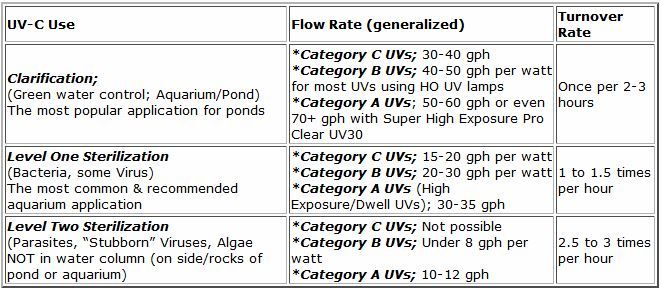
As one can see, there is obviously some variance in the gph per watt, this is not meant to be vague, but to reflect the variance in UV Sterilizers themselves. This is not a perfect formula since it does not factor in dwell time, temperature, and pre-filtration. However, most formulas only factor in flow rate as per µW/cm2 which is less complete than this formula. In my three decades of experience using and even building I have found the formula I espouse here to be the most reliable, especially when one attempts to factor in the somewhat more subjective variables. However, I do provide a test to determine dwell time that I have not found a way to merge into the above formula other than to subtract as much as 40% off the flow rate for the many UVs sold with poor dwell times.
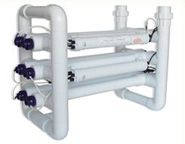
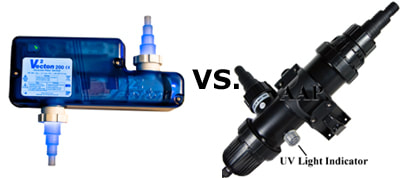
As an example, lower end Compact Sterilizers such as the Jebo have poor dwell time (exposure time) per watt and thus will require the lower flow rates (in fact some poorly designed units may require even lower flow rates), while top notch straight tube UV Sterilizers such as the TMC Vecton and Advantage can achieve the same results with higher flow rates and thus will be at the high end of flow rate suggestion per type of UV irridation.
As you can also see, if level two sterilization is required (as is generally necessary for swimming pool use as well as most “high end” marine fish importers such as Quality Marine USA), the need for large UV-C Sterilizer may be necessary for these large volumes of water such as the TMC 440-Watt Industrial UV Sterilizer pictured above (right).
For a further explanation of the subject of gph & turnover rates as it pertains to the correct UV for your application, see the section What Size UV Sterilizer is Best, please read this section to help use the above number to determine the best fit UV for your application.
Or please read, Is Too Large a UV Sterilizer a Problem? for further information about flow rate including very low gph per watt and parasite control.
As you can also see, if level two sterilization is required (as is generally necessary for swimming pool use as well as most “high end” marine fish importers such as Quality Marine USA), the need for large UV-C Sterilizer may be necessary for these large volumes of water such as the TMC 440-Watt Industrial UV Sterilizer pictured above (right).
For a further explanation of the subject of gph & turnover rates as it pertains to the correct UV for your application, see the section What Size UV Sterilizer is Best, please read this section to help use the above number to determine the best fit UV for your application.
Or please read, Is Too Large a UV Sterilizer a Problem? for further information about flow rate including very low gph per watt and parasite control.
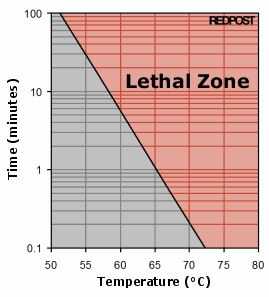
(C) Temperature/Quartz Sleeves: Generally, UV Sterilizer Bulbs used in aquatics employ low pressure mercury lamps (32-39% 254nm efficiency) vs. the medium/ pressure mercury lamps that have a much lower effectiveness (7-13% 254nm efficiency). This is important to note as low pressure lamps are sensitive to water temperature while medium pressure are not (the poor efficiency of medium pressure lamps which produce much of their light in spectrums useless for sterilization makes this only quality negligible).
The operating temperature spectrum at which low pressure UVC is effective is between 20 C (68 F) and 40 C (104 F). The keyword is OPERATING temperature as in a reasonably well-designed unit the water is usually in the unit long enough to be warmed several degrees which generally means that a water temperature over 20 C (68 F) will work fine. So, if your flow or unit design (or both) is not allowing this temperature, your effectiveness will be minimal.
The graph above shows general UVC "killing" power at a given temperature and given dwell time. While these temperatures are not realistic, it points out the importance of dwell time which is more readily controllable and is an aspect so MANY if not MOST popular aquarium & pond UVs are so lacking in (although temperature next to the UVC lamps do get much higher than the general aquarium water)!!
This is why going on the cheap and purchasing a UV that might cost only $50 from Amazon, eBay or other discounters basically insures you are not getting an effective UV Sterilizer.
Further Reading:
• Dwell/Exposure Time
Quartz sleeves help keep up a higher temperature, however in my tests with the same wattage units, (with and without Quartz sleeves) I only found a 5-degree Fahrenheit difference inside the UV Sterilizer when I turned off the units and then checked temperature differences, so this is another one of those statements about UV Sterilizers that I will challenge.
Quartz glass is also used in some UV Sterilization applications to protect a UVC light that is suspended above the water from spray (assuming the quartz glass is kept clean of mineral buildup). As per the latest data I have; quartz is about 99% efficient as per UVC penetration, so it is the best product for this use, however polycarbonate plastic is about 90% efficient, so this could also be used. I do not recommend acrylic (about 60% efficient) or standard float glass (about 40% efficient).
Although useful in some applications, quartz sleeves don't always allow as good of contact with the water and are difficult to keep clean, so in my opinion the benefits can be a wash. Which brings me to key #3, keeping the bulb or quartz sleeve clean? First, you want to change the UV bulb every 6 months for disease prevention or once every year at the beginning of the growing season for green algae prevention. You want to clean the quartz sleeve at this time too (using acetone). With a simple model without a quartz sleeve, you just throw away the dirty bulb.
Premium UV Lamps product resource:
• High Efficiency UV bulbs
Be careful of the latest gimmick in UV Sterilizers and that is wipers (great in theory though but NOT practical application), for more about these, please read this blog post: UV Sterilizer Truths. I would also be aware of many other sources of inaccuracies in UV Sterilization, please read this blog which has regular posts dealing with these subjects: UV Sterilizer Review Blog.
Back to temperature: If your water is very cold (such as a pond or even well water treatment system), I would suggest pre-heating your water before it passes through your UV Sterilizer unit, this is more effective than a quartz sleeve.
For further information about UV bulbs (lamps) and how they work, please see these excellent articles:
• UV (UVC) Lamps (Bulbs) used in Aquariums and Ponds and how they work
• Actual UV-C Emission from a UV Bulb: Aquarium or Pond
Aquarium Temperature with UV Sterilizer Use: The section above deals temperatures inside the UV Sterilizer itself, not an aquarium. Please do not confuse the two as although the temperature inside the aquarium (& more likely a pond during cooler months) affects the effectiveness of the UV Sterilizer, the UV Sterilizer has little effect on the aquarium temperature.
For example, a 9-watt UV Sterilizer connected to a 100-gallon tank can at best heat your tank the same as a 9-watt heater. With a heater 25 watts is required for every 10 degrees of ambient temperature per 10 gallons you need to raise your aquarium temperature; so using this equation a 9 watt UV-C lamp (again at best) could only raise 10 gallons of water 3.6 degrees F; now divide this by 10 (since a 100 gallon tank is ten times the gallons) and you have a temperature increase of .36 degrees Fahrenheit, in other words insignificant!
Reference:
• How an Aquarium Heater Functions, Types
Product Resource:
• 9 Watt UV-C Lamp/Bulb
The operating temperature spectrum at which low pressure UVC is effective is between 20 C (68 F) and 40 C (104 F). The keyword is OPERATING temperature as in a reasonably well-designed unit the water is usually in the unit long enough to be warmed several degrees which generally means that a water temperature over 20 C (68 F) will work fine. So, if your flow or unit design (or both) is not allowing this temperature, your effectiveness will be minimal.
The graph above shows general UVC "killing" power at a given temperature and given dwell time. While these temperatures are not realistic, it points out the importance of dwell time which is more readily controllable and is an aspect so MANY if not MOST popular aquarium & pond UVs are so lacking in (although temperature next to the UVC lamps do get much higher than the general aquarium water)!!
This is why going on the cheap and purchasing a UV that might cost only $50 from Amazon, eBay or other discounters basically insures you are not getting an effective UV Sterilizer.
Further Reading:
• Dwell/Exposure Time
Quartz sleeves help keep up a higher temperature, however in my tests with the same wattage units, (with and without Quartz sleeves) I only found a 5-degree Fahrenheit difference inside the UV Sterilizer when I turned off the units and then checked temperature differences, so this is another one of those statements about UV Sterilizers that I will challenge.
Quartz glass is also used in some UV Sterilization applications to protect a UVC light that is suspended above the water from spray (assuming the quartz glass is kept clean of mineral buildup). As per the latest data I have; quartz is about 99% efficient as per UVC penetration, so it is the best product for this use, however polycarbonate plastic is about 90% efficient, so this could also be used. I do not recommend acrylic (about 60% efficient) or standard float glass (about 40% efficient).
Although useful in some applications, quartz sleeves don't always allow as good of contact with the water and are difficult to keep clean, so in my opinion the benefits can be a wash. Which brings me to key #3, keeping the bulb or quartz sleeve clean? First, you want to change the UV bulb every 6 months for disease prevention or once every year at the beginning of the growing season for green algae prevention. You want to clean the quartz sleeve at this time too (using acetone). With a simple model without a quartz sleeve, you just throw away the dirty bulb.
Premium UV Lamps product resource:
• High Efficiency UV bulbs
Be careful of the latest gimmick in UV Sterilizers and that is wipers (great in theory though but NOT practical application), for more about these, please read this blog post: UV Sterilizer Truths. I would also be aware of many other sources of inaccuracies in UV Sterilization, please read this blog which has regular posts dealing with these subjects: UV Sterilizer Review Blog.
Back to temperature: If your water is very cold (such as a pond or even well water treatment system), I would suggest pre-heating your water before it passes through your UV Sterilizer unit, this is more effective than a quartz sleeve.
For further information about UV bulbs (lamps) and how they work, please see these excellent articles:
• UV (UVC) Lamps (Bulbs) used in Aquariums and Ponds and how they work
• Actual UV-C Emission from a UV Bulb: Aquarium or Pond
Aquarium Temperature with UV Sterilizer Use: The section above deals temperatures inside the UV Sterilizer itself, not an aquarium. Please do not confuse the two as although the temperature inside the aquarium (& more likely a pond during cooler months) affects the effectiveness of the UV Sterilizer, the UV Sterilizer has little effect on the aquarium temperature.
For example, a 9-watt UV Sterilizer connected to a 100-gallon tank can at best heat your tank the same as a 9-watt heater. With a heater 25 watts is required for every 10 degrees of ambient temperature per 10 gallons you need to raise your aquarium temperature; so using this equation a 9 watt UV-C lamp (again at best) could only raise 10 gallons of water 3.6 degrees F; now divide this by 10 (since a 100 gallon tank is ten times the gallons) and you have a temperature increase of .36 degrees Fahrenheit, in other words insignificant!
Reference:
• How an Aquarium Heater Functions, Types
Product Resource:
• 9 Watt UV-C Lamp/Bulb
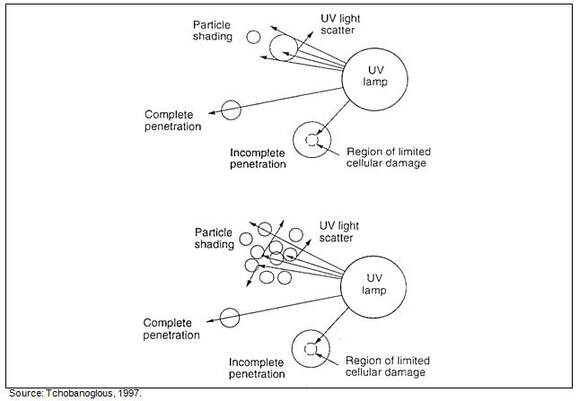
(D) UV Transmittance: Other Factors Affecting UV Sterilization: Pre-Filtration/Turbidity. Another important factor that is often overlooked and sometimes controversial (as per my reading of some forums, especially reef forums) is the waters UV Transmittance. UV Transmittance which is expressed in percent (0-100%) of UVC Transmittance. This measured value is the difference between a known UVC light source and what is measured by a calibrated detector through a 1 cm thick sample of the water to be irradiated/treated.
Water turbidity (dissolved waste particulates, DOC, etc.) in the water column, poor circulation (a poor flow pattern that has the water pickup and return too close where too much water goes unfiltered). If these factors exist and more UVC light is absorbed/blocked, you will need a larger UV Sterilizer for an effective pathogen kill or green water control.
The picture above displays UV Penetration (turbidity) and how particulate shading affect UV Sterilizer effectiveness.
Particulates in the water column interfere with the effectiveness of a UV Sterilizer by blocking UVC light and absorbing some of this energy. For this reason, the UV Sterilizer is best placed AFTER a filter so as to remove as many particulates from the water column as possible (the UV Unit is also best placed on the exhaust/return form a filter so as to allow maximum nitrifying bacteria accumulation in a bio filter).
Sometimes this is not always possible or desirable (as per some reef keepers that feel that pre-filtration increases nitrates), in this case you MUST increase the size of your UV to compensate.
Removing as many particulates from the water prior to UV Sterilization also partly dictates what devices are better to power (move water through) your UV Sterilizer. Obviously, a micron filter is going to do about the best job (other than possibly clogging faster). However most any standard canister filter (or similar pressurized pond filter) can remove a reasonable amount of particulates prior to entering your UV Sterilizer. Internal Power Filters or even Sponge Filters perform this task reasonably well (but not as well a canister filter).
Water turbidity (dissolved waste particulates, DOC, etc.) in the water column, poor circulation (a poor flow pattern that has the water pickup and return too close where too much water goes unfiltered). If these factors exist and more UVC light is absorbed/blocked, you will need a larger UV Sterilizer for an effective pathogen kill or green water control.
The picture above displays UV Penetration (turbidity) and how particulate shading affect UV Sterilizer effectiveness.
Particulates in the water column interfere with the effectiveness of a UV Sterilizer by blocking UVC light and absorbing some of this energy. For this reason, the UV Sterilizer is best placed AFTER a filter so as to remove as many particulates from the water column as possible (the UV Unit is also best placed on the exhaust/return form a filter so as to allow maximum nitrifying bacteria accumulation in a bio filter).
Sometimes this is not always possible or desirable (as per some reef keepers that feel that pre-filtration increases nitrates), in this case you MUST increase the size of your UV to compensate.
Removing as many particulates from the water prior to UV Sterilization also partly dictates what devices are better to power (move water through) your UV Sterilizer. Obviously, a micron filter is going to do about the best job (other than possibly clogging faster). However most any standard canister filter (or similar pressurized pond filter) can remove a reasonable amount of particulates prior to entering your UV Sterilizer. Internal Power Filters or even Sponge Filters perform this task reasonably well (but not as well a canister filter).
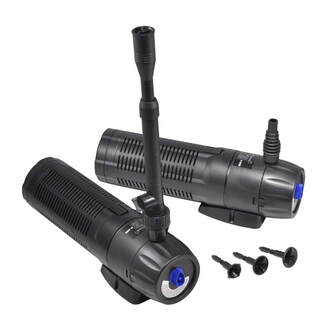
There are also Internal/Submersible UV Sterilizer Pumps with their own Sponge Pre-Filters such as the AAP Internal UV that does a reasonable job of level 1 UV Sterilization (beware of the cheapie first generation models of these internal UVs that leak and damage the UV and have poor flow rates in comparison to the wattage of the UV Bulb used). Even then, the best of this type of UV Sterilizer (the SunSun) is primarily intended for green or cloudy water control.
For small tank options consider the AAP 5 watt Internal UV Pump Filter.
Product Reference:
• Submersible/Internal UV Sterilizer Pumps
Your final choice would be a power head with little or no pre-filtration, while this can still work I have found that at least 20% must be taken off from the rated flow rate per watts of UV-C to make up for the higher particulates in the water when using a straight pump or power head (in many ponds this can actually cut the rated flow in half!).
Time: Generally a UV Sterilizer is best run 24/7, as this will provide the best Sterilization, Algae Control and Redox improvement. In Ponds this is particularly important as it can be difficult for a UV Sterilizer to keep up with algae growth during peak sunlight hours, while nighttime allows for a UV Sterilizer to “catch up” with algae spores. In Redox balance, a UV run constantly will provide a more stable balance.
There are exceptions though; many in Reef aquariums do not run a UV during certain hours (often using a timer) such as feeding micro planktons. A UV Sterilizer should be turned off when certain antibiotics are added (see the next section), when seeding tanks with established filter media, or Autotrophic or Heterotrophic Bacteria are added for bio waste composting or cycling (such as cycling products like SeaChem Stability). Generally, 24 hours off is long enough for these products.
Product Resource:
• SeaChem Stability
(E) UVC Penetration (Microwatts second/cm2): The emission or light intensity of a UVC germicidal light bulb is usually expressed in a term called "microwatts per square centimeter" (Mw/cm2) and can be tested with equipment such as the General UV254SD Data Logging UVC Meter.
The maximum intensity provided by a single UVC Bulb is at its surface. So, if we calculate the surface area of the UVC lamp and only use that area which effectively emit UVC light rays, the effective area of UVC transmission will be established. Basic mathematics will show that the surface area of a cylindrical tube is ‘pie’ D L. UVC light intensity decreasingly varies as the distance from the UVC light increases.
Another aspect that might be important for us to visualize is the 254nm UVC light photon is more energetic than say 350 or 450nm blue light, with a higher frequency. This more energetic photon can deliver more energy and has the potential to pass through water better/faster than lower frequency photons of light energy. A higher watt UV bulb/lamp is going to produce more of these energetic photons and have more ability to penetrate and thus sterilize better and at higher flow rates/water volumes.
Another point to understand that while photons travel in a straight line in a vacuum, in our UV Sterilizers filled with water these photons do not all travel in a straight line. As well, unlike red light which has a low frequency, low energy, long wavelength and can bend around things and go through things without harming them; UVC being a higher frequency has more vibration and a higher chance of interaction with any given particle. This is important as this can explain why more direct surface area provides better dwell time and most importantly why my 1000s of observations and dozens of tests have shown that such UV Sterilizers have BETTER RESULTS!!!
Reference:
• Most photons do not travel in straight lines
Here is a quote: "The great difference between bullets and photons is their inverse size to mass ratio. The photons with the smallest wavelengths have the greatest mass and energy and the very largest photons have fleetingly small masses and energies. If guns shot photons, a BB gun would have the power of a large artillery shell and the battleship Missouri’s 16-inch guns would eject soap bubbles." Since UVC is a smaller wavelength, it is going behave in ways stated in this quote and why we cannot think of UVC light energy in one dimensional, linear ways.
Put more simply (a non-scientific analogy); The amount of wattage will also increase penetration, as a higher watt UVC bulb will generally have more Mw/cm2. In my own experiments I have used 15 watt and 25-watt UVC bulbs in exactly the same unit (both were 18”), if wattage were only considered there would be a 60% increase in effectiveness, however I only observed a 25% increase. When I used a 30-Watt UVC bulb in a unit with over twice the exposure as the 15 Watt, the kill rate more than doubled. From my experience, if you increase wattage (and Mw/cm2) you need to also increase the volume of water to maximize the higher watt bulb.
Experiments can also be safely conducted with standard household light bulbs to correlate penetration.
For this, start with a 7 watt clear bulb (such as a Christmas bulb) and place varying thicknesses of paper/ cardboard in front of the bulb and measure when penetration stops. Continue this with higher and higher wattage bulbs.
This brings us back to the Dwell/ Exposure Time I noted earlier, and why the gph per watt flow suggestions that I myself use are not entirely accurate when comparing different UV units and the length, style, type of lamp used. An 8 Watt Vecton; High Dwell/ Exposure Time UV is going to outperform any 9-watt compact and often GIMMICKS such as "Twists" actually keep the UVC exposure way from the lamp!
This is also assuming the design of the UV Sterilizer maintains a consistent .3 cm distance from the UV lamp/Quartz Sleeve at all times. This is where some designs (such as the "Twists") may fool the one into assuming a long exposure time, while in reality a good portion of the exposure time was past the most effective 3 cm range. Again, this is where a High Dwell/Exposure Time Straight Tube Ultraviolet Sterilizer shines.
Product Resource:
• 8 Watt Vecton UV Sterilizer (V2 200)
AAP Compact UVs
UVC rays do not have great penetration ability on most substances. In the case of air, UVC has a very effective “killing” range. In the case of water (which is what we are dealing with), this can vary considerably with dissolved solids, mineral content, organic content and more.
This is why pre-filtering water is important for proper UV Sterilization. Your UV Sterilizer should ALWAYS be connected after the filter, not before. Water that is still laden with minerals, organics or more will need more UVC radiation in terms of Watts and time exposure. Agitation of water being sterilized generally increases sterilization effectiveness.
For small tank options consider the AAP 5 watt Internal UV Pump Filter.
Product Reference:
• Submersible/Internal UV Sterilizer Pumps
Your final choice would be a power head with little or no pre-filtration, while this can still work I have found that at least 20% must be taken off from the rated flow rate per watts of UV-C to make up for the higher particulates in the water when using a straight pump or power head (in many ponds this can actually cut the rated flow in half!).
Time: Generally a UV Sterilizer is best run 24/7, as this will provide the best Sterilization, Algae Control and Redox improvement. In Ponds this is particularly important as it can be difficult for a UV Sterilizer to keep up with algae growth during peak sunlight hours, while nighttime allows for a UV Sterilizer to “catch up” with algae spores. In Redox balance, a UV run constantly will provide a more stable balance.
There are exceptions though; many in Reef aquariums do not run a UV during certain hours (often using a timer) such as feeding micro planktons. A UV Sterilizer should be turned off when certain antibiotics are added (see the next section), when seeding tanks with established filter media, or Autotrophic or Heterotrophic Bacteria are added for bio waste composting or cycling (such as cycling products like SeaChem Stability). Generally, 24 hours off is long enough for these products.
Product Resource:
• SeaChem Stability
(E) UVC Penetration (Microwatts second/cm2): The emission or light intensity of a UVC germicidal light bulb is usually expressed in a term called "microwatts per square centimeter" (Mw/cm2) and can be tested with equipment such as the General UV254SD Data Logging UVC Meter.
The maximum intensity provided by a single UVC Bulb is at its surface. So, if we calculate the surface area of the UVC lamp and only use that area which effectively emit UVC light rays, the effective area of UVC transmission will be established. Basic mathematics will show that the surface area of a cylindrical tube is ‘pie’ D L. UVC light intensity decreasingly varies as the distance from the UVC light increases.
Another aspect that might be important for us to visualize is the 254nm UVC light photon is more energetic than say 350 or 450nm blue light, with a higher frequency. This more energetic photon can deliver more energy and has the potential to pass through water better/faster than lower frequency photons of light energy. A higher watt UV bulb/lamp is going to produce more of these energetic photons and have more ability to penetrate and thus sterilize better and at higher flow rates/water volumes.
Another point to understand that while photons travel in a straight line in a vacuum, in our UV Sterilizers filled with water these photons do not all travel in a straight line. As well, unlike red light which has a low frequency, low energy, long wavelength and can bend around things and go through things without harming them; UVC being a higher frequency has more vibration and a higher chance of interaction with any given particle. This is important as this can explain why more direct surface area provides better dwell time and most importantly why my 1000s of observations and dozens of tests have shown that such UV Sterilizers have BETTER RESULTS!!!
Reference:
• Most photons do not travel in straight lines
Here is a quote: "The great difference between bullets and photons is their inverse size to mass ratio. The photons with the smallest wavelengths have the greatest mass and energy and the very largest photons have fleetingly small masses and energies. If guns shot photons, a BB gun would have the power of a large artillery shell and the battleship Missouri’s 16-inch guns would eject soap bubbles." Since UVC is a smaller wavelength, it is going behave in ways stated in this quote and why we cannot think of UVC light energy in one dimensional, linear ways.
Put more simply (a non-scientific analogy); The amount of wattage will also increase penetration, as a higher watt UVC bulb will generally have more Mw/cm2. In my own experiments I have used 15 watt and 25-watt UVC bulbs in exactly the same unit (both were 18”), if wattage were only considered there would be a 60% increase in effectiveness, however I only observed a 25% increase. When I used a 30-Watt UVC bulb in a unit with over twice the exposure as the 15 Watt, the kill rate more than doubled. From my experience, if you increase wattage (and Mw/cm2) you need to also increase the volume of water to maximize the higher watt bulb.
Experiments can also be safely conducted with standard household light bulbs to correlate penetration.
For this, start with a 7 watt clear bulb (such as a Christmas bulb) and place varying thicknesses of paper/ cardboard in front of the bulb and measure when penetration stops. Continue this with higher and higher wattage bulbs.
This brings us back to the Dwell/ Exposure Time I noted earlier, and why the gph per watt flow suggestions that I myself use are not entirely accurate when comparing different UV units and the length, style, type of lamp used. An 8 Watt Vecton; High Dwell/ Exposure Time UV is going to outperform any 9-watt compact and often GIMMICKS such as "Twists" actually keep the UVC exposure way from the lamp!
This is also assuming the design of the UV Sterilizer maintains a consistent .3 cm distance from the UV lamp/Quartz Sleeve at all times. This is where some designs (such as the "Twists") may fool the one into assuming a long exposure time, while in reality a good portion of the exposure time was past the most effective 3 cm range. Again, this is where a High Dwell/Exposure Time Straight Tube Ultraviolet Sterilizer shines.
Product Resource:
• 8 Watt Vecton UV Sterilizer (V2 200)
AAP Compact UVs
UVC rays do not have great penetration ability on most substances. In the case of air, UVC has a very effective “killing” range. In the case of water (which is what we are dealing with), this can vary considerably with dissolved solids, mineral content, organic content and more.
This is why pre-filtering water is important for proper UV Sterilization. Your UV Sterilizer should ALWAYS be connected after the filter, not before. Water that is still laden with minerals, organics or more will need more UVC radiation in terms of Watts and time exposure. Agitation of water being sterilized generally increases sterilization effectiveness.
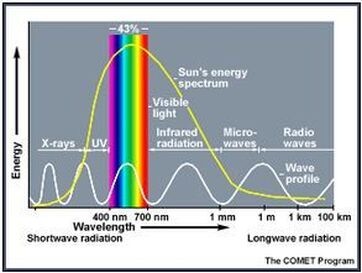
Effect of UV Sterilization on Minerals, Chemicals, etc.
This is an area where a lot of information is posted in aquatic forums and similar that has little scientific proof to back up statements. I myself have noted the effect of UVC radiation on a variety of chemicals added to treat infections and I have noted a variety of end results, HOWEVER I also have not conducted hard scientific studies, nor have I found any reputable studies to make conclusive statements (although many persons do without much to back themselves up).
What I have observed is that there is no effect of UVC radiation on minerals, and many chemicals such as Malachite Green (despite comments that UVC breaks down Malachite Green I see no evidence as of writing this). I however have observed UVC radiation breakdown some light sensitive antibiotics such as Quinine Hydrochloride. A few other proven UV sensitive antibiotics include cephaloridine, cephalexin, and cephradine.
Obviously most organic compounds are either destroyed or weakened by UVC Sterilization (at optimum levels). As I have noted elsewhere this includes nitrifying bacteria, HOWEVER, this bacteria is rarely in the water column and should NOT be in the water column, so this is not a problem under most instances other than adding cycling aids (during such time UVC Sterilization should be discontinued for 24 hours as noted earlier).
Organic compounds also include hormones, which can be both 'BAD' (if one desires hormones be controlled such as for certain 'grow out' tanks) or 'GOOD' (if there is a reason such as breeding whereby the aquarium keeper desires these hormones in the water column). So, for hormones the UV Sterilizer can be used as a tool that is turned on or off depending upon the needs of the aquarium keeper for controlling their aquatic environment.
It is however noteworthy that iron, sulfites, nitrites, and phenols can absorb UV (DeMers and Renner, 1992). This does not mean that UV Sterilizers are useful for removal of these compounds, rather that the presence of these compounds in water lower UV Penetration and thus effectiveness.
Here is a list of PROVEN light sensitive chemicals: Bromine, Oleic Acid, Ethyl Ether, Potassium Ferricyanide, Ferric Ammonium Citrate, Silver salts, Hydrobromic Acid, Sodium Iodide, Mercuric Salts, Mercurous Nitrate
What I have observed is that there is no effect of UVC radiation on minerals, and many chemicals such as Malachite Green (despite comments that UVC breaks down Malachite Green I see no evidence as of writing this). I however have observed UVC radiation breakdown some light sensitive antibiotics such as Quinine Hydrochloride. A few other proven UV sensitive antibiotics include cephaloridine, cephalexin, and cephradine.
Obviously most organic compounds are either destroyed or weakened by UVC Sterilization (at optimum levels). As I have noted elsewhere this includes nitrifying bacteria, HOWEVER, this bacteria is rarely in the water column and should NOT be in the water column, so this is not a problem under most instances other than adding cycling aids (during such time UVC Sterilization should be discontinued for 24 hours as noted earlier).
Organic compounds also include hormones, which can be both 'BAD' (if one desires hormones be controlled such as for certain 'grow out' tanks) or 'GOOD' (if there is a reason such as breeding whereby the aquarium keeper desires these hormones in the water column). So, for hormones the UV Sterilizer can be used as a tool that is turned on or off depending upon the needs of the aquarium keeper for controlling their aquatic environment.
It is however noteworthy that iron, sulfites, nitrites, and phenols can absorb UV (DeMers and Renner, 1992). This does not mean that UV Sterilizers are useful for removal of these compounds, rather that the presence of these compounds in water lower UV Penetration and thus effectiveness.
Here is a list of PROVEN light sensitive chemicals: Bromine, Oleic Acid, Ethyl Ether, Potassium Ferricyanide, Ferric Ammonium Citrate, Silver salts, Hydrobromic Acid, Sodium Iodide, Mercuric Salts, Mercurous Nitrate
What Size is Best
Here are a few examples for level one sterilization and basic clarification, then I will explain in more depth with even more examples.
As noted earlier in this article; for sterilization (level 1) you want 20-25 gph per watt for compact UVs or 30-35 gph for high dwell time UVs, as well as an aquarium/pond turnover rate of 1-1/2 times per hour (recommended minimum). For simple pond clarification about 45-50 (Compact UVs), or 60-70 high dwell time UVs.
Please note that pre-filtration is not factored in with these examples, as well a good circulation pattern that allows as little recirculation of the same water within the pond/aquarium into the UV Sterilizer.
These examples below ASSUME these factors & others to be within suggested parameters already discussed in this article.
Example 1: In this example I will look at the capabilities of a few UVs as per maximum size of pond or aquarium for the two most common UV applications; Clarification and Level 1 Sterilization.
The in-line TMC 15-watt Advantage can efficiently clarify at 60 gallons per watt, so 60 times 15 = 900 gph. Then multiple by a turnover of once every three hours which equals a 2700-gallon pond.
The 18 in-line Watt AAP Compact UV or Tetra Pond Green Free UV Clarifier can efficiently clarify at 50 gallons per watt, so 50 times 18 = 900 gph. Then multiple by a turnover of once every three hours which equals a 2700-gallon pond. As with the Advantage, the Tetra 18 watt can maintain a 2700-gallon pond.
The TMC in-line 15-watt Vecton can efficiently perform Level 1 Sterilization at 30 gallons per watt (actually higher), so 30 times 15 = 450 gph. Then divide this number by a turnover rate of 1.5 times per hour which equals a 300-gallon aquarium.
The Jebo low efficiency 18-watt Compact UV can only provide Level 1 Sterilization at 20 gallons per watt, so 20 times 18 = 360 gph. Then divide this number by a turnover rate of 1.5 which equals a maximum aquarium of 240 gallons. Please note that many other factors make this a generalization such as filtration, bio load, the presence of a Veggie Filter (in a pond), and of course the UV itself.
Example 2: In this example I will use a 100-gallon aquarium (or small patio pond).
For Clarification (Green Water Control; generally, the most common application in ponds) you would need a flow rate of 40-50 gph (60-70 for some high dwell time UVs) and a turnover of aquarium/pond water through the UV of once per 2-3 hours. So as a minimum you would need a flow rate of 50 gph (assuming once per 2 hours in water turnover). At 50 gph (for turnover) the smallest UV available is a 5 Watt which can have a flow rate up to 250 gph (5 x 50 gph) for clarification.
For Level One Sterilization (generally the most common application in aquariums), you would need a turnover rate of 1.5 times per hour which would be 150 gph for this example. The flow rate through the UV should be 20-25 gph per watt (I will use 20 such as required with a Jebo UV) which would mean 7.5 watts would be the minimum UV Sterilizer (20 x 7.5 = 150).
For Level Two Sterilization, you would need an aquarium/pond turnover rate through the UV Sterilizer of up to 2.5-4 times per hour, which would mean 300 gph minimum for this example. The flow rate in gph per watt is generally 8-12 gph (sometimes even lower, we will assume a lower efficiency UV and use 8 gph per watt for this example), so at 300 gph this would require a 37.5-Watt UV Sterilizer (300 divided by 8).
With a high dwell time UV such as the TMC Vecton, @ 12 gph per watt, this same 100-gallon aquarium could utilize a 25-Watt UV Sterilizer for level 2 sterilization (300 divided by 12).
These examples also due not factor in the design of the unit as per gap between the bulb/quartz tube and the wall of the Sterilizer, as this would require an even larger UV Sterilizer (in watts used) if the gap is more than 3 cm.
This is most often the case in many pressurized pond filters with UV, canister filters with UV, and even to strangely popular UV Sterilizers such as the Turbo Twist! I say "strangely popular" because the Turbo Twist has a gap of more than 3 cm at many points during the water pass due to baffles, as well this UV has many known issues with its ballast, which makes me wonder why such a poor UV is so popular!! If you are looking for a Compact UV Sterilizer, not only is the AAP Compact UV better in flow design than the Turbo Twist, but it does also not have anywhere near the same ballast issues.
Another factor that should also be considered in the length of exposure from first contact to last contact with the UV-C lamp (Dwell Time). Generally speaking, Compact UV Sterilizers such as the Tetra, Jebo, etc. are not going to have as a long of contact exposure as the best designed straight tube UVs such as the TMC Vecton/Advantage, so the more conservative flow rates should be applied to compact UVs (including the "twists").
Again, I want to emphasize the previously given flow rates are generic generalizations that do not take into consideration UV design, water temperature, water turbidity and more. Water that is not pre-filtered is going to be more turbid (higher TDS) and require a lower flow rate, as well the design of some UV Sterilizers often necessitates a lower flow rate as well.
This is especially true in units with larger water volumes around the UV bulb/Quartz Sleeve as often found in Pond filter with built in UVs such as “Pressurized Pond Filters with UV”, and “Canister Filters with UV” which include many brands (this is not to say ANY of these are bad filters as they are all excellent filters, they are simply not the best way to use a UV Sterilizer in a pond!).
As noted earlier in this article; for sterilization (level 1) you want 20-25 gph per watt for compact UVs or 30-35 gph for high dwell time UVs, as well as an aquarium/pond turnover rate of 1-1/2 times per hour (recommended minimum). For simple pond clarification about 45-50 (Compact UVs), or 60-70 high dwell time UVs.
Please note that pre-filtration is not factored in with these examples, as well a good circulation pattern that allows as little recirculation of the same water within the pond/aquarium into the UV Sterilizer.
These examples below ASSUME these factors & others to be within suggested parameters already discussed in this article.
Example 1: In this example I will look at the capabilities of a few UVs as per maximum size of pond or aquarium for the two most common UV applications; Clarification and Level 1 Sterilization.
The in-line TMC 15-watt Advantage can efficiently clarify at 60 gallons per watt, so 60 times 15 = 900 gph. Then multiple by a turnover of once every three hours which equals a 2700-gallon pond.
The 18 in-line Watt AAP Compact UV or Tetra Pond Green Free UV Clarifier can efficiently clarify at 50 gallons per watt, so 50 times 18 = 900 gph. Then multiple by a turnover of once every three hours which equals a 2700-gallon pond. As with the Advantage, the Tetra 18 watt can maintain a 2700-gallon pond.
The TMC in-line 15-watt Vecton can efficiently perform Level 1 Sterilization at 30 gallons per watt (actually higher), so 30 times 15 = 450 gph. Then divide this number by a turnover rate of 1.5 times per hour which equals a 300-gallon aquarium.
The Jebo low efficiency 18-watt Compact UV can only provide Level 1 Sterilization at 20 gallons per watt, so 20 times 18 = 360 gph. Then divide this number by a turnover rate of 1.5 which equals a maximum aquarium of 240 gallons. Please note that many other factors make this a generalization such as filtration, bio load, the presence of a Veggie Filter (in a pond), and of course the UV itself.
Example 2: In this example I will use a 100-gallon aquarium (or small patio pond).
For Clarification (Green Water Control; generally, the most common application in ponds) you would need a flow rate of 40-50 gph (60-70 for some high dwell time UVs) and a turnover of aquarium/pond water through the UV of once per 2-3 hours. So as a minimum you would need a flow rate of 50 gph (assuming once per 2 hours in water turnover). At 50 gph (for turnover) the smallest UV available is a 5 Watt which can have a flow rate up to 250 gph (5 x 50 gph) for clarification.
For Level One Sterilization (generally the most common application in aquariums), you would need a turnover rate of 1.5 times per hour which would be 150 gph for this example. The flow rate through the UV should be 20-25 gph per watt (I will use 20 such as required with a Jebo UV) which would mean 7.5 watts would be the minimum UV Sterilizer (20 x 7.5 = 150).
For Level Two Sterilization, you would need an aquarium/pond turnover rate through the UV Sterilizer of up to 2.5-4 times per hour, which would mean 300 gph minimum for this example. The flow rate in gph per watt is generally 8-12 gph (sometimes even lower, we will assume a lower efficiency UV and use 8 gph per watt for this example), so at 300 gph this would require a 37.5-Watt UV Sterilizer (300 divided by 8).
With a high dwell time UV such as the TMC Vecton, @ 12 gph per watt, this same 100-gallon aquarium could utilize a 25-Watt UV Sterilizer for level 2 sterilization (300 divided by 12).
These examples also due not factor in the design of the unit as per gap between the bulb/quartz tube and the wall of the Sterilizer, as this would require an even larger UV Sterilizer (in watts used) if the gap is more than 3 cm.
This is most often the case in many pressurized pond filters with UV, canister filters with UV, and even to strangely popular UV Sterilizers such as the Turbo Twist! I say "strangely popular" because the Turbo Twist has a gap of more than 3 cm at many points during the water pass due to baffles, as well this UV has many known issues with its ballast, which makes me wonder why such a poor UV is so popular!! If you are looking for a Compact UV Sterilizer, not only is the AAP Compact UV better in flow design than the Turbo Twist, but it does also not have anywhere near the same ballast issues.
Another factor that should also be considered in the length of exposure from first contact to last contact with the UV-C lamp (Dwell Time). Generally speaking, Compact UV Sterilizers such as the Tetra, Jebo, etc. are not going to have as a long of contact exposure as the best designed straight tube UVs such as the TMC Vecton/Advantage, so the more conservative flow rates should be applied to compact UVs (including the "twists").
Again, I want to emphasize the previously given flow rates are generic generalizations that do not take into consideration UV design, water temperature, water turbidity and more. Water that is not pre-filtered is going to be more turbid (higher TDS) and require a lower flow rate, as well the design of some UV Sterilizers often necessitates a lower flow rate as well.
This is especially true in units with larger water volumes around the UV bulb/Quartz Sleeve as often found in Pond filter with built in UVs such as “Pressurized Pond Filters with UV”, and “Canister Filters with UV” which include many brands (this is not to say ANY of these are bad filters as they are all excellent filters, they are simply not the best way to use a UV Sterilizer in a pond!).
UV Examples & installation tips
With all these examples, you will note that the UV Sterilizer is always after the pump and the filter.
The pump obvious has to be first to initiate water flow. The Filter should be first for two reasons:
For one the filter removes particulates that will impede effective UVC irradiation as noted earlier in this article. As well, having the Filter first allows for establishing of necessary nitrifying bacterial colonies in the filter.
Here are a few more installation tips: As just noted, the UV Sterilizer is generally best after the filter.
If an in-line chiller is being used, the UV Sterilizer is best on a separate line, but if not possible, the UV should be BEFORE the chiller. The reason is if the chiller is being run by a thermostat probe in the aquarium, it is going to be cooling the water that goes through it much more than the water in the aquarium itself until the temperature comes down. This is a problem since UV Sterilizers operate more efficiently at higher temperatures and the water inside the lines FROM the chiller are likely to be much cooler than the aquarium water when the device is running.
For pond use, ANY UV Sterilizer should be place away from as much weather/outside water/snow exposure as possible. Based on my experience in 1000s of applications, even UVs designed for pond use can prematurely fail due to poor placement. See the Myths section for more about this subject.
Know your aquarium temperature before adding the UV, as while a UV does not affect an aquarium or pond's temperature much, it can and does have at least some effect on the water temperature.
The best way to look at this is if you have a 15-watt UV Sterilizer, consider this a 15-watt ambient heater that is constantly running. Is this likely to be a problem with a 100-gallon aquarium or pond? NO, but maybe so a 10 gallon.
IN FACT, the same formula applies to a UV Sterilizer as applies to an aquarium heater: 25 watts of heater for every 10 degrees of ambient temperature per 10 gallons you need to raise your aquarium temperature. EXAMPLE: If your home is 68 degrees and you have a 40-gallon aquarium, to reach a temperature of 78 degrees you would need a 100-watt heater.
The pump obvious has to be first to initiate water flow. The Filter should be first for two reasons:
For one the filter removes particulates that will impede effective UVC irradiation as noted earlier in this article. As well, having the Filter first allows for establishing of necessary nitrifying bacterial colonies in the filter.
Here are a few more installation tips: As just noted, the UV Sterilizer is generally best after the filter.
If an in-line chiller is being used, the UV Sterilizer is best on a separate line, but if not possible, the UV should be BEFORE the chiller. The reason is if the chiller is being run by a thermostat probe in the aquarium, it is going to be cooling the water that goes through it much more than the water in the aquarium itself until the temperature comes down. This is a problem since UV Sterilizers operate more efficiently at higher temperatures and the water inside the lines FROM the chiller are likely to be much cooler than the aquarium water when the device is running.
For pond use, ANY UV Sterilizer should be place away from as much weather/outside water/snow exposure as possible. Based on my experience in 1000s of applications, even UVs designed for pond use can prematurely fail due to poor placement. See the Myths section for more about this subject.
Know your aquarium temperature before adding the UV, as while a UV does not affect an aquarium or pond's temperature much, it can and does have at least some effect on the water temperature.
The best way to look at this is if you have a 15-watt UV Sterilizer, consider this a 15-watt ambient heater that is constantly running. Is this likely to be a problem with a 100-gallon aquarium or pond? NO, but maybe so a 10 gallon.
IN FACT, the same formula applies to a UV Sterilizer as applies to an aquarium heater: 25 watts of heater for every 10 degrees of ambient temperature per 10 gallons you need to raise your aquarium temperature. EXAMPLE: If your home is 68 degrees and you have a 40-gallon aquarium, to reach a temperature of 78 degrees you would need a 100-watt heater.
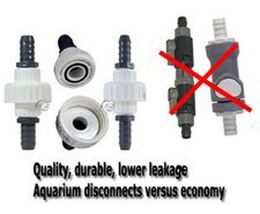
While not critical to the function of your UV Sterilizer, the use of quick disconnects can often make life easier when servicing any UV Sterilizer connected in-line, whether it be via a canister filter, water pump, or and other filtration/pump device. Also, based on considerable aquarium design plumbing experience, I would be weary of most disconnects sold by pump, filter, or any other aquarium supply manufacturers as while simple, these are usually light duty and are much more prone to leaking than much more durable PVC compression union disconnects which use a surer screw on method and much better O ring. See the picture above.
Product Reference:
• Heavy Duty Quick Disconnect Union
Product Reference:
• Heavy Duty Quick Disconnect Union
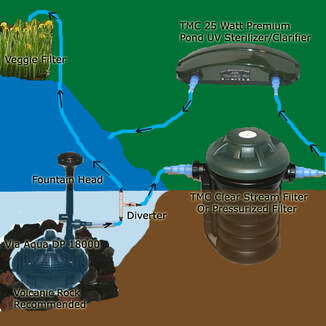
This first picture displays a pond set up whereby a pressurized filter is used along with a diverter valve to allow some water to the in-line UV Sterilizer, and some to the Veggie/Plant Filter.
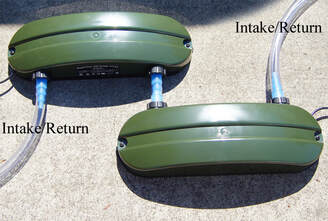
Multiple units in parallel or immediately inline with each other work well for larger ponds or aquariums.
As an example two in-line 25 Watt TMC Advantage UVs will easily handle a 7000-9000 gallon pond. For this combination to be effective it is important to place these UVs one IMMEDIATELY after the other and connect with at least 1 inch ID Tubing for proper flow (Click the pictures to enlarge).
Another example would be two 25 Watt high dwell time UVs such as the Vecton #600 or the Aqua UV classic placed in opposite circulating patterns at each end of a large aquarium such as a 6-7 foot 250 gallon aquarium. These combinations will outperform any one HO 50 watt UV Sterilizer!
The picture below displays how to utilize two sterilizers in an opposing water pattern. It is noteworthy that my controlled tests using my "test slurry" showed that two high dwell time UVs actually cleared the tank quicker that one single high dwell time UV of double the wattage.
The picture uses canister filters, but this can be done with pre-filtered water pumps or similar.
As an example two in-line 25 Watt TMC Advantage UVs will easily handle a 7000-9000 gallon pond. For this combination to be effective it is important to place these UVs one IMMEDIATELY after the other and connect with at least 1 inch ID Tubing for proper flow (Click the pictures to enlarge).
Another example would be two 25 Watt high dwell time UVs such as the Vecton #600 or the Aqua UV classic placed in opposite circulating patterns at each end of a large aquarium such as a 6-7 foot 250 gallon aquarium. These combinations will outperform any one HO 50 watt UV Sterilizer!
The picture below displays how to utilize two sterilizers in an opposing water pattern. It is noteworthy that my controlled tests using my "test slurry" showed that two high dwell time UVs actually cleared the tank quicker that one single high dwell time UV of double the wattage.
The picture uses canister filters, but this can be done with pre-filtered water pumps or similar.
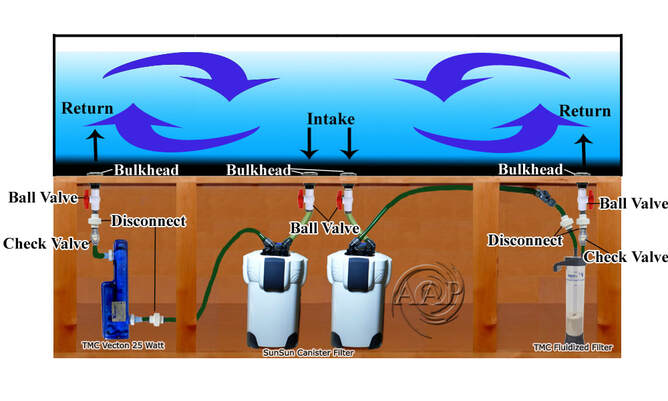
For very large ponds, UV Clarifiers such as the in-line TMC 110-watt Professional Pond UV Sterilizer which can handle ponds up to 12,000 gallons by itself.
Product Resource:
• TMC 110 Watt Professional Large Pond/Aquarium UV Sterilizer/Clarifier
Product Resource:
• TMC 110 Watt Professional Large Pond/Aquarium UV Sterilizer/Clarifier
As noted earlier there are many excellent UV Sterilizers/Clarifiers with good basic and reliable designs, however there are many excellent high end UV Sterilizers such as the Matala stainless steel UV Sterilizer that may appeal to those with large ponds with high flows. These may be a worthwhile purchase for many, however in my experience, I have achieved equal results with lower cost UV Clarifiers such as a pair of Terminator 36 watt UV Sterilizers @ $140 each ($280) connected at the proper flow and pond turnover rate as one high end UV Clarifier such as a 75 watt Matala that costs over $800; so be careful on being over sold for your pond clarification needs (as well look into improved filtration including a DIY Veggie Filter).
For more information about pond applications (including a diagram for reducing flow), please see the UV Sterilizer section in this article:
• A Clear Pond: Pond Information.
• As well please refer to this article: Pond Veggie Filters.
For more information about pond applications (including a diagram for reducing flow), please see the UV Sterilizer section in this article:
• A Clear Pond: Pond Information.
• As well please refer to this article: Pond Veggie Filters.
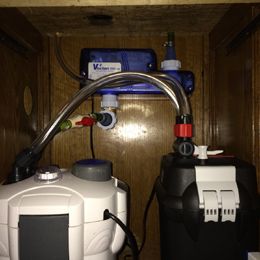
Some Ultraviolet Sterilizers are specifically designed for aquarium use so as to maximize long UVC exposure time (& thus higher-level UV Sterilization at higher flow rates) in a more compact design that fits or hangs under aquariums and cabinets.
The in-line Vecton UV8 (V2 200) (pictured) is a good example of this design that is offers the superior long exposure straight tube design in a more compact easily adaptable design that is superior to ANY compact in-line UV Sterilizer (including the Terminator which I also still recommend).
The picture above shows a Vecton 200, 8 Watt UV mounted to a twin canister filter combination as well as a CO2 injection system (one canister filter is run as a bio filter only in this example).
The in-line Vecton UV8 (V2 200) (pictured) is a good example of this design that is offers the superior long exposure straight tube design in a more compact easily adaptable design that is superior to ANY compact in-line UV Sterilizer (including the Terminator which I also still recommend).
The picture above shows a Vecton 200, 8 Watt UV mounted to a twin canister filter combination as well as a CO2 injection system (one canister filter is run as a bio filter only in this example).
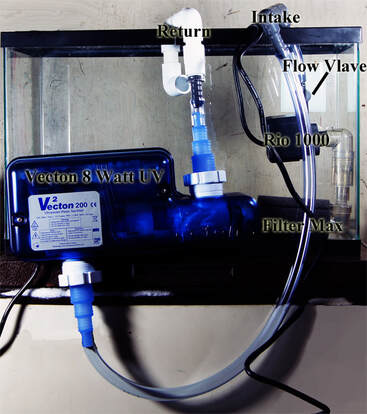
Taking the very high dwell time Vecton UV a step further, the picture above picture demonstrates these products: Vecton 8 Watt UV, with a Rio 1000 (Discontinued), Filter Max #3 Pre-Filter, 5/8" Tubing, and an Intake and Return Adapter.
This is a simple yet VERY effective way to connect a premium high dwell time UV for level one or higher UV Sterilization utilizing a simple power head and sponge pre-filter for maximum effectiveness. The small valve included with the Rio 1000 (and many other pumps as well such as the Via Aqua 1300) can be used to slow the flow during critical times when a higher level of UV Sterilization is desired.
This is a simple yet VERY effective way to connect a premium high dwell time UV for level one or higher UV Sterilization utilizing a simple power head and sponge pre-filter for maximum effectiveness. The small valve included with the Rio 1000 (and many other pumps as well such as the Via Aqua 1300) can be used to slow the flow during critical times when a higher level of UV Sterilization is desired.
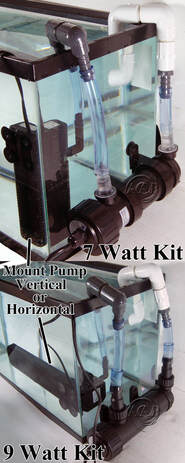
Here is another basic picture for plumbing an in-line compact UV Sterilizer using an Internal Filter or Power Head. The UV is mounted on the side only to better display how this is done. Back mounting is suggested for better aesthetics.
You may also place your power head/ internal filter on its side for an easier tubing application. Unfortunately, the kit we used to sell is no longer available.
Plumbing Parts to make the job simpler can be found here:
• Aquarium & Pond Plumbing Parts
This example includes these parts:
• Return Adapter
• Intake Adapter
• 5/8" ID Flexible Tubing
You may also place your power head/ internal filter on its side for an easier tubing application. Unfortunately, the kit we used to sell is no longer available.
Plumbing Parts to make the job simpler can be found here:
• Aquarium & Pond Plumbing Parts
This example includes these parts:
• Return Adapter
• Intake Adapter
• 5/8" ID Flexible Tubing
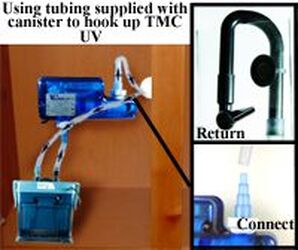
Probably the most common UV Sterilizer Application is to a Canister Filter or Pressurized Pond Filter (these pressurized pond filters make an excellent alternative aquarium canister filter as well).
The picture above demonstrates a Vecton 8 Watt, very simply spliced ("plumbed") in-line from the return side of the Vecton UV.
The picture above demonstrates a Vecton 8 Watt, very simply spliced ("plumbed") in-line from the return side of the Vecton UV.
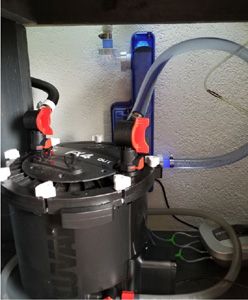
Some Fluval Canister Filters have “ribbed” tubing, which can still be used to attach to a UV Sterilizer (using Teflon tape around the UV male hose barbs and hose clamps). HOWEVER, I recommend replacing the Fluval tubing with standard vinyl tubing as in the picture above since this is a poor-quality tubing anyway that easily cracks.
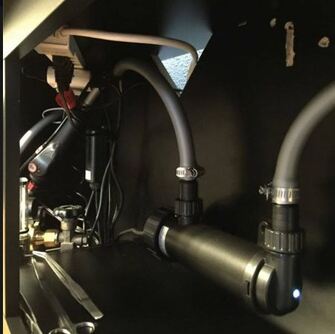
The picture above shows an AAP 9-Watt Compact UV attached to a newer Fluval Filter in an aquarium cabinet.
Product Resource:
AAP Compacts UV
Often many UV Sterilizers only have hose barbs that fit one size tubing instead of variable sizes such as with the Vecton & Advantages. A good example is the AAP Compact 9-watt Terminator UV pictured below. In the example of this 9 Watt AAP UV it comes with a hose barb that fits only 3/4" or 1" hoses, HOWEVER many canister filters that would run it at most efficient flows only have 5/8" hoses. For this, using a hose barb adapter is often a very simple "fix".
For a couple of pictures/diagrams as to UV Sterilizer/Clarifier connection to a Sponge Filter, please see this article:
• Sponge Filtrations: UV Sterilizer Sponge Filter Applications
Product Resource:
AAP Compacts UV
Often many UV Sterilizers only have hose barbs that fit one size tubing instead of variable sizes such as with the Vecton & Advantages. A good example is the AAP Compact 9-watt Terminator UV pictured below. In the example of this 9 Watt AAP UV it comes with a hose barb that fits only 3/4" or 1" hoses, HOWEVER many canister filters that would run it at most efficient flows only have 5/8" hoses. For this, using a hose barb adapter is often a very simple "fix".
For a couple of pictures/diagrams as to UV Sterilizer/Clarifier connection to a Sponge Filter, please see this article:
• Sponge Filtrations: UV Sterilizer Sponge Filter Applications
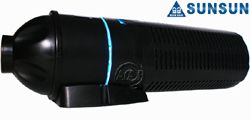
Finally, a growing in popularity method of UV Sterilization for both ponds and aquariums is the Submersible/Internal UV Sterilizer. This is an excellent idea in theory that also has many flaws. The first-generation internal UV Sterilizers (which are still sold by places such as Amazon) have leakage and reliability problems as well as flow design problems. The second generation still has flow design problems.
The third generation are definitely the best as long as one understands that these still have their limits.
The limits are that these still are mated to internal water pumps that are often too high a flow rate per the wattage UV-C used. You also cannot control the flow rate by virtue of mating the correct pump, diverter, valve, etc that you can with a separate UV Sterilizer.
The only 3rd generation Internal Submersible UV Sterilizer Pump I can recommend at this time is the AAP version of the AAP CUP-613 & 609 Submersible UV Filters as long as it is an AAP model corrected for flow rate and WITH a built-in pre-filter (those sold by Amazon are NOT to these specs!!!).
This UV Pump/Filter is also sold under another brand: HOWEVER, BE WARNED this other company also has many models that are NOT correctly mated as per pump gph and UV-C wattage and are poor at best for water clarity and CANNOT perform Level 1 or high UV Sterilization. As well, MOST if not all of these models sold by Amazon do not have the flow rate corrections, are using low output medium pressure UV bulbs (with 1/4 the UVC irradiation) and are missing the critical pre-filter that lowers water turbidity. The bottom line is you are not going to get a Level 1 (or higher) UV Sterilizer for under $50!
Product Resource:
• AAP CUP-613 & 609 Submersible UV Filters with Prefilter/Correct Flow
One major plus (or selling point if you will) is these Submersible UV Clarifiers require no additional plumbing, which for ponds often is a major hassle. Another plus for ponds is with the 13 Watt SunSun Submersible UV is these units can be used in multiples, strategically placed in larger ponds for effective clarification; Example three of these models in a 4000-gallon pond!
These internal/submersible UV Sterilizers are an excellent choice as a recirculating UV Filter in water reservoir such as one used to store RO/DI water or conditioned tap/well water for later use. These submersible UV Filter combinations require no additional plumbing and in the restricted/ contained environment of a reservoir, these are more than adequate for level one sterilization since the water turnover is likely quite high (such as a 30-gallon Rubbermaid type plastic trash can that I have used for this purpose).
What I would not recommend these for are inside a reef tank, especially the low-end models such as the Submariner. The reasons are for one, these submersible UVs can more easily suck in the many minute life forms often found in the water column, especially if placed too low to the substrate. As well these are simply not effective enough for the reasons many would desire a UV Sterilizer in the first place, again especially the low-end models such as the Green Killing Machine as all these units are good for is clarification and frankly I have yet to see a reasonably well-maintained reef aquarium with clarity issues!!!
Vertical or Horizontal Mounting? This is a commonly asked question as to which is better. The answer is quite simple and applies to virtually every model UV Sterilizer I have used, regardless of brand and that is horizontal is better! This does not mean a vertical application cannot work as I have mounted plenty of UVs this way.
I know that some manufacturers even recommend a vertical over horizontal mounting application, so let me explain why: With the vertical application it is quite common to get an air pocket at the top of the UV, this results in a small fraction of the lamp not exposed to water thus diminishing dwell time, simple as that. Again, this is generally only a small area if any that does not provide full water exposure to UVC, but if one is looking for the best results and both mounting options are viable, always go with horizontal. However, if the choice is between vertical, not a UV at all, or some cheap UV that fits horizontally (rather than a quality UV such as a TMC Vecton/Advantage, Aqua UV, or Emperor UV), then by all means mount vertically!!!
The third generation are definitely the best as long as one understands that these still have their limits.
The limits are that these still are mated to internal water pumps that are often too high a flow rate per the wattage UV-C used. You also cannot control the flow rate by virtue of mating the correct pump, diverter, valve, etc that you can with a separate UV Sterilizer.
The only 3rd generation Internal Submersible UV Sterilizer Pump I can recommend at this time is the AAP version of the AAP CUP-613 & 609 Submersible UV Filters as long as it is an AAP model corrected for flow rate and WITH a built-in pre-filter (those sold by Amazon are NOT to these specs!!!).
This UV Pump/Filter is also sold under another brand: HOWEVER, BE WARNED this other company also has many models that are NOT correctly mated as per pump gph and UV-C wattage and are poor at best for water clarity and CANNOT perform Level 1 or high UV Sterilization. As well, MOST if not all of these models sold by Amazon do not have the flow rate corrections, are using low output medium pressure UV bulbs (with 1/4 the UVC irradiation) and are missing the critical pre-filter that lowers water turbidity. The bottom line is you are not going to get a Level 1 (or higher) UV Sterilizer for under $50!
Product Resource:
• AAP CUP-613 & 609 Submersible UV Filters with Prefilter/Correct Flow
One major plus (or selling point if you will) is these Submersible UV Clarifiers require no additional plumbing, which for ponds often is a major hassle. Another plus for ponds is with the 13 Watt SunSun Submersible UV is these units can be used in multiples, strategically placed in larger ponds for effective clarification; Example three of these models in a 4000-gallon pond!
These internal/submersible UV Sterilizers are an excellent choice as a recirculating UV Filter in water reservoir such as one used to store RO/DI water or conditioned tap/well water for later use. These submersible UV Filter combinations require no additional plumbing and in the restricted/ contained environment of a reservoir, these are more than adequate for level one sterilization since the water turnover is likely quite high (such as a 30-gallon Rubbermaid type plastic trash can that I have used for this purpose).
What I would not recommend these for are inside a reef tank, especially the low-end models such as the Submariner. The reasons are for one, these submersible UVs can more easily suck in the many minute life forms often found in the water column, especially if placed too low to the substrate. As well these are simply not effective enough for the reasons many would desire a UV Sterilizer in the first place, again especially the low-end models such as the Green Killing Machine as all these units are good for is clarification and frankly I have yet to see a reasonably well-maintained reef aquarium with clarity issues!!!
Vertical or Horizontal Mounting? This is a commonly asked question as to which is better. The answer is quite simple and applies to virtually every model UV Sterilizer I have used, regardless of brand and that is horizontal is better! This does not mean a vertical application cannot work as I have mounted plenty of UVs this way.
I know that some manufacturers even recommend a vertical over horizontal mounting application, so let me explain why: With the vertical application it is quite common to get an air pocket at the top of the UV, this results in a small fraction of the lamp not exposed to water thus diminishing dwell time, simple as that. Again, this is generally only a small area if any that does not provide full water exposure to UVC, but if one is looking for the best results and both mounting options are viable, always go with horizontal. However, if the choice is between vertical, not a UV at all, or some cheap UV that fits horizontally (rather than a quality UV such as a TMC Vecton/Advantage, Aqua UV, or Emperor UV), then by all means mount vertically!!!
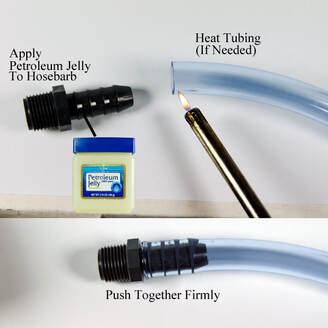
For help in connecting aquarium tubing to hose barbs or similar connection..
What is a Quality UV
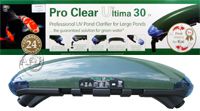
As noted earlier in this article: Proper UV sterilization starts with contact/dwell time, water turnover, water turbidity/filtration, water temperature, bio load, and more. Many UVs now available do not have proper dwell/contact time or advertise too high a flow rate. Many if not most sold are not even capable of level one UV Sterilization.
COMMENTARY: In the age of social media and Amazon driven website reviews, BEWARE of so-called review sites that use no proven objective measures to rate so-called aquarium (or pond) UV Sterilizers.
As an example: "aquariumadviser.com/best-uv-sterilizer-reviews" has a so-called review where only two of the so-called 7 best are true UV Sterilizers. The rest are NOT and are simply UV clarifiers (the two are True UVs are the "Turbo Twist" which is a Category B and the "Aqua Ultraviolet" which is a Category A).
Sadly this review leaves off the TMC Terminator/Advantage line that while not as well known online has been the clear choice among professionals for decades now (for reasons clearly and objectively outlined in this article). Of course when one looks deeper, this review is nothing more than another Amazon shilling web site that is helping to destroy the professional aquarium industry.
Testing/experience has shown that an in-line UV Sterilizer WITH good pre-filtration are the most likely to actually perform true UV Sterilization (with only a few exceptions, and even then these exceptions are for lower level UV Sterilization).
Your best results are going to come from the T8 and T5 inline UV Sterilizers, in particular the AAP/TMC Vecton/Advantage line followed by the Aqua and Emperor line. Many persons will seek out these cheaper often self-powered/contained UV Clarifiers (these are not true UV Sterilizers) for ease of fitting their smaller aquarium or tight installation, but unfortunately this is analogous to trying to pull your travel trailer with a moped instead of a capable truck, it simply is NOT GOING TO HAPPEN!
As an example, a Custom 15-watt UV I personally have built in the past is effective when installed properly (in part because it is flow restricted and will not allow more than 350 gph necessary for level 1 UV sterilization). UV sterilizers that place the UVC lamp above the water are generally less effective or insert the lamp inside the filter, again due to poor UV-C exposure.
COMMENTARY: In the age of social media and Amazon driven website reviews, BEWARE of so-called review sites that use no proven objective measures to rate so-called aquarium (or pond) UV Sterilizers.
As an example: "aquariumadviser.com/best-uv-sterilizer-reviews" has a so-called review where only two of the so-called 7 best are true UV Sterilizers. The rest are NOT and are simply UV clarifiers (the two are True UVs are the "Turbo Twist" which is a Category B and the "Aqua Ultraviolet" which is a Category A).
Sadly this review leaves off the TMC Terminator/Advantage line that while not as well known online has been the clear choice among professionals for decades now (for reasons clearly and objectively outlined in this article). Of course when one looks deeper, this review is nothing more than another Amazon shilling web site that is helping to destroy the professional aquarium industry.
Testing/experience has shown that an in-line UV Sterilizer WITH good pre-filtration are the most likely to actually perform true UV Sterilization (with only a few exceptions, and even then these exceptions are for lower level UV Sterilization).
Your best results are going to come from the T8 and T5 inline UV Sterilizers, in particular the AAP/TMC Vecton/Advantage line followed by the Aqua and Emperor line. Many persons will seek out these cheaper often self-powered/contained UV Clarifiers (these are not true UV Sterilizers) for ease of fitting their smaller aquarium or tight installation, but unfortunately this is analogous to trying to pull your travel trailer with a moped instead of a capable truck, it simply is NOT GOING TO HAPPEN!
As an example, a Custom 15-watt UV I personally have built in the past is effective when installed properly (in part because it is flow restricted and will not allow more than 350 gph necessary for level 1 UV sterilization). UV sterilizers that place the UVC lamp above the water are generally less effective or insert the lamp inside the filter, again due to poor UV-C exposure.
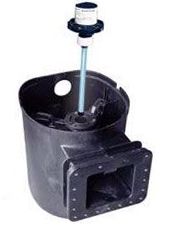
As another example, I have used several such UVs over the years that do not meet certain important criteria such as the Savio in ponds, which is one of the LEAST effective UVs I have ever used.
What is unfortunate, as I have noted on many occasions, is that persons will rate all UVs based on the use of one ineffective UV such as the Savio UV/Skimmer combo. Just recently in a pond consult I spoke with a gentleman who has a Savio UV/Skimmer combo where he made the claim that UVs are useless devices because his did nothing and the lamps also burned out prematurely due to leaky seals. In this case, a pond skimmer itself is a terrible idea carried over from pool persons not aware of what it takes to filter a living pond. In this case, building a simple Bog/Veggie filter where the water was pulled through the Veggie/Bog filter, then into a premium high dwell time TMC Advantage quickly took care of the problem.
Further Reading:
• Complete Pond Care Information
SOME UV STERILIZER/CLARIFIERS TO AVOID OR GOOD UVs TO BE CAUTIOUS OF THE HYPE:
Low Cost UVs, generally sold via Amazon, Lowes, & eBay: Be careful of some of the cheap UV sterilizers currently flooding the market generally for under $50 USD, such as the Aqua Medic, Sunterra, Green Killing Machine, Jebo, AquaTop, etc., as noted earlier there is not one of these that can perform level 1 UV Sterilization. Our aquarium/pond service has experienced poor results with these units (leakage, poor sterilization patterns, low quality ballasts, & more). If you obtain one of these units, you CANNOT make a fair assessment of what UV Sterilization can really do for your aquarium or pond.
A recent social media conversation I had showed the lack of understanding of what you get with these cheap UVs. He argued that for $30-$40 he could get a 9-watt UV Sterilizer at Amazon and compared this to the AAP Vecton Model 200 at $150. He stated that even if just 80% as effective he would be ahead on the deal via Amazon.
The problem is that these cheap UVs utilize low-cost medium pressure UV lamps with only 25% of the UVC output of a HO low pressure lamp. Then add in at best 50% of the dwell time and you are at just 1/8 the effectiveness and this $150 Vecton is the same value of an Amazon UV sold at $18.75 (as per the math). Throw in a lifespan of 7-10 years versus 1-2 years for these cheap Chinese models sold via Amazon/eBay and this is a no brainer. It is also noteworthy that these cheap UVs are not sterilizers, these are clarifiers only (& not good ones at that!)
The bottom line is if the UV seems "too cheap", there is most likely a good reason such as with the PFUV-40 Hang on the Back Filter with UV at price of $50: For $50 you are not going to get an effective filter and most definitely NOT a Level One UV Sterilizer!!!
What is unfortunate, as I have noted on many occasions, is that persons will rate all UVs based on the use of one ineffective UV such as the Savio UV/Skimmer combo. Just recently in a pond consult I spoke with a gentleman who has a Savio UV/Skimmer combo where he made the claim that UVs are useless devices because his did nothing and the lamps also burned out prematurely due to leaky seals. In this case, a pond skimmer itself is a terrible idea carried over from pool persons not aware of what it takes to filter a living pond. In this case, building a simple Bog/Veggie filter where the water was pulled through the Veggie/Bog filter, then into a premium high dwell time TMC Advantage quickly took care of the problem.
Further Reading:
• Complete Pond Care Information
SOME UV STERILIZER/CLARIFIERS TO AVOID OR GOOD UVs TO BE CAUTIOUS OF THE HYPE:
Low Cost UVs, generally sold via Amazon, Lowes, & eBay: Be careful of some of the cheap UV sterilizers currently flooding the market generally for under $50 USD, such as the Aqua Medic, Sunterra, Green Killing Machine, Jebo, AquaTop, etc., as noted earlier there is not one of these that can perform level 1 UV Sterilization. Our aquarium/pond service has experienced poor results with these units (leakage, poor sterilization patterns, low quality ballasts, & more). If you obtain one of these units, you CANNOT make a fair assessment of what UV Sterilization can really do for your aquarium or pond.
A recent social media conversation I had showed the lack of understanding of what you get with these cheap UVs. He argued that for $30-$40 he could get a 9-watt UV Sterilizer at Amazon and compared this to the AAP Vecton Model 200 at $150. He stated that even if just 80% as effective he would be ahead on the deal via Amazon.
The problem is that these cheap UVs utilize low-cost medium pressure UV lamps with only 25% of the UVC output of a HO low pressure lamp. Then add in at best 50% of the dwell time and you are at just 1/8 the effectiveness and this $150 Vecton is the same value of an Amazon UV sold at $18.75 (as per the math). Throw in a lifespan of 7-10 years versus 1-2 years for these cheap Chinese models sold via Amazon/eBay and this is a no brainer. It is also noteworthy that these cheap UVs are not sterilizers, these are clarifiers only (& not good ones at that!)
The bottom line is if the UV seems "too cheap", there is most likely a good reason such as with the PFUV-40 Hang on the Back Filter with UV at price of $50: For $50 you are not going to get an effective filter and most definitely NOT a Level One UV Sterilizer!!!
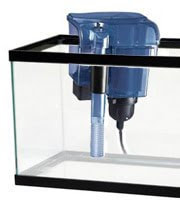
HOB & UVs to attach to UG Filters: Other designs of UV Sterilizers which have suddenly re-surfaced, that have been around before (as far back as the 1970s) are those that mount to Under gravel filters and "Hang on the Back Filters". Nektonics was one of the first manufacturers to experiment with these ideas (I too used and tested these in the late 70s and early 80s).
The problem is not usually flow rate, rather a poor design that does not allow for correct turnover, exposure distance from the UVC lamp, and contact. Most often these also do not employ HO UVC lamps. While these may seem like a good idea (I thought so too initially until testing showed otherwise), in practical test these all failed level one sterilization tests, yet alone level 2 sterilization which is claimed (sadly by "My Aquarium Box"). This is all but impossible simply based on flow rate & contact/dwell time despite misinformed YouTubers!!!
One such new reincarnation of these already tried (but failed) ideas are the Hang on Filters with UV (pictured above), such as the PFUV-25, PFUV-40, & PSE1. Also included are the Aqueon QuietFlow UV18 and UV9 so-called UV Sterilizers. The facts are these are at the very best UV Clarifier (poor ones at that).
Many Submersible/Internal UVs: Also, beware of the basic Internal UV Sterilizer imported out of China, first by Jebo now called the Killing Machine. We thought this to be an awesome idea ourselves, however after testing they failed miserably with not one of these Internal UV Sterilizer passing durability tests. What is sad is that they are now being marketed as the Killing Machine after most reputable aquarium maintenance companies & retailers have since rejected the originals. Reference: Killing Machine, Submariner Review
The AAP CUP series Submersible UV Filter is the best of the Submersible UVs (this is the model WITH the pre-filter & low-pressure level 1 capable UV Bulb, which are NOT included with those sold on Amazon).
The problem is not usually flow rate, rather a poor design that does not allow for correct turnover, exposure distance from the UVC lamp, and contact. Most often these also do not employ HO UVC lamps. While these may seem like a good idea (I thought so too initially until testing showed otherwise), in practical test these all failed level one sterilization tests, yet alone level 2 sterilization which is claimed (sadly by "My Aquarium Box"). This is all but impossible simply based on flow rate & contact/dwell time despite misinformed YouTubers!!!
One such new reincarnation of these already tried (but failed) ideas are the Hang on Filters with UV (pictured above), such as the PFUV-25, PFUV-40, & PSE1. Also included are the Aqueon QuietFlow UV18 and UV9 so-called UV Sterilizers. The facts are these are at the very best UV Clarifier (poor ones at that).
Many Submersible/Internal UVs: Also, beware of the basic Internal UV Sterilizer imported out of China, first by Jebo now called the Killing Machine. We thought this to be an awesome idea ourselves, however after testing they failed miserably with not one of these Internal UV Sterilizer passing durability tests. What is sad is that they are now being marketed as the Killing Machine after most reputable aquarium maintenance companies & retailers have since rejected the originals. Reference: Killing Machine, Submariner Review
The AAP CUP series Submersible UV Filter is the best of the Submersible UVs (this is the model WITH the pre-filter & low-pressure level 1 capable UV Bulb, which are NOT included with those sold on Amazon).
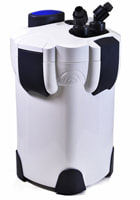
Canister and Pressurized Pond filter Built in UVs: I would be aware of otherwise good to excellent Pond Filters such as the SunSun Pressurized Pond Filter and many others such as Cyprios, Clear Stream, & Tetras. As well as some new Aquarium Canister filters that come with built in UV Sterilizers in the top (such as the Grech, SunSun, and related canister filters).
These are rarely as effective as a separate UV unit & are generally only UV Clarifiers for these reasons:
• Flow rate is often too fast for proper contact/exposure and rated wattage to generate the correct temperature around the bulb.
• The water in these style units is not contained in a small space around the UVC bulb (less than 3 cm) rather the flow is in a large area around the bulb which is generally not adequate for good UVC exposure/ dwell time.
• Many pressurized pond filters and aquarium canister filters are not 100% in their internal flow patterns, meaning a certain percentage of water that passes through the filter is never even routed next to the UVC lamp, UNLIKE a separate UV Sterilizer!
• Finally, most sold on Amazon & eBay utilize low output "nail curing" UV lamps which have only 25% of the UVC output of the better high output lamps so as to keep costs down. So, in the end, these are barely UV Clarifiers, yet alone a true level one capable UV Sterilizer!
It is always best to purchase a separate UV sterilizer that can handle the flow rate as per its wattage or divert the water through a ‘T’ Valve to the UV at a slower flow rate than the Filter or main pump is running at. While I personally sell and use the SunSun Aquarium Canister Filters, I want to make it clear that while these are good filters with many selling points, the additional UV Sterilizer is more of a gimmick and should not be a major part of your decision to purchase or not to purchase, unless your pond only needs minor clarification or your not desiring any level one sterilization in an aquarium or pond.
Build Quality: ALL of the very low cost to even better economy UV Sterilizers (such as AAP/SunSun Terminator UVs), do not have the build quality that will last years along with readily available parts when there is the rare need for repair. Basically, even the AAP Compacts that I also sell are a throw away UV that may last a few years. Compare this to am AAP/TMC Vecton or Advantage UV that not only provides a much higher level of sterilization but will likely last you a decade or even more.
HO, Short Lamp UVs such as the Emperor SMART HO UV Sterilizers & Gimmmicks such as "Wipers":
Finally, be aware that although HO (high output) UVC lights/lamps are certainly an improvement over a similar length UVC bulb of similar length, they do not increase effectiveness proportionally as to wattage per length. Often HO bulbs are very short and even with this higher output, these are often still not enough for the water flow that is usually applied to these UVs.
For example, although an Emperor UV with a 50 Watt HO bulb of 18 inches will handle a higher water flow than a 25 watt UVC bulb found in a Sterilizer such as the TMC Advantage; the flow rate is NOT doubled.
The FACTS ARE, combining two 25-Watt TMC Advantage or Vecton UVs for double the exposure time over an Emperor 50-watt UV with only 18 inches of straight tube UV-C lamp exposure WILL PROVIDE TRUER UVC STERILIZATION based on my experiments using my bacterial sludge solution added to the water column! Generally, for aquarium use, I would place the two 25 Watt UVs running from opposite ends of a large aquarium (such as 250 gallon), although good results can be achieved running these UVs end to end as well.
As another example, a unit with long exposure such as the TMC Professional 110-Watt UV Clarifier as compared a Smart HO Two-Lamp 100-Watt UV Sterilizer. The TMC Pro 110 Watt is not only vastly less money, but also a superior UV Sterilizer in terms of UVC exposure and performance!
This is not to say the Emperor Smart UV is poor UV, far from it as it is one of the best, I simply have found you can achieve excellent level 1 or 2 Sterilization for less money with other UVs such as the TMC line that also have been easier to obtain parts for when needed during my years of aquarium maintenance.
As well I personally do not like paying for gimmicks such as wipers that I found did little to get a UV lamp clean in a common hard water environment.
In the end, my complaint with these and other UVs with gimmicks such as wipers & short HO lamps, is not that the UV does not work, it is more you are paying for a lot of hype/marketing. These are certainly better than the 90% of the UVs sold.
Effective UVs include the TMC Vecton & Advantage (easily the best when all factors are considered including price), the Cyprio, Aqua UV, and the Emperor. Among the Compact UVs, the Tetra and the AAP Compact, while not as good as the before mentioned high dwell time premium UVs are still an excellent UV. This is providing a HO UVC lamp is utilized, and flow rates published here are followed, not the flow rates many manufacturers suggest as an example many SunSun UVs sold vie eBay do not utilize a HO UVC lamp and the flow rates are too high.
Product Resource:
• AAP/SunSun Value Pond/Aquarium UVC Sterilizers with HO Lamps
Even with many of the before mentioned UV Sterilizers/Clarifiers, many although of good design and reliability, are often overpriced or imply features that add no effectiveness to actual sterilization effectiveness. An example is the Tetra Pond UV Sterilizers, such as the GreenFree™ UV Mini Pond Clarifier, which is overpriced and yet less effective than the TMC Advantage models. Although reasonably well made, this 5-watt Tetra UV adds no more effectiveness than an AAP Compact 7-watt UV Sterilizer (a Compact UV of similar design).
In fact, you will likely pay twice as much for the Tetra over the Terminator only for a slightly thicker plastic housing, and despite some common perceptions, neither should be kept in direct contact with weather and both are only water resistant, not waterproof. I will also add for pond applications, generally a 5-7 watt of any brand is too small but for the smallest of water features. I generally recommend 13 watts or larger, and even then, the TMC line of Advantage Pond UVs is far more effective/efficient for ponds than ANY compact UV design.
These are rarely as effective as a separate UV unit & are generally only UV Clarifiers for these reasons:
• Flow rate is often too fast for proper contact/exposure and rated wattage to generate the correct temperature around the bulb.
• The water in these style units is not contained in a small space around the UVC bulb (less than 3 cm) rather the flow is in a large area around the bulb which is generally not adequate for good UVC exposure/ dwell time.
• Many pressurized pond filters and aquarium canister filters are not 100% in their internal flow patterns, meaning a certain percentage of water that passes through the filter is never even routed next to the UVC lamp, UNLIKE a separate UV Sterilizer!
• Finally, most sold on Amazon & eBay utilize low output "nail curing" UV lamps which have only 25% of the UVC output of the better high output lamps so as to keep costs down. So, in the end, these are barely UV Clarifiers, yet alone a true level one capable UV Sterilizer!
It is always best to purchase a separate UV sterilizer that can handle the flow rate as per its wattage or divert the water through a ‘T’ Valve to the UV at a slower flow rate than the Filter or main pump is running at. While I personally sell and use the SunSun Aquarium Canister Filters, I want to make it clear that while these are good filters with many selling points, the additional UV Sterilizer is more of a gimmick and should not be a major part of your decision to purchase or not to purchase, unless your pond only needs minor clarification or your not desiring any level one sterilization in an aquarium or pond.
Build Quality: ALL of the very low cost to even better economy UV Sterilizers (such as AAP/SunSun Terminator UVs), do not have the build quality that will last years along with readily available parts when there is the rare need for repair. Basically, even the AAP Compacts that I also sell are a throw away UV that may last a few years. Compare this to am AAP/TMC Vecton or Advantage UV that not only provides a much higher level of sterilization but will likely last you a decade or even more.
HO, Short Lamp UVs such as the Emperor SMART HO UV Sterilizers & Gimmmicks such as "Wipers":
Finally, be aware that although HO (high output) UVC lights/lamps are certainly an improvement over a similar length UVC bulb of similar length, they do not increase effectiveness proportionally as to wattage per length. Often HO bulbs are very short and even with this higher output, these are often still not enough for the water flow that is usually applied to these UVs.
For example, although an Emperor UV with a 50 Watt HO bulb of 18 inches will handle a higher water flow than a 25 watt UVC bulb found in a Sterilizer such as the TMC Advantage; the flow rate is NOT doubled.
The FACTS ARE, combining two 25-Watt TMC Advantage or Vecton UVs for double the exposure time over an Emperor 50-watt UV with only 18 inches of straight tube UV-C lamp exposure WILL PROVIDE TRUER UVC STERILIZATION based on my experiments using my bacterial sludge solution added to the water column! Generally, for aquarium use, I would place the two 25 Watt UVs running from opposite ends of a large aquarium (such as 250 gallon), although good results can be achieved running these UVs end to end as well.
As another example, a unit with long exposure such as the TMC Professional 110-Watt UV Clarifier as compared a Smart HO Two-Lamp 100-Watt UV Sterilizer. The TMC Pro 110 Watt is not only vastly less money, but also a superior UV Sterilizer in terms of UVC exposure and performance!
This is not to say the Emperor Smart UV is poor UV, far from it as it is one of the best, I simply have found you can achieve excellent level 1 or 2 Sterilization for less money with other UVs such as the TMC line that also have been easier to obtain parts for when needed during my years of aquarium maintenance.
As well I personally do not like paying for gimmicks such as wipers that I found did little to get a UV lamp clean in a common hard water environment.
In the end, my complaint with these and other UVs with gimmicks such as wipers & short HO lamps, is not that the UV does not work, it is more you are paying for a lot of hype/marketing. These are certainly better than the 90% of the UVs sold.
Effective UVs include the TMC Vecton & Advantage (easily the best when all factors are considered including price), the Cyprio, Aqua UV, and the Emperor. Among the Compact UVs, the Tetra and the AAP Compact, while not as good as the before mentioned high dwell time premium UVs are still an excellent UV. This is providing a HO UVC lamp is utilized, and flow rates published here are followed, not the flow rates many manufacturers suggest as an example many SunSun UVs sold vie eBay do not utilize a HO UVC lamp and the flow rates are too high.
Product Resource:
• AAP/SunSun Value Pond/Aquarium UVC Sterilizers with HO Lamps
Even with many of the before mentioned UV Sterilizers/Clarifiers, many although of good design and reliability, are often overpriced or imply features that add no effectiveness to actual sterilization effectiveness. An example is the Tetra Pond UV Sterilizers, such as the GreenFree™ UV Mini Pond Clarifier, which is overpriced and yet less effective than the TMC Advantage models. Although reasonably well made, this 5-watt Tetra UV adds no more effectiveness than an AAP Compact 7-watt UV Sterilizer (a Compact UV of similar design).
In fact, you will likely pay twice as much for the Tetra over the Terminator only for a slightly thicker plastic housing, and despite some common perceptions, neither should be kept in direct contact with weather and both are only water resistant, not waterproof. I will also add for pond applications, generally a 5-7 watt of any brand is too small but for the smallest of water features. I generally recommend 13 watts or larger, and even then, the TMC line of Advantage Pond UVs is far more effective/efficient for ponds than ANY compact UV design.
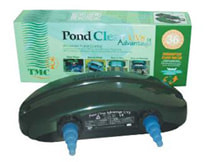
If heavy duty UV Sterilizer construction appeals to you (generally for pond use), rather than the Tetra Pond Green Free UVs, I would suggest the TMC Pond Advantage such as the TMC UV-15 Pond Advantage.
AAP distributed TMC (Tropic Marine Centre of UK and Germany) is the European leader in aquarium technology, including UV Sterilizers and unlike the Tetra Model you will also be purchasing a HO straight UVC bulb with much better UVC exposure time for a better price than the Tetra Pond UV 18.
The TMC Pond Advantage UV15 and UV25 is the heavy duty (albeit bulkier) version of the TMC Vecton UV15 & UV25 and is excellent for Aquarium use as well as pond use. That said the Vecton UV8, UV15, & UV25 are specifically designed for aquarium use with a design that provides full size UV flow capabilities along with a design that fits better in many confined aquarium cabinets, etc.
Product Resources:
• Aquarium Vecton & Pond Advantage UVs
For larger pond or professional the TMC 110 PRO UV use is without equal (nor has gimmicks such as wipers or twists):
• TMC 110 Watt PRO UV Sterilizer
The bottom line is if you are looking for a “High End” UV Sterilizer/Clarifier, the TMC line of UVs is without equal when performance/effectiveness, durability, parts availability, retailer-based return policies, and price are all considered.
As a side note, I as the author of this article (which not only represents 1000s of hours of research, but many years of practical use and controlled tests) obviously hope to sell a quality UV Sterilizer that I choose to make available on my web site (of which the mark up is extremely low so as to make them more readily available).
This does NOT discredit the research and experience that has gone into this article, nor does this mean that there are not many good UV Sterilizers available elsewhere (such as Aqua, Emperor, etc.). However, I choose to recommend UV Sterilizers I would use myself for my clients based on quality AND value (many excellent UVs are overpriced for what they provide in capabilities IMO). It is also noteworthy that there are also several UV Sterilizers that are of poor quality that are not worth purchasing at ANY price (I will leave mentioning many of these to blogs and reviews).
AAP distributed TMC (Tropic Marine Centre of UK and Germany) is the European leader in aquarium technology, including UV Sterilizers and unlike the Tetra Model you will also be purchasing a HO straight UVC bulb with much better UVC exposure time for a better price than the Tetra Pond UV 18.
The TMC Pond Advantage UV15 and UV25 is the heavy duty (albeit bulkier) version of the TMC Vecton UV15 & UV25 and is excellent for Aquarium use as well as pond use. That said the Vecton UV8, UV15, & UV25 are specifically designed for aquarium use with a design that provides full size UV flow capabilities along with a design that fits better in many confined aquarium cabinets, etc.
Product Resources:
• Aquarium Vecton & Pond Advantage UVs
For larger pond or professional the TMC 110 PRO UV use is without equal (nor has gimmicks such as wipers or twists):
• TMC 110 Watt PRO UV Sterilizer
The bottom line is if you are looking for a “High End” UV Sterilizer/Clarifier, the TMC line of UVs is without equal when performance/effectiveness, durability, parts availability, retailer-based return policies, and price are all considered.
As a side note, I as the author of this article (which not only represents 1000s of hours of research, but many years of practical use and controlled tests) obviously hope to sell a quality UV Sterilizer that I choose to make available on my web site (of which the mark up is extremely low so as to make them more readily available).
This does NOT discredit the research and experience that has gone into this article, nor does this mean that there are not many good UV Sterilizers available elsewhere (such as Aqua, Emperor, etc.). However, I choose to recommend UV Sterilizers I would use myself for my clients based on quality AND value (many excellent UVs are overpriced for what they provide in capabilities IMO). It is also noteworthy that there are also several UV Sterilizers that are of poor quality that are not worth purchasing at ANY price (I will leave mentioning many of these to blogs and reviews).
Maintenance (Bulbs, Ballasts, etc.)
UV Sterilizer maintenance is quite straight forward: Make sure you keep your unit dry on the outside, if used for a pond try and protect your unit from harsh weather. Most quality sterilizers can withstand the outdoor environment, however if allowed to sit in water, this water can seep in and damage electrical components
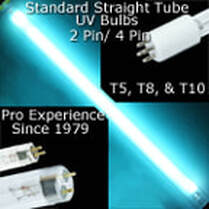
Bulb: Check your UV Bulb/Lamp every month if possible. More importantly, CHANGE your bulb every 6 months for aquariums (run 24/7 as suggested earlier in this article), and also every 6 months for ponds in warm climates where there is no winter freeze. While many non-professionals will quote manufacturers that one year or 8000-9000 hours is when to change, this error is based on the "rated" lifespan" of the HO UV lamp/bulb. HOWEVER, at 6 months the lamp is already at 75% of its UVC output and at one year it is at 50% of its original UVC output which is why I strongly recommend every six months.
In cool climates a pond UV bulb can be changed every season (usually late spring/ early summer), however as your pond UV Sterilizer approaches a year, your UV-C Lamp is only emitting about 25% of the correct UVC energy, so changing a pond UV bulb once per year say in Sept. will not be of much benefit since it will be very inefficient when you need it most (the warm/hot months of summer).
For longevity with a high output UV Bulb/lamp, do not regularly re-start your UV, as EVERY Re-start cycle takes life from your UV bulb. Besides the poor UV Sterilization caused by being on a daily timer, your UV bulb lifespan can be 50-75% lower with daily re-starts. This is due to the surge voltage required to fire your HO UV Bulb.
Replacement Bulb/Lamp Warnings! Be wary of the popular use of medium pressure UV Bulbs that produce only about 7-10% true UVC wavelengths versus the better low pressure UV bulbs/lamps which produce 3.5 times the important UVC wave lengths (35%+ UVC). Originally many of the medium pressure bulbs were designed for "nail curing" where lower output is actually desired, however many sellers of UV bulbs for aquariums/ponds have now taken to selling these due to the much lower cost. This is very common with discounters, Amazon, & eBay sellers.
Purchasing these bulbs results in a UV Sterilizer that is much less effective (if at all for anything other than some clarification), which then saving $10 results in making your UV Sterilizer not much more than a filter with a "pretty blue light".
It is also noteworthy (based on my experience), that a so-called "long life" UV Replacement bulb is a marketing ploy. The facts are that while these might "burn" longer, these are also a lower output UV-C lamp and thus defeat the purpose to use. My point is do not fall for these marketing ploys; purchase an Optimum 254nm High Output µW/cm2 UV-C Hot Cathode Low Pressure Quartz Germicidal Bulb and change it every six months for aquariums and warm climate ponds and once per year for cool climate ponds!
Product Resource:
• 254nm High Output UV-C Hot Cathode Quartz Germicidal Bulbs
Quartz Sleeve: If your UV has a quartz sleeve it is important to clean the quartz sleeve when changing your bulb or at least every other bulb change, this is especially important with pond UVs. Otherwise, your bulb change will not be very useful. Often the lamp glow will get more dim with a quartz sleeve that is coated with hard water deposits and/or dirt/mulm. This need for cleaning becomes a MUST with pond use, and in my experience, wipers do not alleviate the need for cleaning. So do NOT purchase a UV Sterilizer for a pond and not expect to have to clean this part, sometimes even more often than a bulb/lamp change in high bio ponds!!!
Be very careful when cleaning a quartz sleeve as they are very fragile and expensive (and usually hard to find replacements). I recommend cradling the quartz sleeve in an old pillow or towel while cleaning and using acetone to remove scum and other deposits (not glass cleaner). Do not clean in a sink, as it is very easy to break there in!
As noted before, some UV sterilizers come with wipers which are used keeping your quartz sleeve somewhat clean between bulb changes, however they are more of an expensive gimmick (my experience with them is they do little to remove build ups that block UVC light) and still do not take the place of cleaning your quartz sleeve at bulb change time.
Reference:
• UV Sterilizers Gimmicks: 'Turbo' Twists, Baffles Wipers
Be careful when simply changing aquarium water (or bulbs) to not let your UV Sterilizer run dry WITH the UVC Lamp/Bulb still turned on. What can happen is the Quartz Sleeve will heat up and then when water is re-introduced to your UV Sterilizer this can and often does crack your quartz sleeve (& damage your ballast/transformer too). If left running with this crack (which may not be easy to notice), this will damage electrical components to the point where the UV is NOT reasonably repairable at a cost less than a new UV Sterilizer.
For this reason, a pond or aquarium pump that is running the UV Sterilizer should NOT be on a timer unless the UV Sterilizer is on the exact same timer!!!
Another important note is that many UV Sterilizer manufacturers do NOT make their Quartz Sleeves available to retailers at reasonable prices; the result is if your Quartz Sleeve is broken beyond repair (sometimes small cracks can be repaired with a small bead of silicone on the outside of the Quartz Sleeve), it is simply cheaper to replace the entire UV Sterilizer. This is especially common with lower efficiency Compact UVC Sterilizers (these use the G23, G11, G24, PLL, PLS type UV replacement Bulbs).
Product Resource:
• Aquarium Silicone: USDA Approved, 100% Fish Safe
If you find yourself in this situation, I STRONGLY urge readers to purchase a UV Sterilizer of higher quality with better efficiency/dwell time such as the AAP/TMC Advantage/Vecton UV Sterilizer/Clarifier line. TMC is well known as a company (especially in Europe) that not only builds premium products, but ALSO supports their products with replacement parts at reasonable prices!!!
Ballast/Transformer: This part of a UV Sterilizer, Purifier, etc. often does not last as long as the main body/unit itself. This is truer of the electronic ballasts than magnetic, although the starters used with magnetic ballasts often need to be changed every year).
As well many of the low-quality units that are now flooding the market often have cheap electronic ballasts that last 6 months to a year. These poor-quality ballasts simply have a limited number of times that they can produce the "surge voltage" to light a high output UV lamp. Poor design, care (including allowing the UV to overheat due to lack of flow while the UV is still running), or placement of a UV Sterilizer/Purifier can also prematurely destroy an otherwise good ballast.
The use of a multi-meter is the best BASIC way to check a ballast. Assuming a 120 V connection (North America), the output from the ballast should be 120 Volts A/C, while your Amps should be about 2.23 Amps (AC/DC), and your Ohms should be about .75.
HOWEVER, this basic multi meter test only takes into consideration basic electrical power to run the UV-C Bulb/Lamp, not the shot of high-voltage electricity (500 plus volts) ignite/ionize to the gas within the fluorescent bulb; there is NO way that I know to test this function if you have an electronic ballast (magnetic ballasts utilize an easy to replace starter to perform this function).
With magnetic ballasts, make sure to check the starter first, as magnetic ballasts can often last for 25 years while the starters often last six months to 2 years (a fluorescent starters function is to send a delayed shot of high-voltage electricity to the gas within the fluorescent bulb).
Quite bluntly from my extensive experience with UV Sterilizers, generally a good magnetic ballast will out perform and out live a good electronic (if kept dry). As an example, the magnetic ballast employed by the AAP/TMC Vecton & Advantage UVs have lasted me well over a decade with the majority of my clients (even then failure was due to allowing the ballast to get flooded with water).
Unfortunately, a misguided 2014 USA regulation has made all AAP/TMC UVs made for the North American market switch to electronic ballasts (of which there are not high output matches for all TMC UVs). This said, while I prefer a good magnetic ballast, TMC simply discontinued UVs that they could not find a top-notch electronic ballast to mate to a particular unit that would provide long life surge voltage and the longevity their UVs are known for by professionals and hobbyists.
O-Rings, Gaskets, Seals: These are parts that can last several UV lamps changes with most Sterilizers utilizing quartz sleeves, especially with the better brands such as TMC, Aqua Ultraviolet, & Emperor.
Keeping these on hand might be a good idea, however with proper care including lubrication with Petroleum Jelly, I have had these parts last many years.
Pre-Filtration: Since pre-filtration is very important, make sure your filter pre-filter is kept clean where water runs well with as little water turbidity as possible. When using Pre-filters such as the Filter Max or Hydro Pond as well as the Sponges that come in submersible UVs such as the AAP CUP series; these should be checked regularly, usually once per week to two weeks in aquariums and as often as every few days in ponds (use of rock pre-filters as well is suggested for pond use). Rinsing in de-chlorinated or used tank/pond water is suggested.
Further Resource for Ponds:
• Pond Circulation: Including Rock Pre-filter
Cracks/Leaks in UV Body: I personally have salvaged many UV Sterilizers (generally economy models that have thinner UVC irradiation degradable walls) with minor and even moderate cracks/leaks by applying PVC cement followed by Teflon Tap along the crack followed by 2-4 or more layers using this method. This has generally added at least another year to the life of the Sterilizer/Clarifier.
In cool climates a pond UV bulb can be changed every season (usually late spring/ early summer), however as your pond UV Sterilizer approaches a year, your UV-C Lamp is only emitting about 25% of the correct UVC energy, so changing a pond UV bulb once per year say in Sept. will not be of much benefit since it will be very inefficient when you need it most (the warm/hot months of summer).
For longevity with a high output UV Bulb/lamp, do not regularly re-start your UV, as EVERY Re-start cycle takes life from your UV bulb. Besides the poor UV Sterilization caused by being on a daily timer, your UV bulb lifespan can be 50-75% lower with daily re-starts. This is due to the surge voltage required to fire your HO UV Bulb.
Replacement Bulb/Lamp Warnings! Be wary of the popular use of medium pressure UV Bulbs that produce only about 7-10% true UVC wavelengths versus the better low pressure UV bulbs/lamps which produce 3.5 times the important UVC wave lengths (35%+ UVC). Originally many of the medium pressure bulbs were designed for "nail curing" where lower output is actually desired, however many sellers of UV bulbs for aquariums/ponds have now taken to selling these due to the much lower cost. This is very common with discounters, Amazon, & eBay sellers.
Purchasing these bulbs results in a UV Sterilizer that is much less effective (if at all for anything other than some clarification), which then saving $10 results in making your UV Sterilizer not much more than a filter with a "pretty blue light".
It is also noteworthy (based on my experience), that a so-called "long life" UV Replacement bulb is a marketing ploy. The facts are that while these might "burn" longer, these are also a lower output UV-C lamp and thus defeat the purpose to use. My point is do not fall for these marketing ploys; purchase an Optimum 254nm High Output µW/cm2 UV-C Hot Cathode Low Pressure Quartz Germicidal Bulb and change it every six months for aquariums and warm climate ponds and once per year for cool climate ponds!
Product Resource:
• 254nm High Output UV-C Hot Cathode Quartz Germicidal Bulbs
Quartz Sleeve: If your UV has a quartz sleeve it is important to clean the quartz sleeve when changing your bulb or at least every other bulb change, this is especially important with pond UVs. Otherwise, your bulb change will not be very useful. Often the lamp glow will get more dim with a quartz sleeve that is coated with hard water deposits and/or dirt/mulm. This need for cleaning becomes a MUST with pond use, and in my experience, wipers do not alleviate the need for cleaning. So do NOT purchase a UV Sterilizer for a pond and not expect to have to clean this part, sometimes even more often than a bulb/lamp change in high bio ponds!!!
Be very careful when cleaning a quartz sleeve as they are very fragile and expensive (and usually hard to find replacements). I recommend cradling the quartz sleeve in an old pillow or towel while cleaning and using acetone to remove scum and other deposits (not glass cleaner). Do not clean in a sink, as it is very easy to break there in!
As noted before, some UV sterilizers come with wipers which are used keeping your quartz sleeve somewhat clean between bulb changes, however they are more of an expensive gimmick (my experience with them is they do little to remove build ups that block UVC light) and still do not take the place of cleaning your quartz sleeve at bulb change time.
Reference:
• UV Sterilizers Gimmicks: 'Turbo' Twists, Baffles Wipers
Be careful when simply changing aquarium water (or bulbs) to not let your UV Sterilizer run dry WITH the UVC Lamp/Bulb still turned on. What can happen is the Quartz Sleeve will heat up and then when water is re-introduced to your UV Sterilizer this can and often does crack your quartz sleeve (& damage your ballast/transformer too). If left running with this crack (which may not be easy to notice), this will damage electrical components to the point where the UV is NOT reasonably repairable at a cost less than a new UV Sterilizer.
For this reason, a pond or aquarium pump that is running the UV Sterilizer should NOT be on a timer unless the UV Sterilizer is on the exact same timer!!!
Another important note is that many UV Sterilizer manufacturers do NOT make their Quartz Sleeves available to retailers at reasonable prices; the result is if your Quartz Sleeve is broken beyond repair (sometimes small cracks can be repaired with a small bead of silicone on the outside of the Quartz Sleeve), it is simply cheaper to replace the entire UV Sterilizer. This is especially common with lower efficiency Compact UVC Sterilizers (these use the G23, G11, G24, PLL, PLS type UV replacement Bulbs).
Product Resource:
• Aquarium Silicone: USDA Approved, 100% Fish Safe
If you find yourself in this situation, I STRONGLY urge readers to purchase a UV Sterilizer of higher quality with better efficiency/dwell time such as the AAP/TMC Advantage/Vecton UV Sterilizer/Clarifier line. TMC is well known as a company (especially in Europe) that not only builds premium products, but ALSO supports their products with replacement parts at reasonable prices!!!
Ballast/Transformer: This part of a UV Sterilizer, Purifier, etc. often does not last as long as the main body/unit itself. This is truer of the electronic ballasts than magnetic, although the starters used with magnetic ballasts often need to be changed every year).
As well many of the low-quality units that are now flooding the market often have cheap electronic ballasts that last 6 months to a year. These poor-quality ballasts simply have a limited number of times that they can produce the "surge voltage" to light a high output UV lamp. Poor design, care (including allowing the UV to overheat due to lack of flow while the UV is still running), or placement of a UV Sterilizer/Purifier can also prematurely destroy an otherwise good ballast.
The use of a multi-meter is the best BASIC way to check a ballast. Assuming a 120 V connection (North America), the output from the ballast should be 120 Volts A/C, while your Amps should be about 2.23 Amps (AC/DC), and your Ohms should be about .75.
HOWEVER, this basic multi meter test only takes into consideration basic electrical power to run the UV-C Bulb/Lamp, not the shot of high-voltage electricity (500 plus volts) ignite/ionize to the gas within the fluorescent bulb; there is NO way that I know to test this function if you have an electronic ballast (magnetic ballasts utilize an easy to replace starter to perform this function).
With magnetic ballasts, make sure to check the starter first, as magnetic ballasts can often last for 25 years while the starters often last six months to 2 years (a fluorescent starters function is to send a delayed shot of high-voltage electricity to the gas within the fluorescent bulb).
Quite bluntly from my extensive experience with UV Sterilizers, generally a good magnetic ballast will out perform and out live a good electronic (if kept dry). As an example, the magnetic ballast employed by the AAP/TMC Vecton & Advantage UVs have lasted me well over a decade with the majority of my clients (even then failure was due to allowing the ballast to get flooded with water).
Unfortunately, a misguided 2014 USA regulation has made all AAP/TMC UVs made for the North American market switch to electronic ballasts (of which there are not high output matches for all TMC UVs). This said, while I prefer a good magnetic ballast, TMC simply discontinued UVs that they could not find a top-notch electronic ballast to mate to a particular unit that would provide long life surge voltage and the longevity their UVs are known for by professionals and hobbyists.
O-Rings, Gaskets, Seals: These are parts that can last several UV lamps changes with most Sterilizers utilizing quartz sleeves, especially with the better brands such as TMC, Aqua Ultraviolet, & Emperor.
Keeping these on hand might be a good idea, however with proper care including lubrication with Petroleum Jelly, I have had these parts last many years.
Pre-Filtration: Since pre-filtration is very important, make sure your filter pre-filter is kept clean where water runs well with as little water turbidity as possible. When using Pre-filters such as the Filter Max or Hydro Pond as well as the Sponges that come in submersible UVs such as the AAP CUP series; these should be checked regularly, usually once per week to two weeks in aquariums and as often as every few days in ponds (use of rock pre-filters as well is suggested for pond use). Rinsing in de-chlorinated or used tank/pond water is suggested.
Further Resource for Ponds:
• Pond Circulation: Including Rock Pre-filter
Cracks/Leaks in UV Body: I personally have salvaged many UV Sterilizers (generally economy models that have thinner UVC irradiation degradable walls) with minor and even moderate cracks/leaks by applying PVC cement followed by Teflon Tap along the crack followed by 2-4 or more layers using this method. This has generally added at least another year to the life of the Sterilizer/Clarifier.
Is Too Large a UV Sterilizer a Problem?
Is Too Large a UV Sterilizer a Problem? This is an occasionally asked question to which the answer is generally NO with some exceptions.
One exception as per flow rate is once you get below 2-3 gph per watt, this can produce too much heat and shorten the life of your UV Sterilizer (or Clarifier).
Another exception is not necessarily "too large" rather is simply a waste of money. As an example, using an AAP 36-Watt Compact UV connected with a 300 gph water pump flow will produce 8.33 gph per watt. However, while parasite and some virus and other control results are better than 20 gph per watt, it is not double or more the result one would get over a 20 gph per watt application with this particular UV.
Once you drop below 8 gph per watt (as much as 12 gph per watt for high dwell time UVs such as the AAP/TMC Vecton & Advantage), better results are basically nil from my experience.
While it may be true that parasites such as Cryptocaryon (marine Ich), are more readily killed at this rate, this is not an established fact, in part since it is impossible to force all Cryptocaryon tomites in an aquarium through the UV Sterilizer.
I find that UV Sterilizers often help control Ich or similar parasites not by killing them, but by improving water quality such as lowering oxidative stress via an improved Redox balance which in turns improves the fish’ natural resistance allowing treatments or other measure to eradicate a given parasite infestation.
As well in a marine reef tank in particular, this high wattage to flow ratio may kill copepods or other propagated organisms (assuming they get into the water column, which is rare). While the facts that many of the organisms propagated in marine reef are not killed by typical UV flow rates (20 gph per watt), making it a MYTH that UV Sterilization should not be used in reef aquariums, I would also not push the envelope with flow rates much under 10 gph per watt.
One exception as per flow rate is once you get below 2-3 gph per watt, this can produce too much heat and shorten the life of your UV Sterilizer (or Clarifier).
Another exception is not necessarily "too large" rather is simply a waste of money. As an example, using an AAP 36-Watt Compact UV connected with a 300 gph water pump flow will produce 8.33 gph per watt. However, while parasite and some virus and other control results are better than 20 gph per watt, it is not double or more the result one would get over a 20 gph per watt application with this particular UV.
Once you drop below 8 gph per watt (as much as 12 gph per watt for high dwell time UVs such as the AAP/TMC Vecton & Advantage), better results are basically nil from my experience.
While it may be true that parasites such as Cryptocaryon (marine Ich), are more readily killed at this rate, this is not an established fact, in part since it is impossible to force all Cryptocaryon tomites in an aquarium through the UV Sterilizer.
I find that UV Sterilizers often help control Ich or similar parasites not by killing them, but by improving water quality such as lowering oxidative stress via an improved Redox balance which in turns improves the fish’ natural resistance allowing treatments or other measure to eradicate a given parasite infestation.
As well in a marine reef tank in particular, this high wattage to flow ratio may kill copepods or other propagated organisms (assuming they get into the water column, which is rare). While the facts that many of the organisms propagated in marine reef are not killed by typical UV flow rates (20 gph per watt), making it a MYTH that UV Sterilization should not be used in reef aquariums, I would also not push the envelope with flow rates much under 10 gph per watt.
Facts/Myths about UV-C Sterilization
Here are few things UV Sterilization will NOT do: UV sterilization will not cure infected fish of bacterial or fungal diseases - mostly MYTH. A UV can aid in cure by killing bacterial pathogens in the water column and fungal spores. As well cure can be helped by improvement of water quality and of the Redox potential (which is much more important than many realize based on scientific research).
Reference:
• Aquarium Redox
A UV sterilizer will not kill ich trophozoites or similar parasites already on the fish - TRUE. However, then most medications don't either, but the use of UVC can again slow the spread of ich tomites in the water column (but usually not outright kill ich tomites). HOWEVER, by virtue of water quality improvement (such as Redox Potential/Balance) and lowering of pathogenic bacteria, the fish has more natural resistance to fight Marine Cryptocaryon or FW Ich. This is a fact as per controlled tests I performed in the 1990s!
This is why simply improving fish immunity by running a UV Sterilizer at Level 1 often helps with Ich prevention and why a GOOD UV Sterilizer should be a considered just one tool for Ich prevention, NEVER the only tool.
Even when run at a low flow rate (8-12 gph per watt depending upon UV Sterilizer for level 2), a UV Sterilizer cannot kill all Ich or Crytocaryon Tomites or Oodinium Dinoflagellates in the water column, as it is impossible to force all these Tomites to pass through the UV. However, increasing the aquarium turnover rate through the UV Sterilizer (2-3 times per hour or more), increases the number of these Ick Tomites or Dinoflagellates killed.
As well pre-filtration, especially with a micron filter placed before the UV Sterilizer can further improve effectiveness of the UV. A micron filter of 10 microns is very effective by itself, but can lower flow since it is very fine, so often a 50-micron pre-filter will suffice when combined with a high dwell time UV run at level 2 Sterilization.
References:
• Marine Oodinium
• Coral Reef or Velvet Disease, Amyloodiniumiasis, A Virulent Dinoflagellate Disease of Saltwater Fishes
Quarantine and/or fish baths should be a major part of Ich/Crytocaryon prevention, especially in marine aquariums!
See this article:
• Aquarium Disease Prevention; Quarantine, Dips, for new specimens
The bottom line is I have often observed two extremes when is come to aquarium keeper views about the use of UV Sterilizers for Ich/Cryptocaryon prevention: One, is they will solve all your problems, and two, they are useless. NEITHER view is correct as a good, properly installed UV is an invaluable tool in prevention, but NOT the ONLY tool.
A UV sterilizer will not kill beneficial bacteria - TRUE. When used correctly, bacteria such nitrifying aerobic bacteria are effective when attached to a surface of high-water flow such as the sponge of a sponge filter, not when in the water column. In fact, relatively new scientific evidence shows nitrifying bacteria to be sticky and adheres to the surfaces like glue this is why the myth of UV Sterilizers killing beneficial bacteria is just that, a myth. It still may be best to turn off a Sterilizer unit when introducing bacteria in liquid form to seed a new aquarium.
As well, best results are achieved if the UV Sterilizer is place AFTER a filter when placed in line. Example: If used with a canister filter or Fluidized Sand Bed Filter, the level one capable UV Sterilizer should be the LAST device prior to water being returned back to the aquarium. Better results yet are achieved if the filter running ahead of the UV is a micron filter.
Sadly, a recent YouTuber video is trying to prove that a UV Sterilizer considerably lowers the beneficial bacteria. How this person arrived at such a conclusion when all the science and experience I've has over the years shows this is patently FALSE. Now if someone added a true UV Sterilizer to a new aquarium or when bacterial colonies are introduced, this may definitely affect these bacteria. HOWEVER, in established aquarium (both marine and freshwater), I've NEVER demonstrated lower bacterial populations detrimental to the aquarium. This includes spiking the bio load both on purpose and accidentally then running normal tests such as ammonia or nitrites.
UV Sterilization will not remove or destroy algae growing on tank or pond sides - TRUE. Algae growing on aquarium, pond sides, rocks, decorations, etc. are generally not destroyed by the use of a UV Sterilizer. However, UV Sterilization can aid in the spread of certain algae that utilize spores as part of their mode of spread/replication.
Certain problem algae such as hair algae: Most of the time hair algae comes attached to the plant that was purchased, or it may come in attached to the shells of snails or similar transferred rocks, etc. Unfortunately for this type of algae, you find little aid from a UV Sterilizer.
See:
• Aquarium or Pond Algae Control.
UV Sterilization will NOT kill off copepods - TRUE. Copepods and other small life forms in a Reef or Nano Reef Aquarium are generally not harmed in any real numbers by a properly installed UV Sterilizer.
This is one of the more laughable myths about the use of UV Sterilizers in reef aquariums as these copepods live at or near the bottom of live rock piles (making a pile with small pieces is best for copepods), they are not active in the water column. If properly installed, the UV should have at least a fine pore sponge filter media as a pre-filter, which will further stop the “ingestion” of these and other minute life forms (the UV benefits from pre-filtration as well by being more efficient).
What is interesting about this myth is that many who spread this misinformation use filters such as the Ocean Clear Micron Filters systems (which are excellent micron filters), these filters will filter out any copepods that get caught up in the water column and “sucked” into the filter. As well even “pods” that do manage to find their way into the UV Sterilizer are rarely killed due to size as the typical flow rate of 20+ gph is not low enough to kill them (you would need at least 8-12 gph per watt.
The bottom line here is that I have maintained MANY Reef aquariums with UVs with growing copepods, anemone and other creature populations. Honestly this is one of the worst urban myths in the aquarium hobby about UVs (mostly spread on the internet in misinformed forums which never conduct or read scientific evidence to back up these absurd statements). The only truth to these statements is that UV Sterilizers can destroy some microscopic food sources needed by some of these organisms (usually planktonic algae, although timers that turn the UV on during certain hours is an easy remedy for this possible problem).
For more on this myth/controversy, please see this article:
• More UV Sterilizer Questions/Myths Answered
However, Phytoplankton can be killed by correct use of a level one capable UV Sterilizer. The simple fix here is to switch off the UV Sterilizer when adding Phytoplankton to an aquarium for about 1 hour.
A UV Sterilizer Under 25 Watts Is Basically Useless for Sterilization - FALSE. This is newer myth that appears to be started by a popular bulk reef supply seller via a YouTube video, with no experience or evidence to back this statement up.
As an example, if you have a reef aquarium that holds 90 gallons with a 20-gallon sump (110 gallons total), chances are a UV such as the AAP Vecton 8 watt is not going to perform level one sterilization, however if your Reef tank is only 25 gallons, a properly plumbed Vecton 8 Watt is more than enough. This said, if owning a 25-watt model makes you feel more confident for your small 25-gallon aquarium, it certainly will not hurt either. I will also point out using this same High Output 8 Watt UV, that if level 2 sterilization is desired, this UV would be limited to an aquarium with a total volume of 45 gallons assuming properly plumbing, pre-filtration, etc. (based on our cited flow/turnover table).
I base this on the tested numbers (flow rate table) I provide earlier in this article which in turn is based on 100s of controlled experiments & 1000s of observations in my humbly vast experience testing and using UV Sterilizers professionally since 1978. The author of the often referenced YouTube video cannot claim such experience or testing.
The Wattage of the UV lamp determines the wattage pulled when checked with a multi-meter (or Apex Controller) - FALSE. For instance, a 25-Watt UV lamp operated by an electronic ballast does not pull 25 watts once operating, rather closer to 16-18 watts (it pulls more during fire up). Once operating, this is due to Ballast Factor. It is also noteworthy that the popular Apex controllers are notoriously inaccurate as per exact wattage pulled as I've found that in using the same 25-Watt HO UV example, these will show even lower wattage yet, but then when tested with a multi-meter, the wattage is often 15-20% higher (I am personally not a fan of these controllers for many reasons, but I will not go into this here).
UV Sterilization does NOT remove minerals from aquarium water - MOSTLY TRUE. However, UVC Sterilization will also aid in the removal of oil based (carbon based) pollutants. As well, UVC can oxidize the Chelation process, this can make the mineral such as copper or iron more readily removed or absorbed by other processes. However, in treatment of marine Cryptocaryon with chelated copper in multiple observations both with True UVC Sterilization and without, showed only slight decreases in copper level with UVC use.
The use of Ultraviolet Sterilizers will NOT lower fish immunity - TRUE. IN FACT, from my many controlled studies, THE OPPOSITE IS TRUE! Although the exact mode is theoretical, evidence points towards improved Aquarium Redox balance being at least part of the reason.
See also this article:
• Fish Immune System and UV Sterilization
UV Sterilization will NOT make up for poor aquarium maintenance practices - TRUE. Problems such as overcrowding, over feeding, inadequate filtration, poor cleaning practices, improper water parameters, and more are not generally helped by even the best UV Sterilizers.
Often an aquarist will rely too much on the Sterilizer/Clarifier for water quality, clarity, etc., as a UV Sterilizer will often keep a tank clear and healthy in appearance even when correct water changes, mineralization, etc. are not performed (I have also performed this as well for controlled studies). For this reason, the fish may not be as healthy as they should since a Sterilizer should NEVER be relied on as a replacement for good aquarium maintenance practices. Along this same line of thought, often aquariums maintained this way will have low KH and falling pH which can result in osmotic shock and even death when transferred.
UV Sterilization is only useful for water clarification - MYTH. This myth is unfortunately perpetuated by the tidal wave of low-cost UV Sterilizers from companies such as Submariner, Green Killing Machine and more (even higher cost UVs often fall short of level one sterilization due to incorrect installation or even poor contact/dwell time such as often happens with the "Turbo Twist").
What happens is users (often based on non-scientific reviews on Amazon or aquatic forums) will purchase these and maybe find reasonable clarification results, but find no improvement in Redox Balance, Fish, & overall aquarium health. These persons will then write about this anecdotal observation in forums, further reviews, Yahoo Answers, etc. further perpetuating this myth. Hopefully any reader has already figured out the lack of scientific truth to this myth after reading this far in this article.
See Also:
• Green Killing Machine, Submariner Review. These are best for water clarification ONLY!!!
In the end, controlled tests performed in the 1990's where feeding, bio load, mineral cation, etc. were all the same; when a properly installed UV Sterilizer running at level one sterilization, the improvement in fish longevity and lower disease resistance was close to 20%. The exact reasons for this improvement have not been conclusively proven, but improved Redox is likely one part of the equation.
Further Reference:
• Aquarium Disease Prevention
An Ozonizer (Ozone Generator) is better than a UV Sterilizer - some TRUTH, but mostly MYTH. Really the only yes is that the Ozone Generator generally requires less upkeep (maintenance) and lower wattage than a comparable UV. HOWEVER, in my long-term controlled tests the UV Sterilizer outperformed a an ozonizer when it came to long term fish health. The main reason here is an Ozone Generator CANNOT IMPROVE REDOX BALANCE!
From the article Aquarium Redox: "Use of a UV Sterilizer which impacts Redox Balance in a different way than water changes or additional minerals; the UVC irradiation destroys destructive oxidizers and aids in establishing the proper balance of electromagnetism of the water column which can otherwise add oxidative stress to fish. However, the use of Ozone Generators does NOT accomplish the same results with Redox balance, despite similar results in sterilization (I found this stated in some very confused articles and forum posts I have read)."
UVC Light energy will not penetrate a through the plastic or PVC shell of a UV Sterilizer - MOSTLY TRUE. Even a clear or transparent plastic viewing window, hose barb or similar does not allow the passage of UVC light energy. All you are seeing is blue light. This is why quartz is used for the sleeve versus plain glass as even "plain glass" blocks the majority of UVC light energy!
The bottom line is a properly constructed True UV Sterilizer contains ALL UVC light energy (which is in part why they are effective for improved Redox Balance too). This too is but one more reason to avoid the junk so called UV Sterilizers (actually clarifiers) sold via eBay or Amazon.
Water volume contained in the UV Sterilizer unit is more important than dwell - FALSE. This is newer myth that seems to trace back to a popular reef supply discounter. The Facts are you can have a large water volume and poor dwell time. This myth has been used to sell the longer Emperor UVs, based on the volume of water contained therein.
From earlier in this article: "UVC is better at breaking molecular bonds as well as rearranging electron configurations, this is how UVC sterilizes, and why Dwell Time is important. The longer the substance is exposed to UVC light, the greater the chance that all molecular bonds will have been hit by several high energy photons, causing the molecular bond, from simple weak chemical bonds to stronger ones in simple celled DNA material to be broken, rendering the pathogen/organism inert or dead."
Water volume however is more inducive to high flow applications such as ponds, where high level sterilization is not needed, only water clarification, which is why the AAP/TMC Advantage 15 watt has a higher water volume than the 15-watt Vecton of the same brand.
A UV Sterilizer labeled for Pond Use is more effective and will stand up to weather better - MOSTLY FALSE. This is a common sales gimmick that a pond UV is more effective as per sterilization. In fact, the opposite is actually true since these generally have larger chambers to allow for the larger water volumes generally common in pond applications.
This results is a greater distance from the UVC lamp source and thus lower sterilization for a given flow rate. This holds true for my personal pond UV favorite, the "AAP/TMC Pond Advantage", so do not purchase a Pond Advantage thinking it will do a better job for the same given wattage and flow rate (this does not mean they will not work well though).
The other aspect is this myth is only partly false (or partly true). Many persons will pay much higher prices for Pond UV Sterilizers/Clarifiers thinking these will stand up better as per durability to outdoor use. Most often these have heavier duty and thicker walls which do absolutely NOTHING! What does make a difference is that some pond UVs have better protection for electrical components and thus will have a lower chance of failure due to damage such as water from sprinkler, rain, or snow melt.
HOWEVER, my vast experience with literally 100s of pond UVs has shown that even these better "insulated" UVs will often fail if placed in the open. The facts are that any UV used in a pond application should be placed in a reasonably weather/sprinkler/water protected area near the pond. This again goes for the AAP/TMC Pond Advantage UVs that I obviously promote in this article, DESPITE misinformed information by it's manufacturer.
A UV Sterilizer cannot be used in planted freshwater planted aquariums - MYTH. This is totally incorrect, and in fact the improvement in Redox Balance likely will also benefit plants as it does fish and other "animals", although no hard evidence supports this as yet.
However, a UV Sterilizer does not replace plants for control of algae other than free floating algae in the water column. For algae growing on the sides of an aquarium, your aquarium plants will compete for nutrients and thus can aid in the control of algae. While a UV Sterilizer is excellent for algae in the water column, it is more limited in controlling algae on glass, decor, etc. other than destroying free floating spores that might later attach to the glass, rocks, etc.
A True UV Sterilizer is necessary for all aquarium or pond keepers - FALSE/MYTH. The wording is key here - "necessary". Necessary - NO, useful/helpful - YES. I found statistically that my aquariums that used true level one or higher UV Sterilizers had less disease and higher fish longevity. For this reason, after time I also required their use in most aquarium keeping full contracts. HOWEVER, admittedly many a high-end aquarium keeper can do quite well without one too with top notch aquarium maintenance procedures, diet, & more. But the use of true UV Sterilizer still gives an added measure I would recommend.
With ponds, similar results were found, but since clarification is often the reason for purchase, I will note that a good Bog/Veggie filter can make a big difference too. Best though is both a Bog Filter and a good high dwell time UV Sterilizer.
Reference:
• Pond Bog/Veggie Filters
FINALLY, beware of forum posts where someone purchases a UV Sterilizer (even a good one) and posts "I will let everyone know how it works". This is anecdotal science at best. There are too many variables that one person's use cannot simply prove, either positive or negative. Certainly, timed clarification with a control tank with the SAME exact parameters, bio load, filters, etc. is a start, as with a Redox reduction test as we have shown earlier in this article is another.
Reference:
• Aquarium Redox
A UV sterilizer will not kill ich trophozoites or similar parasites already on the fish - TRUE. However, then most medications don't either, but the use of UVC can again slow the spread of ich tomites in the water column (but usually not outright kill ich tomites). HOWEVER, by virtue of water quality improvement (such as Redox Potential/Balance) and lowering of pathogenic bacteria, the fish has more natural resistance to fight Marine Cryptocaryon or FW Ich. This is a fact as per controlled tests I performed in the 1990s!
This is why simply improving fish immunity by running a UV Sterilizer at Level 1 often helps with Ich prevention and why a GOOD UV Sterilizer should be a considered just one tool for Ich prevention, NEVER the only tool.
Even when run at a low flow rate (8-12 gph per watt depending upon UV Sterilizer for level 2), a UV Sterilizer cannot kill all Ich or Crytocaryon Tomites or Oodinium Dinoflagellates in the water column, as it is impossible to force all these Tomites to pass through the UV. However, increasing the aquarium turnover rate through the UV Sterilizer (2-3 times per hour or more), increases the number of these Ick Tomites or Dinoflagellates killed.
As well pre-filtration, especially with a micron filter placed before the UV Sterilizer can further improve effectiveness of the UV. A micron filter of 10 microns is very effective by itself, but can lower flow since it is very fine, so often a 50-micron pre-filter will suffice when combined with a high dwell time UV run at level 2 Sterilization.
References:
• Marine Oodinium
• Coral Reef or Velvet Disease, Amyloodiniumiasis, A Virulent Dinoflagellate Disease of Saltwater Fishes
Quarantine and/or fish baths should be a major part of Ich/Crytocaryon prevention, especially in marine aquariums!
See this article:
• Aquarium Disease Prevention; Quarantine, Dips, for new specimens
The bottom line is I have often observed two extremes when is come to aquarium keeper views about the use of UV Sterilizers for Ich/Cryptocaryon prevention: One, is they will solve all your problems, and two, they are useless. NEITHER view is correct as a good, properly installed UV is an invaluable tool in prevention, but NOT the ONLY tool.
A UV sterilizer will not kill beneficial bacteria - TRUE. When used correctly, bacteria such nitrifying aerobic bacteria are effective when attached to a surface of high-water flow such as the sponge of a sponge filter, not when in the water column. In fact, relatively new scientific evidence shows nitrifying bacteria to be sticky and adheres to the surfaces like glue this is why the myth of UV Sterilizers killing beneficial bacteria is just that, a myth. It still may be best to turn off a Sterilizer unit when introducing bacteria in liquid form to seed a new aquarium.
As well, best results are achieved if the UV Sterilizer is place AFTER a filter when placed in line. Example: If used with a canister filter or Fluidized Sand Bed Filter, the level one capable UV Sterilizer should be the LAST device prior to water being returned back to the aquarium. Better results yet are achieved if the filter running ahead of the UV is a micron filter.
Sadly, a recent YouTuber video is trying to prove that a UV Sterilizer considerably lowers the beneficial bacteria. How this person arrived at such a conclusion when all the science and experience I've has over the years shows this is patently FALSE. Now if someone added a true UV Sterilizer to a new aquarium or when bacterial colonies are introduced, this may definitely affect these bacteria. HOWEVER, in established aquarium (both marine and freshwater), I've NEVER demonstrated lower bacterial populations detrimental to the aquarium. This includes spiking the bio load both on purpose and accidentally then running normal tests such as ammonia or nitrites.
UV Sterilization will not remove or destroy algae growing on tank or pond sides - TRUE. Algae growing on aquarium, pond sides, rocks, decorations, etc. are generally not destroyed by the use of a UV Sterilizer. However, UV Sterilization can aid in the spread of certain algae that utilize spores as part of their mode of spread/replication.
Certain problem algae such as hair algae: Most of the time hair algae comes attached to the plant that was purchased, or it may come in attached to the shells of snails or similar transferred rocks, etc. Unfortunately for this type of algae, you find little aid from a UV Sterilizer.
See:
• Aquarium or Pond Algae Control.
UV Sterilization will NOT kill off copepods - TRUE. Copepods and other small life forms in a Reef or Nano Reef Aquarium are generally not harmed in any real numbers by a properly installed UV Sterilizer.
This is one of the more laughable myths about the use of UV Sterilizers in reef aquariums as these copepods live at or near the bottom of live rock piles (making a pile with small pieces is best for copepods), they are not active in the water column. If properly installed, the UV should have at least a fine pore sponge filter media as a pre-filter, which will further stop the “ingestion” of these and other minute life forms (the UV benefits from pre-filtration as well by being more efficient).
What is interesting about this myth is that many who spread this misinformation use filters such as the Ocean Clear Micron Filters systems (which are excellent micron filters), these filters will filter out any copepods that get caught up in the water column and “sucked” into the filter. As well even “pods” that do manage to find their way into the UV Sterilizer are rarely killed due to size as the typical flow rate of 20+ gph is not low enough to kill them (you would need at least 8-12 gph per watt.
The bottom line here is that I have maintained MANY Reef aquariums with UVs with growing copepods, anemone and other creature populations. Honestly this is one of the worst urban myths in the aquarium hobby about UVs (mostly spread on the internet in misinformed forums which never conduct or read scientific evidence to back up these absurd statements). The only truth to these statements is that UV Sterilizers can destroy some microscopic food sources needed by some of these organisms (usually planktonic algae, although timers that turn the UV on during certain hours is an easy remedy for this possible problem).
For more on this myth/controversy, please see this article:
• More UV Sterilizer Questions/Myths Answered
However, Phytoplankton can be killed by correct use of a level one capable UV Sterilizer. The simple fix here is to switch off the UV Sterilizer when adding Phytoplankton to an aquarium for about 1 hour.
A UV Sterilizer Under 25 Watts Is Basically Useless for Sterilization - FALSE. This is newer myth that appears to be started by a popular bulk reef supply seller via a YouTube video, with no experience or evidence to back this statement up.
As an example, if you have a reef aquarium that holds 90 gallons with a 20-gallon sump (110 gallons total), chances are a UV such as the AAP Vecton 8 watt is not going to perform level one sterilization, however if your Reef tank is only 25 gallons, a properly plumbed Vecton 8 Watt is more than enough. This said, if owning a 25-watt model makes you feel more confident for your small 25-gallon aquarium, it certainly will not hurt either. I will also point out using this same High Output 8 Watt UV, that if level 2 sterilization is desired, this UV would be limited to an aquarium with a total volume of 45 gallons assuming properly plumbing, pre-filtration, etc. (based on our cited flow/turnover table).
I base this on the tested numbers (flow rate table) I provide earlier in this article which in turn is based on 100s of controlled experiments & 1000s of observations in my humbly vast experience testing and using UV Sterilizers professionally since 1978. The author of the often referenced YouTube video cannot claim such experience or testing.
The Wattage of the UV lamp determines the wattage pulled when checked with a multi-meter (or Apex Controller) - FALSE. For instance, a 25-Watt UV lamp operated by an electronic ballast does not pull 25 watts once operating, rather closer to 16-18 watts (it pulls more during fire up). Once operating, this is due to Ballast Factor. It is also noteworthy that the popular Apex controllers are notoriously inaccurate as per exact wattage pulled as I've found that in using the same 25-Watt HO UV example, these will show even lower wattage yet, but then when tested with a multi-meter, the wattage is often 15-20% higher (I am personally not a fan of these controllers for many reasons, but I will not go into this here).
UV Sterilization does NOT remove minerals from aquarium water - MOSTLY TRUE. However, UVC Sterilization will also aid in the removal of oil based (carbon based) pollutants. As well, UVC can oxidize the Chelation process, this can make the mineral such as copper or iron more readily removed or absorbed by other processes. However, in treatment of marine Cryptocaryon with chelated copper in multiple observations both with True UVC Sterilization and without, showed only slight decreases in copper level with UVC use.
The use of Ultraviolet Sterilizers will NOT lower fish immunity - TRUE. IN FACT, from my many controlled studies, THE OPPOSITE IS TRUE! Although the exact mode is theoretical, evidence points towards improved Aquarium Redox balance being at least part of the reason.
See also this article:
• Fish Immune System and UV Sterilization
UV Sterilization will NOT make up for poor aquarium maintenance practices - TRUE. Problems such as overcrowding, over feeding, inadequate filtration, poor cleaning practices, improper water parameters, and more are not generally helped by even the best UV Sterilizers.
Often an aquarist will rely too much on the Sterilizer/Clarifier for water quality, clarity, etc., as a UV Sterilizer will often keep a tank clear and healthy in appearance even when correct water changes, mineralization, etc. are not performed (I have also performed this as well for controlled studies). For this reason, the fish may not be as healthy as they should since a Sterilizer should NEVER be relied on as a replacement for good aquarium maintenance practices. Along this same line of thought, often aquariums maintained this way will have low KH and falling pH which can result in osmotic shock and even death when transferred.
UV Sterilization is only useful for water clarification - MYTH. This myth is unfortunately perpetuated by the tidal wave of low-cost UV Sterilizers from companies such as Submariner, Green Killing Machine and more (even higher cost UVs often fall short of level one sterilization due to incorrect installation or even poor contact/dwell time such as often happens with the "Turbo Twist").
What happens is users (often based on non-scientific reviews on Amazon or aquatic forums) will purchase these and maybe find reasonable clarification results, but find no improvement in Redox Balance, Fish, & overall aquarium health. These persons will then write about this anecdotal observation in forums, further reviews, Yahoo Answers, etc. further perpetuating this myth. Hopefully any reader has already figured out the lack of scientific truth to this myth after reading this far in this article.
See Also:
• Green Killing Machine, Submariner Review. These are best for water clarification ONLY!!!
In the end, controlled tests performed in the 1990's where feeding, bio load, mineral cation, etc. were all the same; when a properly installed UV Sterilizer running at level one sterilization, the improvement in fish longevity and lower disease resistance was close to 20%. The exact reasons for this improvement have not been conclusively proven, but improved Redox is likely one part of the equation.
Further Reference:
• Aquarium Disease Prevention
An Ozonizer (Ozone Generator) is better than a UV Sterilizer - some TRUTH, but mostly MYTH. Really the only yes is that the Ozone Generator generally requires less upkeep (maintenance) and lower wattage than a comparable UV. HOWEVER, in my long-term controlled tests the UV Sterilizer outperformed a an ozonizer when it came to long term fish health. The main reason here is an Ozone Generator CANNOT IMPROVE REDOX BALANCE!
From the article Aquarium Redox: "Use of a UV Sterilizer which impacts Redox Balance in a different way than water changes or additional minerals; the UVC irradiation destroys destructive oxidizers and aids in establishing the proper balance of electromagnetism of the water column which can otherwise add oxidative stress to fish. However, the use of Ozone Generators does NOT accomplish the same results with Redox balance, despite similar results in sterilization (I found this stated in some very confused articles and forum posts I have read)."
UVC Light energy will not penetrate a through the plastic or PVC shell of a UV Sterilizer - MOSTLY TRUE. Even a clear or transparent plastic viewing window, hose barb or similar does not allow the passage of UVC light energy. All you are seeing is blue light. This is why quartz is used for the sleeve versus plain glass as even "plain glass" blocks the majority of UVC light energy!
The bottom line is a properly constructed True UV Sterilizer contains ALL UVC light energy (which is in part why they are effective for improved Redox Balance too). This too is but one more reason to avoid the junk so called UV Sterilizers (actually clarifiers) sold via eBay or Amazon.
Water volume contained in the UV Sterilizer unit is more important than dwell - FALSE. This is newer myth that seems to trace back to a popular reef supply discounter. The Facts are you can have a large water volume and poor dwell time. This myth has been used to sell the longer Emperor UVs, based on the volume of water contained therein.
From earlier in this article: "UVC is better at breaking molecular bonds as well as rearranging electron configurations, this is how UVC sterilizes, and why Dwell Time is important. The longer the substance is exposed to UVC light, the greater the chance that all molecular bonds will have been hit by several high energy photons, causing the molecular bond, from simple weak chemical bonds to stronger ones in simple celled DNA material to be broken, rendering the pathogen/organism inert or dead."
Water volume however is more inducive to high flow applications such as ponds, where high level sterilization is not needed, only water clarification, which is why the AAP/TMC Advantage 15 watt has a higher water volume than the 15-watt Vecton of the same brand.
A UV Sterilizer labeled for Pond Use is more effective and will stand up to weather better - MOSTLY FALSE. This is a common sales gimmick that a pond UV is more effective as per sterilization. In fact, the opposite is actually true since these generally have larger chambers to allow for the larger water volumes generally common in pond applications.
This results is a greater distance from the UVC lamp source and thus lower sterilization for a given flow rate. This holds true for my personal pond UV favorite, the "AAP/TMC Pond Advantage", so do not purchase a Pond Advantage thinking it will do a better job for the same given wattage and flow rate (this does not mean they will not work well though).
The other aspect is this myth is only partly false (or partly true). Many persons will pay much higher prices for Pond UV Sterilizers/Clarifiers thinking these will stand up better as per durability to outdoor use. Most often these have heavier duty and thicker walls which do absolutely NOTHING! What does make a difference is that some pond UVs have better protection for electrical components and thus will have a lower chance of failure due to damage such as water from sprinkler, rain, or snow melt.
HOWEVER, my vast experience with literally 100s of pond UVs has shown that even these better "insulated" UVs will often fail if placed in the open. The facts are that any UV used in a pond application should be placed in a reasonably weather/sprinkler/water protected area near the pond. This again goes for the AAP/TMC Pond Advantage UVs that I obviously promote in this article, DESPITE misinformed information by it's manufacturer.
A UV Sterilizer cannot be used in planted freshwater planted aquariums - MYTH. This is totally incorrect, and in fact the improvement in Redox Balance likely will also benefit plants as it does fish and other "animals", although no hard evidence supports this as yet.
However, a UV Sterilizer does not replace plants for control of algae other than free floating algae in the water column. For algae growing on the sides of an aquarium, your aquarium plants will compete for nutrients and thus can aid in the control of algae. While a UV Sterilizer is excellent for algae in the water column, it is more limited in controlling algae on glass, decor, etc. other than destroying free floating spores that might later attach to the glass, rocks, etc.
A True UV Sterilizer is necessary for all aquarium or pond keepers - FALSE/MYTH. The wording is key here - "necessary". Necessary - NO, useful/helpful - YES. I found statistically that my aquariums that used true level one or higher UV Sterilizers had less disease and higher fish longevity. For this reason, after time I also required their use in most aquarium keeping full contracts. HOWEVER, admittedly many a high-end aquarium keeper can do quite well without one too with top notch aquarium maintenance procedures, diet, & more. But the use of true UV Sterilizer still gives an added measure I would recommend.
With ponds, similar results were found, but since clarification is often the reason for purchase, I will note that a good Bog/Veggie filter can make a big difference too. Best though is both a Bog Filter and a good high dwell time UV Sterilizer.
Reference:
• Pond Bog/Veggie Filters
FINALLY, beware of forum posts where someone purchases a UV Sterilizer (even a good one) and posts "I will let everyone know how it works". This is anecdotal science at best. There are too many variables that one person's use cannot simply prove, either positive or negative. Certainly, timed clarification with a control tank with the SAME exact parameters, bio load, filters, etc. is a start, as with a Redox reduction test as we have shown earlier in this article is another.
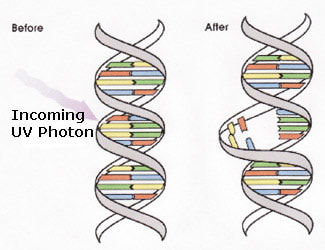
IN DEPTH INFORMATION ABOUT UV THAT FURTHER EXPLAINS THE PROPERTIES OF UVC STERILIZATION: All gases, liquids, and solids are made up of elements. The fundamental building blocks of elements are atoms, which in turn are made of electrons, neutrons and protons..., all held together by electronic attraction. This is referred to as polarity, the principle that positive and negative poles attract and remain bound together based upon the strength of that attraction. There are over 100 elements known in our universe. It is the elements that form compounds.
Elements combine to form gases, liquids or solids. For example, water is made of two molecules of hydrogen and one molecule of oxygen. Carbon dioxide is one molecule of carbon and two molecules of oxygen. These and all other combinations of elements are bound together by the force of attraction or polarity at the level of the atoms.
Organic compounds are the compounds of our consideration for the use of UVC irradiation are those structures that are organic in nature. Primarily it is the organic molecules that are the basis of disease, contamination, odors, etc. We need to understand these compounds so as to properly utilize UVC.
Organic compounds are carbon based. Life is determined by carbon based DNA and amino acid chains.
Carbon is not only found in "life," but a whole range of chemicals/molecules.
A number of useful organic compounds are made up of carbon, nitrogen, hydrogen, oxygen and traces of other elements. The most recognizable organic compound is based upon the carbon and hydrogen combination, or hydrocarbons. Plastics, petroleum products and gasoline are hydrocarbons. Hydrocarbon Organic compounds tend to break down or decay faster than non-organic. The decaying process means hydrogen and carbon molecules separate.
For example, if the plastic (organic) in milk bottle is left in the sun for a couple of years, much of it will decay. Skin, hair, tissue (all organic) decays more rapidly. This also shows the effectiveness in UV Sterilization in removing oil based pollutants from an aquarium.
With the understanding that carbon is the building block of life (and more), we now need to look at the forces that will break down organic and carbon based contaminate molecules. In short, a photochemical process, initiated by short-wave ultraviolet can do this. Short-Wave Ultraviolet we all accept but don't understand the damaging effects of x-ray and gamma ray radiation.
Why isn't visible light as destructive on human cells or bacteria as x-ray and short-wave UV have been shown to be? X-ray, gamma, ultraviolet, infrared and visible light energy all fit in a category called "electromagnetic" energy. They all have the same characteristic "lazy S" energy wave, that travel at the speed of light. The light ray energy is called photons that oscillate, resulting in wave frequency. The difference in each type of wave energy is the wavelength, the distance across this wave.
By definition, the shorter the distance across the wave, the more powerful the wave will be. The difference in the wavelength determines how the wave affects its surroundings. It is this wavelength difference that allows short-wave x-ray to pass through walls, while longer-wave visible light cannot pass though the same material; short-wave ultraviolet and x-ray can destroy DNA in living microorganisms and breakdown organic material while visible light will not.
Nanometers: Measuring Light Energy All light energy is measured on a "nanometer" (nm) scale. Nanometer means one-billionth of a meter. The lower end of the scale has the shortest wavelength, and the upper the longest. Cosmic, gamma, x-rays and "C" band UV are all classified short-wave energy and also classified as ionizing radiation the whereas the individual photons have sufficient energy to ionize atoms.
Visible light is at middle ground, at 400-700 NM on the scale. Infrared light is in the upper end of the spectrum, running from about 800 to 1400 NM, and radio waves are longer yet in the 1400 to 2200 NM range. Reference: Aquarium Lighting
Ultraviolet light is toward the low end of this scale, from about 100 to 400 NM, with three categories, "A," "B" and "C." UV is beyond the range of visible light and cannot be seen. We only see evidence of its presence. Short-wave UV, called "C" band (100 – 280 NM) is known as UVC. Most C band radiation is screened from the sun before reaching the earth by the production of ozone in the upper atmosphere.
Useful UVC is entirely manmade, found in today's low-pressure UVC lamps. The most effective sterilizing range for UV is within the C bandwidth. This range is called the germicidal bandwidth. The ideal germicidal curve is considered 240 NM to 280 NM, with the most effective at 265 NM. With the initial exposure, UVC has properties that alter the cells of living tissue, particularly microbes. UVC radiation triggers the formation of peptide bonds between certain amino acids in the microbes DNA molecules.
This renders bacteria, viruses and molds harmless by robbing them of the ability to reproduce.
Most research points to a microwaves per second by cubic centimeter (mW/cm2) of 4,200 to 8,700 to destroy bacteria of their ability to reproduce. If the germ cells are exposed for longer periods, they start breaking down to the molecular level (carbon, oxygen, hydrogen, nitrogen ions, etc.).
UVC Germicidal Effectiveness Wave length - NM Relative germicidal effectiveness:
• 240 .62
• 245 .72
• 250 .90
• 255 1.03
• 260 1.12
• 265 1.15
• 270 1.08
• 257 .98
• 280 .87
• 285 .73
• 290 .60
While we do not know the exact microbicidal capacity of a UV Sterilizer, we do know the optimal wavelength for germicidal effectiveness is shown to be 265 NM. So, any application that utilizes as much 265nm UVC for the time period required to kill a given pathogen is what we seek to achieve.
This article may help more as per time period to kill a given pathogen (this is not well established):
• UVC, Watts, Microwatts, Joules, & Light Penetration
Elements combine to form gases, liquids or solids. For example, water is made of two molecules of hydrogen and one molecule of oxygen. Carbon dioxide is one molecule of carbon and two molecules of oxygen. These and all other combinations of elements are bound together by the force of attraction or polarity at the level of the atoms.
Organic compounds are the compounds of our consideration for the use of UVC irradiation are those structures that are organic in nature. Primarily it is the organic molecules that are the basis of disease, contamination, odors, etc. We need to understand these compounds so as to properly utilize UVC.
Organic compounds are carbon based. Life is determined by carbon based DNA and amino acid chains.
Carbon is not only found in "life," but a whole range of chemicals/molecules.
A number of useful organic compounds are made up of carbon, nitrogen, hydrogen, oxygen and traces of other elements. The most recognizable organic compound is based upon the carbon and hydrogen combination, or hydrocarbons. Plastics, petroleum products and gasoline are hydrocarbons. Hydrocarbon Organic compounds tend to break down or decay faster than non-organic. The decaying process means hydrogen and carbon molecules separate.
For example, if the plastic (organic) in milk bottle is left in the sun for a couple of years, much of it will decay. Skin, hair, tissue (all organic) decays more rapidly. This also shows the effectiveness in UV Sterilization in removing oil based pollutants from an aquarium.
With the understanding that carbon is the building block of life (and more), we now need to look at the forces that will break down organic and carbon based contaminate molecules. In short, a photochemical process, initiated by short-wave ultraviolet can do this. Short-Wave Ultraviolet we all accept but don't understand the damaging effects of x-ray and gamma ray radiation.
Why isn't visible light as destructive on human cells or bacteria as x-ray and short-wave UV have been shown to be? X-ray, gamma, ultraviolet, infrared and visible light energy all fit in a category called "electromagnetic" energy. They all have the same characteristic "lazy S" energy wave, that travel at the speed of light. The light ray energy is called photons that oscillate, resulting in wave frequency. The difference in each type of wave energy is the wavelength, the distance across this wave.
By definition, the shorter the distance across the wave, the more powerful the wave will be. The difference in the wavelength determines how the wave affects its surroundings. It is this wavelength difference that allows short-wave x-ray to pass through walls, while longer-wave visible light cannot pass though the same material; short-wave ultraviolet and x-ray can destroy DNA in living microorganisms and breakdown organic material while visible light will not.
Nanometers: Measuring Light Energy All light energy is measured on a "nanometer" (nm) scale. Nanometer means one-billionth of a meter. The lower end of the scale has the shortest wavelength, and the upper the longest. Cosmic, gamma, x-rays and "C" band UV are all classified short-wave energy and also classified as ionizing radiation the whereas the individual photons have sufficient energy to ionize atoms.
Visible light is at middle ground, at 400-700 NM on the scale. Infrared light is in the upper end of the spectrum, running from about 800 to 1400 NM, and radio waves are longer yet in the 1400 to 2200 NM range. Reference: Aquarium Lighting
Ultraviolet light is toward the low end of this scale, from about 100 to 400 NM, with three categories, "A," "B" and "C." UV is beyond the range of visible light and cannot be seen. We only see evidence of its presence. Short-wave UV, called "C" band (100 – 280 NM) is known as UVC. Most C band radiation is screened from the sun before reaching the earth by the production of ozone in the upper atmosphere.
Useful UVC is entirely manmade, found in today's low-pressure UVC lamps. The most effective sterilizing range for UV is within the C bandwidth. This range is called the germicidal bandwidth. The ideal germicidal curve is considered 240 NM to 280 NM, with the most effective at 265 NM. With the initial exposure, UVC has properties that alter the cells of living tissue, particularly microbes. UVC radiation triggers the formation of peptide bonds between certain amino acids in the microbes DNA molecules.
This renders bacteria, viruses and molds harmless by robbing them of the ability to reproduce.
Most research points to a microwaves per second by cubic centimeter (mW/cm2) of 4,200 to 8,700 to destroy bacteria of their ability to reproduce. If the germ cells are exposed for longer periods, they start breaking down to the molecular level (carbon, oxygen, hydrogen, nitrogen ions, etc.).
UVC Germicidal Effectiveness Wave length - NM Relative germicidal effectiveness:
• 240 .62
• 245 .72
• 250 .90
• 255 1.03
• 260 1.12
• 265 1.15
• 270 1.08
• 257 .98
• 280 .87
• 285 .73
• 290 .60
While we do not know the exact microbicidal capacity of a UV Sterilizer, we do know the optimal wavelength for germicidal effectiveness is shown to be 265 NM. So, any application that utilizes as much 265nm UVC for the time period required to kill a given pathogen is what we seek to achieve.
This article may help more as per time period to kill a given pathogen (this is not well established):
• UVC, Watts, Microwatts, Joules, & Light Penetration
Other Uses for UV-C
OTHER USES FOR UVC: UVC Sterilization is not just limited to Aquarium and pond use. The use of UVC Sterilization is growing in popularity for use in foods and food preparation. UVC is also used for Indoor air quality as a means of purifying the air that we breath, removing harmful pathogens from the air.
Resources:
• UVC Absorption Terminology
• Basics of Ultraviolet Disinfection Technology
Resources:
• UVC Absorption Terminology
• Basics of Ultraviolet Disinfection Technology
Summary
This article is quite in depth, especially when one reads all the outside references/sources. However, if one conclusion/summation can be honestly be made by reading this article and the resources in their entirety, that is that although one CAN maintain a healthy aquarium or pond without a UV Sterilizer, adding this device greatly increases your chances of success and when one considers the price of many UV Sterilizers vs. the cost of replacing valuable fish, not to mention time, possible remedies, and heart ache it is often foolish to dismiss a UV Sterilizer as an irrelevant piece of equipment.
HERE IS AN INTERESTING ARTICLE AND QUOTE: I am posting this here to make readers aware that although UV Sterilizers are not essential, reasons such as this are poor ones to not have a UV. I was going thru Yahoo Answers, when I stumbled upon this gem: "Question: What is the best UV Sterilizer for use in a 20-gallon tank and where can I order one online? Answer: A UV sterilizer might do more harm than good to a 20-gallon tank. The UV sterilizer will do exactly that; sterilize almost everything that passes through it, bad bacteria and the good. In a 20-gallon tank your water will circulate so many times that you may be doing more harm than good. There are other ways of treating the water in your tank that might not be as extreme as a UV sterilizer." TOTALLY AND COMPLETELY WRONG!!!
This a good example where caution needs to exercised not just on the internet, but at many so-called aquarium stores staffed by un-knowledgeable aquarists. This person probably has never even used one to make such an outrageous statement such as this. Often many aquatic forums are staffed by after work aquarium “experts” who have not done their homework or worse, they are just plain dishonest. (This is not to say there are not a lot of good ones out there, but I have left a few after being flamed there by aquarists who knew nothing about which they were talking about).
I have spent 40+ years studying, reading, and doing tank by tank comparisons in my aquarium maintenance business. A UV should be properly installed such as not to high or slow a flow rate. Also, the watts per gallon have to be figured. Another often missed aspect is the Redox Potential which research shows having a balanced Redox Potential improves the water quality much the same way an antioxidant vitamin works. A UV sterilizer properly installed helps with this! Also, in studies with goldfish (a fish with a higher impact on bio load), I have found vastly healthier fish in aquariums with UVs versus without, with all other aspects such as feeding and filtration equal.
Another incorrect point was about the “good and bad” bacteria. Aeromonas bacteria are common in most all aquariums and pond they are only “bad” when they become pathogenic due to an injured or weak fish, or very common, when water conditions are poor. “Good” bacteria such aerobic nitrifying bacteria can be “bad” when there is a bacterial bloom, as they rob oxygen from the fish, weakening fish even more for other pathogens. In both scenarios, UV Sterilizers can help control.
HERE IS AN INTERESTING ARTICLE AND QUOTE: I am posting this here to make readers aware that although UV Sterilizers are not essential, reasons such as this are poor ones to not have a UV. I was going thru Yahoo Answers, when I stumbled upon this gem: "Question: What is the best UV Sterilizer for use in a 20-gallon tank and where can I order one online? Answer: A UV sterilizer might do more harm than good to a 20-gallon tank. The UV sterilizer will do exactly that; sterilize almost everything that passes through it, bad bacteria and the good. In a 20-gallon tank your water will circulate so many times that you may be doing more harm than good. There are other ways of treating the water in your tank that might not be as extreme as a UV sterilizer." TOTALLY AND COMPLETELY WRONG!!!
This a good example where caution needs to exercised not just on the internet, but at many so-called aquarium stores staffed by un-knowledgeable aquarists. This person probably has never even used one to make such an outrageous statement such as this. Often many aquatic forums are staffed by after work aquarium “experts” who have not done their homework or worse, they are just plain dishonest. (This is not to say there are not a lot of good ones out there, but I have left a few after being flamed there by aquarists who knew nothing about which they were talking about).
I have spent 40+ years studying, reading, and doing tank by tank comparisons in my aquarium maintenance business. A UV should be properly installed such as not to high or slow a flow rate. Also, the watts per gallon have to be figured. Another often missed aspect is the Redox Potential which research shows having a balanced Redox Potential improves the water quality much the same way an antioxidant vitamin works. A UV sterilizer properly installed helps with this! Also, in studies with goldfish (a fish with a higher impact on bio load), I have found vastly healthier fish in aquariums with UVs versus without, with all other aspects such as feeding and filtration equal.
Another incorrect point was about the “good and bad” bacteria. Aeromonas bacteria are common in most all aquariums and pond they are only “bad” when they become pathogenic due to an injured or weak fish, or very common, when water conditions are poor. “Good” bacteria such aerobic nitrifying bacteria can be “bad” when there is a bacterial bloom, as they rob oxygen from the fish, weakening fish even more for other pathogens. In both scenarios, UV Sterilizers can help control.
Videos
|
|
|
|
|
|
|
|
|
|
|