

Aquarium Ich Disease - Ichthyophthirius Multifilis & Cryptocaryon in Fish
Treatment | Identification | Life Cycle
Treatment | Identification | Life Cycle
Overview
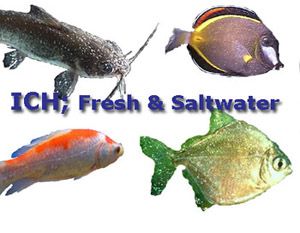
This includes general information about both Ichthyophthirius (freshwater) & Cryptocaryon (saltwater)
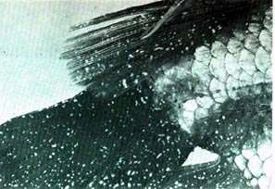
Ich, also called white spot disease, is one of the most common protozoan infections affecting aquarium and pond fish. The scientific name for freshwater ich is “Ichthyophthirius multifilis". The marine protozoan causing ich is Cryptocaryon irritants (for more information about Cryptocaryon, please scroll towards the bottom of this article). Both organisms cause whitish spots, called “cysts”, to appear on the bodies and fins of the infested fishes.
Ich, also called white spot disease, is one of the most common protozoan infections affecting aquarium and pond fish. The scientific name for freshwater ich is “Ichthyophthirius multifilis". The marine protozoan causing ich is Cryptocaryon irritants (for more information about Cryptocaryon, please scroll towards the bottom of this article). Both organisms cause whitish spots, called “cysts”, to appear on the bodies and fins of the infested fishes.
As common as this disease is, there is also a lot of misunderstanding and often down right misinformation. Stress is correctly recognized as a major factor in ich infestation outbreaks, however causes of this stress are not always recognized.
Here are a few causes of stress that makes it easier for an ich infestation to take hold (first commonly known stressors):
• Sudden drops in temperature.
• Stress caused by transfer of a fish from one tank to another.
• Stress from other fish chasing or bothering another.
• Stress from high ammonia/nitrites.
Even Stress from long term nitrate levels over 40 ppm increases the incidences of Ich and lengthens time of treatment. Equally important stressors that are often forgotten: Stress from improper electrolytes (resulting in poor osmoregulation in fish); this is a very important stressor that is easily corrected but often forgotten.
For more information, please see these links:
• Aquarium Chemistry; Proper KH/GH, why Calcium and Electrolytes are important.
• Proper Osmotic Function/Electrolytes
• Stress from poor immunity caused by poor diet and poor Redox.
Further Information:
• Proper Fish Nutrition
• Aquarium Redox Potential, Oxidation, Reduction
Please read on for more in depth information on freshwater and saltwater Ich that is gathered from current research AND years on controlled studies on my part.
For Marine Ich, please read the *Diagnosis, *Life Cycle, & *Prevention Section for useful information that still applies to Cryptocaryon, then I recommend reading the more specific information about Marine Ich further in this article.
Here are a few causes of stress that makes it easier for an ich infestation to take hold (first commonly known stressors):
• Sudden drops in temperature.
• Stress caused by transfer of a fish from one tank to another.
• Stress from other fish chasing or bothering another.
• Stress from high ammonia/nitrites.
Even Stress from long term nitrate levels over 40 ppm increases the incidences of Ich and lengthens time of treatment. Equally important stressors that are often forgotten: Stress from improper electrolytes (resulting in poor osmoregulation in fish); this is a very important stressor that is easily corrected but often forgotten.
For more information, please see these links:
• Aquarium Chemistry; Proper KH/GH, why Calcium and Electrolytes are important.
• Proper Osmotic Function/Electrolytes
• Stress from poor immunity caused by poor diet and poor Redox.
Further Information:
• Proper Fish Nutrition
• Aquarium Redox Potential, Oxidation, Reduction
Please read on for more in depth information on freshwater and saltwater Ich that is gathered from current research AND years on controlled studies on my part.
For Marine Ich, please read the *Diagnosis, *Life Cycle, & *Prevention Section for useful information that still applies to Cryptocaryon, then I recommend reading the more specific information about Marine Ich further in this article.
Diagnosis
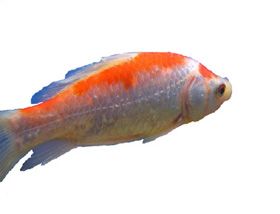
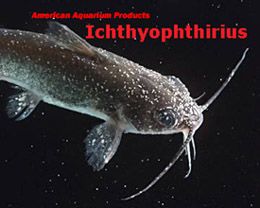
The usual way of diagnosing ich is by close observation of the infected fish. The presence of small, (.5 to 1.0 mm) white dots (kind of like salt) scattered about on the fishes' skin is an indicator. This is most easily observed around the tail or fins (especially if the fins are normally clear). You can also check this diagnosis by removing one of the spots and observing it under a microscope. Ich has a small micronucleus and a prominent crescent-shaped macronucleus.
Fish behavior: The fish will often hide in corners near the top of the aquarium to get oxygen, more so as the disease progresses. Sometimes the fish are observed bobbing up and down with their head above the surface, again in an attempt to get extra oxygen as ich infestations often start in the gills and this robs the fish of the ability to properly respirate. Fins are often held down and are clamped as well.
Darting and scratching is also sometimes exhibited (although this is more a symptom of velvet in Fresh water or oodinium infestations in salt water). As the infestation progresses, the fish become more listless, lose color, and often develop secondary fungal and/or bacterial infections.
Fish behavior: The fish will often hide in corners near the top of the aquarium to get oxygen, more so as the disease progresses. Sometimes the fish are observed bobbing up and down with their head above the surface, again in an attempt to get extra oxygen as ich infestations often start in the gills and this robs the fish of the ability to properly respirate. Fins are often held down and are clamped as well.
Darting and scratching is also sometimes exhibited (although this is more a symptom of velvet in Fresh water or oodinium infestations in salt water). As the infestation progresses, the fish become more listless, lose color, and often develop secondary fungal and/or bacterial infections.
Life Cycle
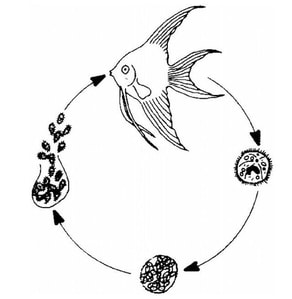
Ich is most often introduced into the aquarium or pond by adding new fish or aquatic plants. Ich is not air borne. Tomites which have only recently attached themselves to the host will not be readily visible. It is good aquarium and pond keeping practice to isolate any new fish for at least four days under close observation.
For tropical fish, maintain a temperature of around 75°- 80° F (24° C), depending upon fish kept. Check carefully for the presence of any tell-tale white spots appearing on the skin of the fish and treat them accordingly. If no white spots are observed on tropical fish within four days at this temperature, they can be moved from isolation. Remember, fish maintained at cooler water temperatures, such as pond fish, will require longer isolation times.
The visible stages of Ich are carried out within the host fishes' skin. The first stages are called trophozoites and are highly resistant to drug therapy. Trophozoites mature into trophonts and leave the host, falling to the bottom of the aquarium or pond. These mature trophonts release from 200 to 1,000 tomtits.
For tropical fish, maintain a temperature of around 75°- 80° F (24° C), depending upon fish kept. Check carefully for the presence of any tell-tale white spots appearing on the skin of the fish and treat them accordingly. If no white spots are observed on tropical fish within four days at this temperature, they can be moved from isolation. Remember, fish maintained at cooler water temperatures, such as pond fish, will require longer isolation times.
The visible stages of Ich are carried out within the host fishes' skin. The first stages are called trophozoites and are highly resistant to drug therapy. Trophozoites mature into trophonts and leave the host, falling to the bottom of the aquarium or pond. These mature trophonts release from 200 to 1,000 tomtits.
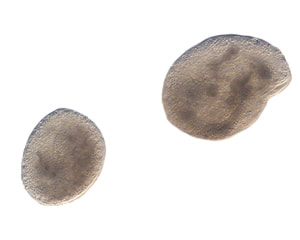
These tomites move about looking for a host, which they must find within 2 to 3 days at 75° F (24° C) or they may die. Cooler temperatures will lengthen this time. IT IS THIS FREE SWIMMING STAGE that is most vulnerable to treatment. It is important to note that during these intermediate stages Ich tomites may also attach themselves to plants and be accidentally introduced into an aquarium or pond along with the new plants. Once the tomite attaches to the host, it matures and the cycle begins anew.
The parasite forms a nodule under the skin or gill epithelium of the fish host. It constantly turns and moves under the skin, feeding on destroyed cells and body fluids. It continues to feed on the cells until it matures, causing damage to the skin tissue. This leads to osmotic stress, often resulting in secondary fungal or bacterial infections (especially infections caused by Aeromonas bacterium). It is this osmotic stress that is often exasperated due to poor aquarium water parameters, including low positive mineral ions such as calcium.
This is the reason many treatments fail, as osmotic function in the fish is poor and not addressed in treatment/prevention.
Reference:
• Osmotic Function in Fish
How Ich Kills: The general thought as to how ich kills fish is the epithelium (the top layer of the gill cells) reacts to an Ich invasion by growing thicker, the result of this is a restriction of the oxygen flow from the water to the blood in the gills. The lamellae (respiratory folds of the gills) also become deformed, reducing the proper transfer of oxygen. The sheer numbers of Ich trophozoites covering the gills will also cause a mechanical blockage of successful oxygen transfer. These conditions combine to stress the fish by hindering respiration.
The epithelial layer of the gill may also separate and cause loss of ESSENTIAL electrolytes, nutrients and fluids from the fish, making it difficult for the infected fish to regulate the water concentration in its body. Bacteria and fungus may also invade the fish more easily while it is stressed from the Ich infection.
References:
• Fungus (Saprolegnia) in Fish
• Aquarium Chemistry; Electrolytes
The parasite forms a nodule under the skin or gill epithelium of the fish host. It constantly turns and moves under the skin, feeding on destroyed cells and body fluids. It continues to feed on the cells until it matures, causing damage to the skin tissue. This leads to osmotic stress, often resulting in secondary fungal or bacterial infections (especially infections caused by Aeromonas bacterium). It is this osmotic stress that is often exasperated due to poor aquarium water parameters, including low positive mineral ions such as calcium.
This is the reason many treatments fail, as osmotic function in the fish is poor and not addressed in treatment/prevention.
Reference:
• Osmotic Function in Fish
How Ich Kills: The general thought as to how ich kills fish is the epithelium (the top layer of the gill cells) reacts to an Ich invasion by growing thicker, the result of this is a restriction of the oxygen flow from the water to the blood in the gills. The lamellae (respiratory folds of the gills) also become deformed, reducing the proper transfer of oxygen. The sheer numbers of Ich trophozoites covering the gills will also cause a mechanical blockage of successful oxygen transfer. These conditions combine to stress the fish by hindering respiration.
The epithelial layer of the gill may also separate and cause loss of ESSENTIAL electrolytes, nutrients and fluids from the fish, making it difficult for the infected fish to regulate the water concentration in its body. Bacteria and fungus may also invade the fish more easily while it is stressed from the Ich infection.
References:
• Fungus (Saprolegnia) in Fish
• Aquarium Chemistry; Electrolytes
Does Ich Lay Dormant
Ich is NOT always present in an aquarium, despite many claims to the contrary which is sometimes used to cover up for poor quality stock. I have conducted tests (and read others) where I killed off any Ich (if there was any depending on the control group) and then subjected the fish to many stressors that commonly bring on Ich such as sudden temperature drops with NO resulting Ich outbreaks.
It is important to note that the Ich protozoan cannot live outside water and if dried, its cell wall would collapse permanently destroying this single cell parasite, so this point also makes migration of Ich from anything other than transport via infected fish or similar water transfer impossible. This also goes for marine Ich (Cryptocaryon) which I almost never had problems within tanks where all fish were carefully added and there were no previous outbreaks.
Another key point is a common way to treat Ich, in particular Marine Ich (Cryptocaryon) is to leave an aquarium without fish for 6-8 weeks since it will eventually die out and is ONLY introduced to aquariums.
SeaChem Tech support also points this out: "Generally ich can lay dormant for as long as 3 weeks but there have been many cases where it was dormant for as long as 6 weeks. Some of this depends on the temperature, keeping it high will help quicken the life cycle." Reference: SeaChem Support; Paragard, ick, water change.
Test Method:
Group 1: I used two aquariums as control aquariums where I started the bio cycle using the fish food method so as to eliminate the slight chance of Ich introduction via a media swap method (one tank was started from empty, the other was bleached prior to start). Fish that had been healthy for many months were used as the control group test fish, and yes this is the weak link, but I feel confident based on baths performed and results that there was no Ich introduction with these fish.
Group 2: One more tank that was used was already running and I treated it with several treatments of Aquatronics Super Ich Plus (Malachite Green/ Quinine Hydrochloride; this product is no longer available) to kill potential Ich parasites.
Group 3: Four more established aquariums were used where no pre-treatment was used but had ich at a previous time and had been chemically treated, one a mild treatment with Kordon Rid Ich and the other three with Super Ich Plus.
Group 4: Was a tank that was also established with no pre-treatment but also had a previous Ich infestation that was treated via the heat method.
After subjecting these tanks to stressors that included in ALL tanks a drop in temperature from 78 F to 68 F AND heavy bio load stressor fish food and filter removal so as to spike ammonia (approximately 2-3 ppm if my memory serves me correctly, as I did not write this number down);
Results:
Group 1: No Ich outbreaks.
Group 2: No Ich outbreaks.
Group 3: One outbreak in one of the Super Ich groups (none in the other two) and a major outbreak in the Rid Ich group.
Group 4: A minor outbreak of Ich.
“SeaChem ParaGuard” and the stronger "Super Ich Plus" are comparable products (ParaGuard being slightly safer for delicate fish while the AAP Super Ich Plus is stronger and is generally the better choice when available from AAP). I also did not use Medicated Wonder Shells in this experiment, but based on subjective use I would expect good results.
Product Resources:
• ParaGuard Ich Treatment from AAP
• AAP Professional Treatments; Super Ich Plus
I have no firm evidence of how Ich can lie dormant, my anecdotal thoughts here are that the trophozoites (which are the most drug resistant, except for bleach, bare tank) can somehow lie dormant until conditions are right, whereas the tomtit stage cannot live more than a few days without a host.
It is important to note that the Ich protozoan cannot live outside water and if dried, its cell wall would collapse permanently destroying this single cell parasite, so this point also makes migration of Ich from anything other than transport via infected fish or similar water transfer impossible. This also goes for marine Ich (Cryptocaryon) which I almost never had problems within tanks where all fish were carefully added and there were no previous outbreaks.
Another key point is a common way to treat Ich, in particular Marine Ich (Cryptocaryon) is to leave an aquarium without fish for 6-8 weeks since it will eventually die out and is ONLY introduced to aquariums.
SeaChem Tech support also points this out: "Generally ich can lay dormant for as long as 3 weeks but there have been many cases where it was dormant for as long as 6 weeks. Some of this depends on the temperature, keeping it high will help quicken the life cycle." Reference: SeaChem Support; Paragard, ick, water change.
Test Method:
Group 1: I used two aquariums as control aquariums where I started the bio cycle using the fish food method so as to eliminate the slight chance of Ich introduction via a media swap method (one tank was started from empty, the other was bleached prior to start). Fish that had been healthy for many months were used as the control group test fish, and yes this is the weak link, but I feel confident based on baths performed and results that there was no Ich introduction with these fish.
Group 2: One more tank that was used was already running and I treated it with several treatments of Aquatronics Super Ich Plus (Malachite Green/ Quinine Hydrochloride; this product is no longer available) to kill potential Ich parasites.
Group 3: Four more established aquariums were used where no pre-treatment was used but had ich at a previous time and had been chemically treated, one a mild treatment with Kordon Rid Ich and the other three with Super Ich Plus.
Group 4: Was a tank that was also established with no pre-treatment but also had a previous Ich infestation that was treated via the heat method.
After subjecting these tanks to stressors that included in ALL tanks a drop in temperature from 78 F to 68 F AND heavy bio load stressor fish food and filter removal so as to spike ammonia (approximately 2-3 ppm if my memory serves me correctly, as I did not write this number down);
Results:
Group 1: No Ich outbreaks.
Group 2: No Ich outbreaks.
Group 3: One outbreak in one of the Super Ich groups (none in the other two) and a major outbreak in the Rid Ich group.
Group 4: A minor outbreak of Ich.
“SeaChem ParaGuard” and the stronger "Super Ich Plus" are comparable products (ParaGuard being slightly safer for delicate fish while the AAP Super Ich Plus is stronger and is generally the better choice when available from AAP). I also did not use Medicated Wonder Shells in this experiment, but based on subjective use I would expect good results.
Product Resources:
• ParaGuard Ich Treatment from AAP
• AAP Professional Treatments; Super Ich Plus
I have no firm evidence of how Ich can lie dormant, my anecdotal thoughts here are that the trophozoites (which are the most drug resistant, except for bleach, bare tank) can somehow lie dormant until conditions are right, whereas the tomtit stage cannot live more than a few days without a host.
Prevention
As in many parasite caused fish diseases the fish may need to be stressed due to changes in environment, poor water conditions, and/or stress from other fish to be susceptible to the parasite (this is not to say a perfectly healthy fish cannot get ich, only that often a foothold in a stressed fish is the starting point). Also, the parasites must be present in the aquatic environment (ich is NOT air borne).
It is not unusual for an aquarium population to have a low level of ich infestation present but not be showing any signs of the disease. Then, once a new fish is placed into the system or a weak/stressed fish becomes the start point for an ich infestation gets a foot hold in the aquarium. Fish can sometimes carry the parasite and not actually be diseased. These carriers can shed the parasite into a new aquarium into which it is placed. If the fish in the new aquarium have never been exposed to the parasite, and they become stressed, they can develop the disease.
Put another way, with healthy fish, they can usually produce enough mucous to prevent the ich tomites from getting started on the fish, but once these tomites get a foot hold on a stressed fish, even the healthy fish get overwhelmed.
The health of an aquatic environment can play a major role in susceptibility to the ich parasites. High ammonia and nitrites severely stress a fish. Also, long term nitrates above 40-50 ppm in freshwater or 30 ppm in saltwater can weaken the immune system in fish. Calcium is also often forgotten as an essential to fish health (including soft water fish such as Discus). Without calcium, fish cannot carry out many osmotic functions and are more susceptible to disease, including ich infestations. In fact, I have found much quicker response to treatment when adequate calcium is present in freshwater aquariums.
For more information about Calcium and KH, please see this article:
• AQUARIUM CHEMISTRY; Including the importance of Calcium
A healthy, cycled aquarium (0 ammonia/nitrites; low nitrates) with a steady temperature and a GH above 100 ppm WITH CONSTANT positive mineral ion replenishment is less likely to develop ich, or when it does, a healthy aquarium will have a less serious and more easily treatable infestation. High DOC (dissolved organic compounds) can allow for a more serious infestation and hinder treatment by creating a less stable environment as to KH, pH, and poor Redox Balance, so a clean aquarium with low DOCs as well as good circulation is essential.
Further Reference:
• Aquarium Redox Balance
Before you begin any treatment, make sure your water parameters are correct, otherwise this may just worsen the situation and make treatments ineffective and/or poisonous:
• Ammonia - 0
• Nitrites - 0
• kH - 80 ppm or higher (depending on fish, marine much higher)
• GH – 100 ppm or often MUCH higher (again depending upon fish kept) for important mineral ions (electrolytes) along with CONSTANT mineral cation replenishment necessary during times of stress, especially an ich infestation.
I cannot emphasize more how important this constant mineral ion (Cation) replenishment for Ich prevention and treatment is!! My controlled tests, primarily with goldfish in the 1990s showed a 15-20% lower incidence of Ich when this is done. If you are having problems with ammonia, Prime is an excellent product for de-toxification of ammonia and nitrites. Prime only changes the electron number in ammonia (NH4 to NH3) making ammonia less toxic, but ammonia will still show in ammonia tests (except with the SeaChem Ammonia Alert).
Product Resources:
• Prime Water Conditioner from AAP
• Ammonia Alert, ONLY measures Toxic NH3
Changing 20% of your water before treatment dosing's is also helpful in an effective treatment.
A preventative fish bath (or quarantine if possible) is generally a good idea for new fish arrivals, even if the fish are from a known good source. With this bath for freshwater fish, I generally recommend salt (sodium chloride) at one teaspoon per gallon, AAP Bettamax (or Methylene Blue) at or double the recommended in tank dose recommended by the manufacturer. This bath should be for 30 minutes using the water the new fish arrived in along with a slow introduction of new tank water.
Use of a Medicated Wonder Shell is also advised when new fish are added for 10-14 days. If shrimp or other invertebrates are present, the Marine Medicated Wonder Shells which do not have copper can be used (however these are not as effective).
Product Resources:
• Medicated Mineral Block for Prevention
• AAP Super Ich Plus Aquarium Ich Treatment/Preventative
• ParaGuard Aquarium Ich Treatment/Preventative
• Metronidazole from American Aquarium Products
• Methylene Blue from American Aquarium Products
I strongly recommend reading this article for a more in depth discussion of Disease Prevention (which includes Ich prevention, quarantine, baths, etc.): Aquarium Disease Prevention. Following ALL steps in this article, even improved lighting can affect fish disease resistance!
Here is a specific Fish Bath reference article:
• Fish Baths/Dips for parasite/disease prevention
It is not unusual for an aquarium population to have a low level of ich infestation present but not be showing any signs of the disease. Then, once a new fish is placed into the system or a weak/stressed fish becomes the start point for an ich infestation gets a foot hold in the aquarium. Fish can sometimes carry the parasite and not actually be diseased. These carriers can shed the parasite into a new aquarium into which it is placed. If the fish in the new aquarium have never been exposed to the parasite, and they become stressed, they can develop the disease.
Put another way, with healthy fish, they can usually produce enough mucous to prevent the ich tomites from getting started on the fish, but once these tomites get a foot hold on a stressed fish, even the healthy fish get overwhelmed.
The health of an aquatic environment can play a major role in susceptibility to the ich parasites. High ammonia and nitrites severely stress a fish. Also, long term nitrates above 40-50 ppm in freshwater or 30 ppm in saltwater can weaken the immune system in fish. Calcium is also often forgotten as an essential to fish health (including soft water fish such as Discus). Without calcium, fish cannot carry out many osmotic functions and are more susceptible to disease, including ich infestations. In fact, I have found much quicker response to treatment when adequate calcium is present in freshwater aquariums.
For more information about Calcium and KH, please see this article:
• AQUARIUM CHEMISTRY; Including the importance of Calcium
A healthy, cycled aquarium (0 ammonia/nitrites; low nitrates) with a steady temperature and a GH above 100 ppm WITH CONSTANT positive mineral ion replenishment is less likely to develop ich, or when it does, a healthy aquarium will have a less serious and more easily treatable infestation. High DOC (dissolved organic compounds) can allow for a more serious infestation and hinder treatment by creating a less stable environment as to KH, pH, and poor Redox Balance, so a clean aquarium with low DOCs as well as good circulation is essential.
Further Reference:
• Aquarium Redox Balance
Before you begin any treatment, make sure your water parameters are correct, otherwise this may just worsen the situation and make treatments ineffective and/or poisonous:
• Ammonia - 0
• Nitrites - 0
• kH - 80 ppm or higher (depending on fish, marine much higher)
• GH – 100 ppm or often MUCH higher (again depending upon fish kept) for important mineral ions (electrolytes) along with CONSTANT mineral cation replenishment necessary during times of stress, especially an ich infestation.
I cannot emphasize more how important this constant mineral ion (Cation) replenishment for Ich prevention and treatment is!! My controlled tests, primarily with goldfish in the 1990s showed a 15-20% lower incidence of Ich when this is done. If you are having problems with ammonia, Prime is an excellent product for de-toxification of ammonia and nitrites. Prime only changes the electron number in ammonia (NH4 to NH3) making ammonia less toxic, but ammonia will still show in ammonia tests (except with the SeaChem Ammonia Alert).
Product Resources:
• Prime Water Conditioner from AAP
• Ammonia Alert, ONLY measures Toxic NH3
Changing 20% of your water before treatment dosing's is also helpful in an effective treatment.
A preventative fish bath (or quarantine if possible) is generally a good idea for new fish arrivals, even if the fish are from a known good source. With this bath for freshwater fish, I generally recommend salt (sodium chloride) at one teaspoon per gallon, AAP Bettamax (or Methylene Blue) at or double the recommended in tank dose recommended by the manufacturer. This bath should be for 30 minutes using the water the new fish arrived in along with a slow introduction of new tank water.
Use of a Medicated Wonder Shell is also advised when new fish are added for 10-14 days. If shrimp or other invertebrates are present, the Marine Medicated Wonder Shells which do not have copper can be used (however these are not as effective).
Product Resources:
• Medicated Mineral Block for Prevention
• AAP Super Ich Plus Aquarium Ich Treatment/Preventative
• ParaGuard Aquarium Ich Treatment/Preventative
• Metronidazole from American Aquarium Products
• Methylene Blue from American Aquarium Products
I strongly recommend reading this article for a more in depth discussion of Disease Prevention (which includes Ich prevention, quarantine, baths, etc.): Aquarium Disease Prevention. Following ALL steps in this article, even improved lighting can affect fish disease resistance!
Here is a specific Fish Bath reference article:
• Fish Baths/Dips for parasite/disease prevention
Treatments
FIRST, before any aquarium Ich treatment it is important to know all the steps as often treatment is much more than dumping medication, adding salt, or turning up the heat in an aquarium as has already been outlined in this article.
Please read this article before ANY aquarium treatment regimen:
• Fish Diseases | How to Treat Sick Fish
I will now cover several different treatment methods, and although I may seem to promote one over another, I would like to stress that many experienced aquarists will have a method that works best for them and their types of fish. What I do want to stress is often many aquarium keepers will make statements that one method will not work or that their method is best when in fact not all conditions are equal (apples to apples, not apples to oranges).
What I am getting at is, if for example your aquarium has high DOC, is acidic and has poor mineral levels, your treatment with medications such as Malachite Green will likely not do well. By the same token, the heat method is not a good choice for a tank with poor circulation, a high bio load, and especially with heat sensitive fish. While under the right conditions (especially with many heat tolerant South American Species) the heat method may be a good choice.
I have performed MANY true scientific tests (which involved control groups and testing each method under the SAME conditions), so my results and comments below are based on these tests, not anecdotal results from different aquariums.
It is also important to note that regardless of which treatment method you choose, the temperature of the aquarium or pond will affect the outcome since the ich lifecycle is sped up by warmer temperatures, which is why even if medications are used it is often a good idea to bring up the temperature at least a few degrees (say to 80 F) even if you are not using the “heat method”.
However, be careful NOT to combine different methods thinking that if one way is good, 2 or 3 combined methods are best. As an example, raising the temperature to 86F can emphasize the side effects of many chemical and even organic treatments and actually make these treatments more toxic and make secondary infections (especially Columnaris) much more likely.
Another important note regardless of method used, is to treat long enough to kill the FULL lifestyle of the Parasite. Even many of the effective treatments will often need to be treated for at least 10-14 days (sometimes everyday with small water changes before each treatment). This where “Medicated Wonder Shells” shine in that although they are not the strongest medicated treatment, they are great for follow up after using a stronger medication such as Quick Cure.
Even with the heat method and other non-medication treatment, please keep in mind the life cycle of Ich and keep the treatment going long enough to break the life cycle, not just get rid of the “White Spot”.
Product Resource:
• Medicated Wonder Shells; ONLY available at AAP
Finally, I will state ANY method will be more effective if your water parameters are the best that they can be, which includes ammonia, nitrites, nitrates, and even GH. This is for important calcium, magnesium, and other minerals necessary for correct osmoregulation of the fish. Good circulation and filtration are also important as well.
Please read this article before ANY aquarium treatment regimen:
• Fish Diseases | How to Treat Sick Fish
I will now cover several different treatment methods, and although I may seem to promote one over another, I would like to stress that many experienced aquarists will have a method that works best for them and their types of fish. What I do want to stress is often many aquarium keepers will make statements that one method will not work or that their method is best when in fact not all conditions are equal (apples to apples, not apples to oranges).
What I am getting at is, if for example your aquarium has high DOC, is acidic and has poor mineral levels, your treatment with medications such as Malachite Green will likely not do well. By the same token, the heat method is not a good choice for a tank with poor circulation, a high bio load, and especially with heat sensitive fish. While under the right conditions (especially with many heat tolerant South American Species) the heat method may be a good choice.
I have performed MANY true scientific tests (which involved control groups and testing each method under the SAME conditions), so my results and comments below are based on these tests, not anecdotal results from different aquariums.
It is also important to note that regardless of which treatment method you choose, the temperature of the aquarium or pond will affect the outcome since the ich lifecycle is sped up by warmer temperatures, which is why even if medications are used it is often a good idea to bring up the temperature at least a few degrees (say to 80 F) even if you are not using the “heat method”.
However, be careful NOT to combine different methods thinking that if one way is good, 2 or 3 combined methods are best. As an example, raising the temperature to 86F can emphasize the side effects of many chemical and even organic treatments and actually make these treatments more toxic and make secondary infections (especially Columnaris) much more likely.
Another important note regardless of method used, is to treat long enough to kill the FULL lifestyle of the Parasite. Even many of the effective treatments will often need to be treated for at least 10-14 days (sometimes everyday with small water changes before each treatment). This where “Medicated Wonder Shells” shine in that although they are not the strongest medicated treatment, they are great for follow up after using a stronger medication such as Quick Cure.
Even with the heat method and other non-medication treatment, please keep in mind the life cycle of Ich and keep the treatment going long enough to break the life cycle, not just get rid of the “White Spot”.
Product Resource:
• Medicated Wonder Shells; ONLY available at AAP
Finally, I will state ANY method will be more effective if your water parameters are the best that they can be, which includes ammonia, nitrites, nitrates, and even GH. This is for important calcium, magnesium, and other minerals necessary for correct osmoregulation of the fish. Good circulation and filtration are also important as well.
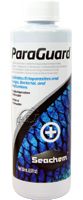
Medication Treatments: There are many ways to treat ich infestations in freshwater, less in saltwater, but not all treatments are equal or can be used for all types of fish or all aquatic environments. I will discuss the medication options I prefer to use in my maintenance business or in my personal aquariums first.
Also, many anecdotal aquarium keepers will comment that "Malachite Green killed their fish", when in reality it was how they used this chemical/product in low ph and under mineralized water and then falsely blame the medication. This is a VERY important aspect that is often forgotten or unknown; Malachite Green is much more toxic at lower pH (especially on the acid side of the pH algorithm).
Calcium is VERY important to buffer this. Calcium also improves osmoregulation further lowering Malachite Green toxicity and improving effectiveness.
See this article:
• Calcium, GH, KH, & Electrolytes
Although there are methods of Ich treatment that do not require traditional medications (such as heat, salt, even pepper), I recommend a quality Aquarium Ich medication if the infestation is moderate to severe (especially severe), if you are too busy to check your tank a few times per day (as the other methods such as heat takes better monitoring), and/or if your tank has a high bio load and low dissolved oxygen.
As noted in the previous sections of this article, low DOC (dissolved organic compounds), good circulation/bio filtration, proper mineralization (such as Calcium), make a big difference in effectiveness of ANY treatment.
Also, many anecdotal aquarium keepers will comment that "Malachite Green killed their fish", when in reality it was how they used this chemical/product in low ph and under mineralized water and then falsely blame the medication. This is a VERY important aspect that is often forgotten or unknown; Malachite Green is much more toxic at lower pH (especially on the acid side of the pH algorithm).
Calcium is VERY important to buffer this. Calcium also improves osmoregulation further lowering Malachite Green toxicity and improving effectiveness.
See this article:
• Calcium, GH, KH, & Electrolytes
Although there are methods of Ich treatment that do not require traditional medications (such as heat, salt, even pepper), I recommend a quality Aquarium Ich medication if the infestation is moderate to severe (especially severe), if you are too busy to check your tank a few times per day (as the other methods such as heat takes better monitoring), and/or if your tank has a high bio load and low dissolved oxygen.
As noted in the previous sections of this article, low DOC (dissolved organic compounds), good circulation/bio filtration, proper mineralization (such as Calcium), make a big difference in effectiveness of ANY treatment.
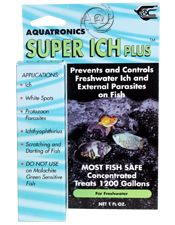
For freshwater, a Malachite Green/Formalin or Malachite Green/Quinine Hydrochloride combination are generally the most effective for moderate to severe infestations. “Quick Cure” was a good product with the first combination of medications (Malachite Green/Formalin), and from my test is one of the strongest with a wider range of parasites treated as well. Unfortunately, this product has been discontinued.
However, Super Ich Plus has been brought back by AAP and now is the strongest available combination, using a unique Malachite Green/Quinine Hydrochloride combination. It is noteworthy that Quinine Hydrochloride makes Super Ich Plus a more broader spectrum single cell ectoparasite treatment. If you are having trouble effecting a cure for Ich, besides the obvious looking into optimizing water parameters and checking for secondary infection, this is the treatment you SHOULD BE USING! Super Ich Plus can be used at 1/2 dose with AAP Yellow Powder or AAP/SeaChem Sulfaplex/Sulfathiazole with sensitive fish or 1/4 dose with Medicated Wonder Shells as a follow up treatment.
As well, for best results (especially with Malachite Green sensitive fish), Super Ich Plus or any similar product that matter, should ALWAYS be proceeded by a water change 15-30 minutes prior to each treatment AND this water change should include the water conditioner; AAP Res-Q which adds a protective medicated slime coat consisting of Quinine Hydrochloride & Sulfamethazine is by far your best choice, not only to help fight Ich, but secondary infection too.
However, in many instances, another product: “AAP/SeaChem ParaGuard” is safer for sensitive fish such as Loaches or Cory Cats and my tests are showing ParaGuard to be a reasonably effective a treatment for moderate to severe Ich infestations, with little side effects when used properly.
ParaGuard can be combined with a Medicated Wonder Shell at ¼ to ½ dose as well, but caution should be used when such a combination is performed and this combination is generally not called for. What is more important is the use of the AAP Regular Wonder Shell with ANY freshwater Ich treatment since this product adds essential mineral Cations and buffers most chemical treatments making these not only safer, but more effective!!!
Whichever medications you chose, be aware that secondary infections are very common with Ich infestations, so small water changes prior to each treatment using AAP Res-Q (a professional water conditioner that provides a medicated slime coat), which along with AAP Furacyn or Triple Sulfa can help lower the chance of secondary infection (AAP Furacyn is strongly suggested when treating cold water fish).
In fact, as noted earlier in this article, Aeromonas, which has many symptoms from septicemia to pop eye is quite common, so taking ALL MEASURES to prevent & possible treat for this is important!
Reference:
• Aeromonas in Fish
Product Resources:
• Super Ich Plus from AAP
• Seachem ParaGuard Aquarium Ich Treatment from AAP
• AAP Wonder Shells; for improving water quality, effectiveness of Ich treatment
• AAP Yellow Powder
• AAP Sulfaplex/Sulfathiazole
Malachite Green by itself is also effective in moderate infestations. Reference: Aquatic Medication Information, Chemical Treatments; Malachite Green.
Other medications that can work for freshwater Ich include Copper Sulfate as found in “SeaChem Cupramine”, Quinine Sulfate or Hydrochloride and products that contain Acriflavin, although Acriflavin is a mild Ich treatment and is better suited to Velvet and Fungal treatments, but it does work reasonably well with less toxicity for delicate fish when combine with Malachite Green. An example of a moderately strong, relatively safe Ich treatment that combines Malachite Green and Acriflavin is Tetra/Jungle Ich Guard.
Correct levels: The therapeutic range for Cupramine is 0.35-0.5mg/L (.35 - .50 ppm). Reference:
• Dosing Cupramine
• How to read the API copper test kit Color Card
Product Resources:
• Cupramine, Medication for Ick and other External Parasites from AAP
Reference:
• Aquarium Medications, Information; Quinine Sulfate
However, Super Ich Plus has been brought back by AAP and now is the strongest available combination, using a unique Malachite Green/Quinine Hydrochloride combination. It is noteworthy that Quinine Hydrochloride makes Super Ich Plus a more broader spectrum single cell ectoparasite treatment. If you are having trouble effecting a cure for Ich, besides the obvious looking into optimizing water parameters and checking for secondary infection, this is the treatment you SHOULD BE USING! Super Ich Plus can be used at 1/2 dose with AAP Yellow Powder or AAP/SeaChem Sulfaplex/Sulfathiazole with sensitive fish or 1/4 dose with Medicated Wonder Shells as a follow up treatment.
As well, for best results (especially with Malachite Green sensitive fish), Super Ich Plus or any similar product that matter, should ALWAYS be proceeded by a water change 15-30 minutes prior to each treatment AND this water change should include the water conditioner; AAP Res-Q which adds a protective medicated slime coat consisting of Quinine Hydrochloride & Sulfamethazine is by far your best choice, not only to help fight Ich, but secondary infection too.
However, in many instances, another product: “AAP/SeaChem ParaGuard” is safer for sensitive fish such as Loaches or Cory Cats and my tests are showing ParaGuard to be a reasonably effective a treatment for moderate to severe Ich infestations, with little side effects when used properly.
ParaGuard can be combined with a Medicated Wonder Shell at ¼ to ½ dose as well, but caution should be used when such a combination is performed and this combination is generally not called for. What is more important is the use of the AAP Regular Wonder Shell with ANY freshwater Ich treatment since this product adds essential mineral Cations and buffers most chemical treatments making these not only safer, but more effective!!!
Whichever medications you chose, be aware that secondary infections are very common with Ich infestations, so small water changes prior to each treatment using AAP Res-Q (a professional water conditioner that provides a medicated slime coat), which along with AAP Furacyn or Triple Sulfa can help lower the chance of secondary infection (AAP Furacyn is strongly suggested when treating cold water fish).
In fact, as noted earlier in this article, Aeromonas, which has many symptoms from septicemia to pop eye is quite common, so taking ALL MEASURES to prevent & possible treat for this is important!
Reference:
• Aeromonas in Fish
Product Resources:
• Super Ich Plus from AAP
• Seachem ParaGuard Aquarium Ich Treatment from AAP
• AAP Wonder Shells; for improving water quality, effectiveness of Ich treatment
• AAP Yellow Powder
• AAP Sulfaplex/Sulfathiazole
Malachite Green by itself is also effective in moderate infestations. Reference: Aquatic Medication Information, Chemical Treatments; Malachite Green.
Other medications that can work for freshwater Ich include Copper Sulfate as found in “SeaChem Cupramine”, Quinine Sulfate or Hydrochloride and products that contain Acriflavin, although Acriflavin is a mild Ich treatment and is better suited to Velvet and Fungal treatments, but it does work reasonably well with less toxicity for delicate fish when combine with Malachite Green. An example of a moderately strong, relatively safe Ich treatment that combines Malachite Green and Acriflavin is Tetra/Jungle Ich Guard.
Correct levels: The therapeutic range for Cupramine is 0.35-0.5mg/L (.35 - .50 ppm). Reference:
• Dosing Cupramine
• How to read the API copper test kit Color Card
Product Resources:
• Cupramine, Medication for Ick and other External Parasites from AAP
Reference:
• Aquarium Medications, Information; Quinine Sulfate
For Scale-less or Delicate Fish, use Malachite Green at a quarter to half dose along with SulfaPlex/Sulfathiazole at full strength. The safest treatment for scale-less fish is Quinine Hydrochloride, but this is less effective than other medication treatments, although it can be combined with half or quarter strength Malachite Green for more effectiveness.
Another point as to Triple Sulfa is, even with less sensitive fish such as Goldfish; the use of Triple Sulfa still buffers the harsh effects of Malachite Green and more importantly for fish that are not that sensitive to Malachite Green and are kept in a healthy KH and properly mineralized aquarium the use of Triple Sulfa is excellent for fin damage that is a common secondary infection with Ich outbreaks! The use of Regular Wonder shells are also useful for the mineral cations necessary for buffering and disease prevention.
Product Resources:
• SeaChem Sulfaplex/Sulfathiazole from AAP
• Wonder Shells; Regular & Medicated, only available from AAP
With sensitive fish (such as Clown Loaches) it is imperative that you are careful with most ich treatments. Malachite Green is more dangerous to these fish, however if used in a buffered form such as ParaGuard or Medicated Wonder Shells it is less toxic.
As noted earlier, you may also use Triple Sulfa at the same time to further buffer the Malachite Green. I and many of my colleagues have used this method considerably for Clown Loaches, Elephant Nose, etc. with good results and this is my preferred method for moderate to severe ich infestations involving scaleless fish such Ghost Knives or Elephant Nose.
It is also noteworthy that Triple Sulfa tends to be the best treatment for Septicemia, which commonly follows serious Ich infections, especially in Anabantidae Family of fish (which includes Gouramis, Paradise Fish, Bettas); so treatment with Triple Sulfa, even before treatment of Ich is finished, may be advised.
Reference:
• Aeromonas as a cause of Septicemia in Fish
Treatment Duration, Follow-Up: Any of these treatments should be followed for 10-14 days (with small 10-20% water changes if at all possible between each treatment). A Medicated Wonder Shell can be used for a week or two instead of stronger medications once the main infestation has cleared, but a follow up treatment is still required.
It should be noted that sodium chloride (salt) can be combined with all these recommended treatments at a rate of 1 teaspoon per gallon for many fish and 1 tablespoon per 5 gallons for more salt sensitive fish such as Catfish, Tetras, Clown Loaches. This will help most all medications be more effective, in part by adding electrolytes that improve the “slime coat” so as to help fish naturally resist Ich.
For further information about the use and safety of salt in freshwater aquariums, please reference this article: "Salt in Freshwater Aquariums".
Malachite Green is generally safe (so long as it is zinc free) for shrimp, crabs, & snails. Be careful with Copper, and prolonged exposure to Methylene Blue. Please see this article for more in depth medication information: "Aquarium Medications and Treatments; How they work".
For severe infections (especially with sensitive fish such as Clown Loaches) I would recommend a bath in Methylene Blue for as many fish as I could capture, especially the really sick fish that tend die quicker from ich such as Clown Loaches again. This bath will also help with the main reason ich kills (in my experience), depletion of oxygen from damage to the gills.
Product Resources:
• MethyBlu PREMIUM Methylene Blue, from AAP (Recommended)
• Methylene Blue, from AAP
Methylene blue is a hemoglobin transfer agent. To prepare this bath I use 1 teaspoon 2.303% solution per 5 gallons in a bath of aquarium water from the tank the fish you wish to treat came from, I usually use about a ½ gallon of water, however you may use less. I also recommend about one teaspoon of salt (Sodium Chloride) per gallon of bath water to further aid the fish via production of more mucous, and yes Clown Loaches CAN tolerate some salt, just not a lot.
Measurement of the Methylene Blue does not need to be precise as this bath should be used for about 30 minutes. Make sure you keep the water in a warm area, as in a cold room the water temperature can drop rapidly which would stress the fish. Do NOT pour this water back into your display aquarium when finished. This can be performed twice per day. After this bath I would also suggest a 3-minute dip for most dire of fish in a salt solution of about 1.012 specific gravity, this will rupture some of the Trophozoites on the fish.
Finally, due not confuse this bath with a preventative bath that should also contain ParaGuard or Metronidazole at full strength in addition to the Methylene Blue.
For further, more in depth information about highly recommended fish baths (for moderate to severe ich infestations), please read this article: Fish Baths/Dips for supplemental of parasite infestations.
For mild to moderate infestations, I also use “Medicated Wonder Shells” as these products have Malachite Green (lower levels safe for most delicate fish), Acriflavin, and small amounts of methylene blue (not enough to affect bio filtration) and copper. What is best about these Medicated Wonder Shells is that they also add electrolytes, calcium and maintain a healthy GH and even more important mineral cation levels, which is VERY IMPORTANT for treatment with Malachite Green as this medication is more toxic at lower pH and in low GH, Calcium, & cation levels.
Medicated Wonder Shells are great for use in tanks with poor or no filtration such as many betta tanks, for office or other aquariums that cannot be monitored, tanks that are low in calcium, or in cases for aquariums that have new fish or past Ich problems as a preventative. As well, a Medicated Wonder Shell can be combined with a ¼ to ½ does of a stronger Ich medication such as ParaGuard for a more even medication delivery as well as the mineral cations that the Wonder Shell provides.
Product Resources:
• AAP ParaGuard Ich Treatment, from AAP
• Medicated Wonder Shell for Ich Treatment
One more treatment option is a hospital tank with a Sponge Filter and no gravel. Methylene Blue works well here, but so do ALL of the above treatments.
Product Resource:
• Premium High Bio Capacity Hydro Sponge Filters
A false assumption by armchair aquarists is the dangers of ich medications such as malachite green.
Yes this is a poison and can be more poisonous to scale-less fish, but many of these persons do not recognize the importance GH, KH and pH play in the treatment and toxicity of ich medications such as malachite green. Usually the pH or GH was too low and the medication gets blamed for poor water parameters.
At a GH below 100 ppm, you have too low of calcium and other essential electrolytes to aid in osmoregulation which is SO VERY important as to natural resistance to ich infestations. GH buffering is why the Medicated Wonder Shells are especially useful for delicate fish. Also a KH of at least 50 ppm will help to buffer the pH (which buffers the malachite green itself).
More should be read about the role KH, GH & Calcium plays even in soft water fish in this article:
Aquarium Chemistry; Why Calcium and Electrolytes are Important.
For more information about chemical ich treatments, their strengths and weaknesses, as well as debunking of some more myths, please read this article: Aquarium Treatments; Parasite and Chemical Treatments.
I will also note to the many different treatments currently available; many are similar Malachite Green/Formalin combinations, however not all are equal. One often recommended product is Kordon Rid Ich, which is very safe however in the MANY tests I have performed using this product it usually fails in moderate to severe infections so unless your fish are strong, the water conditions are good, the disease is mild or you have very sensitive fish such as Ghost Knives, I would not recommend this product.
As well, while I have found that the use of Rid Ich and other mild treatment methods might eventually end the Ich infestation temporarily, the Ich often bounces back later. Worse yet, is that many look at the safety of these mild treatments but fail to recognize that these mild treatments often allow secondary infections to get a foothold in the meantime. Aeromonas bacterium, often the cause of Septicemia & Pop-eye is a common secondary infection.
While I am certainly NOT saying using as safe a treatment as possible is a good idea, but there is a very important flip side that I have found via 1000s of observations & tests over that years and that is treating a more effective treatment that might be temporarily harsher, is long term the better way to go (this is part of the Redox balance equation)
Here is a quick review of two other potential chemical treatments for Freshwater Ich:
• Kordon Rid Ich: Very safe, but often poor effectiveness for moderate to severe infestations & may more readily allow secondary infections.
• Tetra/Jungle Ick Guard: reasonably safe product when proper water chemistry is kept, good effectiveness for mild infestations, only fair effectiveness for moderate to severe infestations.
• Other freshwater Ich treatment methods; Salt Method. Another method that can work is salt, possibly combined with heat. 1-3 teaspoons of salt is added per gallon of tank water added SLOWLY over 1-2 days (while watching fish' reaction) and the temperature is adjusted to 84-86 F. If this method is chosen you can use plain “Aquarium Salt” which is simply sodium chloride, water softener salt, or even marine salt (which is good for many freshwater fish due to other essential minerals, the exception might be the use with soft water preferring fish such as those from the Amazon Basin or SE Asia).
You need to add the salt slowly, watching for adverse reactions, especially with Catfish, loaches, and similar. I do NOT recommend this method with Elephant Nose, Ghost Knives or similar fish that use electrical signals for navigation). Continue treatment until ALL spots are gone and the CONTINUE treatment for another 3-5 days past this point.
I have tested many methods over the years, and I believe many aquarists use this method more under the assumption that is safer and even more effective when often it is neither (although under certain conditions with certain fish/invertebrates it can be safer). Salt is safe for most fish, but some fish such as elephant nose, Ghost Knives, as well as many catfish, Clown Loaches, etc. are salt sensitive (not as much as Elephant Nose) so I would be careful and not go past 2 teaspoons per gallon. Also, this method can take so long that the fish die of the ich infestation (I have affected a cure with salt, but is generally less effective, and research bears this out).
However, for serious ich infestations, salt by itself is often not enough. Under good water parameters and good circulation, I will admit that I have achieved good results with the salt method for mild to moderate ich infestation, however even then, in head-to-head controlled tests under the same conditions, medications such as ParaGuard or especially Super Ich Plus always worked faster with no side effects (especially when used with Triple Sulfa) when compared to salt.
I will also note as to salt treatments for ich infestations, I am not trying to knock this method for treatment among many more advanced aquarists, however I have seen many novices fail with this method more often than the medication methods.
My opinion as to why this happens is that most do not have the proper circulation needed, most also wait until the last minute when the salt method is even less effective, and often many just do not have the time to monitor conditions (which is where the Medicated Wonder Shells shine), and often this all boils down to an earlier point of mine and that is all things equal, my tests with the salt method come up short as compared to products such as AAP Super Ich Plus or ParaGuard when used in the correct water parameters that INCLUDE constant replenishment of mineral Cations!!!
It should also be noted that water with a higher salt content does not hold as much dissolved oxygen, so good circulation is important (as it is with any ich treatment).
For my article about how salt works in freshwater, please follow this link:
• Salt use in Freshwater Aquariums
Heat Only Method: This method is based on the theory (& study) that Ich cannot reproduce in temperatures over 85 F (30 C). This should be performed slowly at a rate no higher than 1-2 degrees Fahrenheit and proved ample circulation and filtration (such as air Stones and power heads). This method is often employed with the salt method, which often confuses many aquarists as to which method truly worked.
I do recommend this method over the salt method for Elephant Nose, Ghost Knives (& similar fish that use electrical signals for under water navigation), as well as fish such as Discus and other cichlids, or other fish that tolerate high temperatures well. In general, I have found better results with the pure heat method over the pure salt method. As with the salt method, you need to maintain the high temperatures at least 3-5 days beyond the disappearance of the last white spots.
Using a gravel vacuum for partial water changes every other day is also important for success of this method!
Due to very low oxygen levels in higher temperature aquariums, one should NOT combine this method with ANY chemical treatments which will often further deplete oxygen! Please note that dissolved oxygen greatly DECREASES at temperatures about 80 F (27 C), many fish are sensitive to this, especially fish from more salty or alkaline waters. You need to maintain a dissolved oxygen level between 5-7 ppm, under 3 ppm can be dangerous, especially with an ich infestation.
This method has its flaws and again is often over-rated based on false assumptions. One problem is that this method takes a lot of initial monitoring as temperatures are increased, which many busy aquarists cannot spare the time for, also in moderate to severe infestations the fish already have severely depleted blood oxygen levels due to the ich infestation and raising of the aquarium temperature can be the final nail in the coffin. I have found this especially true with fish that do not tolerate heat as well (such as many North American fish or other fish that naturally come from cooler waters).
A common flaw with the Heat method is that a opportunistic Columnaris infection may follow, since Columnaris is MUCH more virulent at higher temperatures, and with already weak fish, the heat then provides an open invitation for this disease! Reference: Columnaris in Fish.
In my tests with the heat method (mostly in the 1980s and 1990s when I had access to multiple aquariums in my maintenance business), I also found a higher incidence of Ich return with the heat method over the other ich treatments (used correctly WITH proper water parameters & with gravel vacuuming).
Another false assumption is that this method is safer than chemical treatments, as I just noted in my previous point this is not true, and the assumption of the dangers of medication is often based on misuse, the use of poor ich remedies, or poor water parameters such as calcium/pH levels which has an effect on many medications and the ich itself. This said, this method CAN BE a safe alternative to medications (as I am not trying to over sell the use of medications as often medications are overused in aquariums when changes in environment are more important) if you have the time, have fish that in particular respond well in high temperatures, or the infestation is low to possibly moderate.
Organic Treatments: My use and that of my colleagues in the aquarium maintenance business is fairly limited as to positive results with these types of ich treatments, however that is not to say that they cannot work and continued improvements by the makers of these products may yield more positive results in the future, so experimenting with these treatments for mild infestation may be worth your time.
Another point as to Triple Sulfa is, even with less sensitive fish such as Goldfish; the use of Triple Sulfa still buffers the harsh effects of Malachite Green and more importantly for fish that are not that sensitive to Malachite Green and are kept in a healthy KH and properly mineralized aquarium the use of Triple Sulfa is excellent for fin damage that is a common secondary infection with Ich outbreaks! The use of Regular Wonder shells are also useful for the mineral cations necessary for buffering and disease prevention.
Product Resources:
• SeaChem Sulfaplex/Sulfathiazole from AAP
• Wonder Shells; Regular & Medicated, only available from AAP
With sensitive fish (such as Clown Loaches) it is imperative that you are careful with most ich treatments. Malachite Green is more dangerous to these fish, however if used in a buffered form such as ParaGuard or Medicated Wonder Shells it is less toxic.
As noted earlier, you may also use Triple Sulfa at the same time to further buffer the Malachite Green. I and many of my colleagues have used this method considerably for Clown Loaches, Elephant Nose, etc. with good results and this is my preferred method for moderate to severe ich infestations involving scaleless fish such Ghost Knives or Elephant Nose.
It is also noteworthy that Triple Sulfa tends to be the best treatment for Septicemia, which commonly follows serious Ich infections, especially in Anabantidae Family of fish (which includes Gouramis, Paradise Fish, Bettas); so treatment with Triple Sulfa, even before treatment of Ich is finished, may be advised.
Reference:
• Aeromonas as a cause of Septicemia in Fish
Treatment Duration, Follow-Up: Any of these treatments should be followed for 10-14 days (with small 10-20% water changes if at all possible between each treatment). A Medicated Wonder Shell can be used for a week or two instead of stronger medications once the main infestation has cleared, but a follow up treatment is still required.
It should be noted that sodium chloride (salt) can be combined with all these recommended treatments at a rate of 1 teaspoon per gallon for many fish and 1 tablespoon per 5 gallons for more salt sensitive fish such as Catfish, Tetras, Clown Loaches. This will help most all medications be more effective, in part by adding electrolytes that improve the “slime coat” so as to help fish naturally resist Ich.
For further information about the use and safety of salt in freshwater aquariums, please reference this article: "Salt in Freshwater Aquariums".
Malachite Green is generally safe (so long as it is zinc free) for shrimp, crabs, & snails. Be careful with Copper, and prolonged exposure to Methylene Blue. Please see this article for more in depth medication information: "Aquarium Medications and Treatments; How they work".
For severe infections (especially with sensitive fish such as Clown Loaches) I would recommend a bath in Methylene Blue for as many fish as I could capture, especially the really sick fish that tend die quicker from ich such as Clown Loaches again. This bath will also help with the main reason ich kills (in my experience), depletion of oxygen from damage to the gills.
Product Resources:
• MethyBlu PREMIUM Methylene Blue, from AAP (Recommended)
• Methylene Blue, from AAP
Methylene blue is a hemoglobin transfer agent. To prepare this bath I use 1 teaspoon 2.303% solution per 5 gallons in a bath of aquarium water from the tank the fish you wish to treat came from, I usually use about a ½ gallon of water, however you may use less. I also recommend about one teaspoon of salt (Sodium Chloride) per gallon of bath water to further aid the fish via production of more mucous, and yes Clown Loaches CAN tolerate some salt, just not a lot.
Measurement of the Methylene Blue does not need to be precise as this bath should be used for about 30 minutes. Make sure you keep the water in a warm area, as in a cold room the water temperature can drop rapidly which would stress the fish. Do NOT pour this water back into your display aquarium when finished. This can be performed twice per day. After this bath I would also suggest a 3-minute dip for most dire of fish in a salt solution of about 1.012 specific gravity, this will rupture some of the Trophozoites on the fish.
Finally, due not confuse this bath with a preventative bath that should also contain ParaGuard or Metronidazole at full strength in addition to the Methylene Blue.
For further, more in depth information about highly recommended fish baths (for moderate to severe ich infestations), please read this article: Fish Baths/Dips for supplemental of parasite infestations.
For mild to moderate infestations, I also use “Medicated Wonder Shells” as these products have Malachite Green (lower levels safe for most delicate fish), Acriflavin, and small amounts of methylene blue (not enough to affect bio filtration) and copper. What is best about these Medicated Wonder Shells is that they also add electrolytes, calcium and maintain a healthy GH and even more important mineral cation levels, which is VERY IMPORTANT for treatment with Malachite Green as this medication is more toxic at lower pH and in low GH, Calcium, & cation levels.
Medicated Wonder Shells are great for use in tanks with poor or no filtration such as many betta tanks, for office or other aquariums that cannot be monitored, tanks that are low in calcium, or in cases for aquariums that have new fish or past Ich problems as a preventative. As well, a Medicated Wonder Shell can be combined with a ¼ to ½ does of a stronger Ich medication such as ParaGuard for a more even medication delivery as well as the mineral cations that the Wonder Shell provides.
Product Resources:
• AAP ParaGuard Ich Treatment, from AAP
• Medicated Wonder Shell for Ich Treatment
One more treatment option is a hospital tank with a Sponge Filter and no gravel. Methylene Blue works well here, but so do ALL of the above treatments.
Product Resource:
• Premium High Bio Capacity Hydro Sponge Filters
A false assumption by armchair aquarists is the dangers of ich medications such as malachite green.
Yes this is a poison and can be more poisonous to scale-less fish, but many of these persons do not recognize the importance GH, KH and pH play in the treatment and toxicity of ich medications such as malachite green. Usually the pH or GH was too low and the medication gets blamed for poor water parameters.
At a GH below 100 ppm, you have too low of calcium and other essential electrolytes to aid in osmoregulation which is SO VERY important as to natural resistance to ich infestations. GH buffering is why the Medicated Wonder Shells are especially useful for delicate fish. Also a KH of at least 50 ppm will help to buffer the pH (which buffers the malachite green itself).
More should be read about the role KH, GH & Calcium plays even in soft water fish in this article:
Aquarium Chemistry; Why Calcium and Electrolytes are Important.
For more information about chemical ich treatments, their strengths and weaknesses, as well as debunking of some more myths, please read this article: Aquarium Treatments; Parasite and Chemical Treatments.
I will also note to the many different treatments currently available; many are similar Malachite Green/Formalin combinations, however not all are equal. One often recommended product is Kordon Rid Ich, which is very safe however in the MANY tests I have performed using this product it usually fails in moderate to severe infections so unless your fish are strong, the water conditions are good, the disease is mild or you have very sensitive fish such as Ghost Knives, I would not recommend this product.
As well, while I have found that the use of Rid Ich and other mild treatment methods might eventually end the Ich infestation temporarily, the Ich often bounces back later. Worse yet, is that many look at the safety of these mild treatments but fail to recognize that these mild treatments often allow secondary infections to get a foothold in the meantime. Aeromonas bacterium, often the cause of Septicemia & Pop-eye is a common secondary infection.
While I am certainly NOT saying using as safe a treatment as possible is a good idea, but there is a very important flip side that I have found via 1000s of observations & tests over that years and that is treating a more effective treatment that might be temporarily harsher, is long term the better way to go (this is part of the Redox balance equation)
Here is a quick review of two other potential chemical treatments for Freshwater Ich:
• Kordon Rid Ich: Very safe, but often poor effectiveness for moderate to severe infestations & may more readily allow secondary infections.
• Tetra/Jungle Ick Guard: reasonably safe product when proper water chemistry is kept, good effectiveness for mild infestations, only fair effectiveness for moderate to severe infestations.
• Other freshwater Ich treatment methods; Salt Method. Another method that can work is salt, possibly combined with heat. 1-3 teaspoons of salt is added per gallon of tank water added SLOWLY over 1-2 days (while watching fish' reaction) and the temperature is adjusted to 84-86 F. If this method is chosen you can use plain “Aquarium Salt” which is simply sodium chloride, water softener salt, or even marine salt (which is good for many freshwater fish due to other essential minerals, the exception might be the use with soft water preferring fish such as those from the Amazon Basin or SE Asia).
You need to add the salt slowly, watching for adverse reactions, especially with Catfish, loaches, and similar. I do NOT recommend this method with Elephant Nose, Ghost Knives or similar fish that use electrical signals for navigation). Continue treatment until ALL spots are gone and the CONTINUE treatment for another 3-5 days past this point.
I have tested many methods over the years, and I believe many aquarists use this method more under the assumption that is safer and even more effective when often it is neither (although under certain conditions with certain fish/invertebrates it can be safer). Salt is safe for most fish, but some fish such as elephant nose, Ghost Knives, as well as many catfish, Clown Loaches, etc. are salt sensitive (not as much as Elephant Nose) so I would be careful and not go past 2 teaspoons per gallon. Also, this method can take so long that the fish die of the ich infestation (I have affected a cure with salt, but is generally less effective, and research bears this out).
However, for serious ich infestations, salt by itself is often not enough. Under good water parameters and good circulation, I will admit that I have achieved good results with the salt method for mild to moderate ich infestation, however even then, in head-to-head controlled tests under the same conditions, medications such as ParaGuard or especially Super Ich Plus always worked faster with no side effects (especially when used with Triple Sulfa) when compared to salt.
I will also note as to salt treatments for ich infestations, I am not trying to knock this method for treatment among many more advanced aquarists, however I have seen many novices fail with this method more often than the medication methods.
My opinion as to why this happens is that most do not have the proper circulation needed, most also wait until the last minute when the salt method is even less effective, and often many just do not have the time to monitor conditions (which is where the Medicated Wonder Shells shine), and often this all boils down to an earlier point of mine and that is all things equal, my tests with the salt method come up short as compared to products such as AAP Super Ich Plus or ParaGuard when used in the correct water parameters that INCLUDE constant replenishment of mineral Cations!!!
It should also be noted that water with a higher salt content does not hold as much dissolved oxygen, so good circulation is important (as it is with any ich treatment).
For my article about how salt works in freshwater, please follow this link:
• Salt use in Freshwater Aquariums
Heat Only Method: This method is based on the theory (& study) that Ich cannot reproduce in temperatures over 85 F (30 C). This should be performed slowly at a rate no higher than 1-2 degrees Fahrenheit and proved ample circulation and filtration (such as air Stones and power heads). This method is often employed with the salt method, which often confuses many aquarists as to which method truly worked.
I do recommend this method over the salt method for Elephant Nose, Ghost Knives (& similar fish that use electrical signals for under water navigation), as well as fish such as Discus and other cichlids, or other fish that tolerate high temperatures well. In general, I have found better results with the pure heat method over the pure salt method. As with the salt method, you need to maintain the high temperatures at least 3-5 days beyond the disappearance of the last white spots.
Using a gravel vacuum for partial water changes every other day is also important for success of this method!
Due to very low oxygen levels in higher temperature aquariums, one should NOT combine this method with ANY chemical treatments which will often further deplete oxygen! Please note that dissolved oxygen greatly DECREASES at temperatures about 80 F (27 C), many fish are sensitive to this, especially fish from more salty or alkaline waters. You need to maintain a dissolved oxygen level between 5-7 ppm, under 3 ppm can be dangerous, especially with an ich infestation.
This method has its flaws and again is often over-rated based on false assumptions. One problem is that this method takes a lot of initial monitoring as temperatures are increased, which many busy aquarists cannot spare the time for, also in moderate to severe infestations the fish already have severely depleted blood oxygen levels due to the ich infestation and raising of the aquarium temperature can be the final nail in the coffin. I have found this especially true with fish that do not tolerate heat as well (such as many North American fish or other fish that naturally come from cooler waters).
A common flaw with the Heat method is that a opportunistic Columnaris infection may follow, since Columnaris is MUCH more virulent at higher temperatures, and with already weak fish, the heat then provides an open invitation for this disease! Reference: Columnaris in Fish.
In my tests with the heat method (mostly in the 1980s and 1990s when I had access to multiple aquariums in my maintenance business), I also found a higher incidence of Ich return with the heat method over the other ich treatments (used correctly WITH proper water parameters & with gravel vacuuming).
Another false assumption is that this method is safer than chemical treatments, as I just noted in my previous point this is not true, and the assumption of the dangers of medication is often based on misuse, the use of poor ich remedies, or poor water parameters such as calcium/pH levels which has an effect on many medications and the ich itself. This said, this method CAN BE a safe alternative to medications (as I am not trying to over sell the use of medications as often medications are overused in aquariums when changes in environment are more important) if you have the time, have fish that in particular respond well in high temperatures, or the infestation is low to possibly moderate.
Organic Treatments: My use and that of my colleagues in the aquarium maintenance business is fairly limited as to positive results with these types of ich treatments, however that is not to say that they cannot work and continued improvements by the makers of these products may yield more positive results in the future, so experimenting with these treatments for mild infestation may be worth your time.
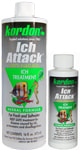
One such treatment is Kordon’s Herbal Ich Attack which uses active ingredients consisting of five natural organic herbals, based on their containing patented naphthoquinones which are naturally occurring colored substances derived from phenylpropanoid and isoprenoid precursorsin plants. Of the organic treatments, Kordon’s Herbal Ich Attack has shown results almost comparable to many chemical treatments when used in aquariums with good water parameters.
The known effects of the naphthoquinones on parasites/fungus/bacterium also bode well for this treatment. However, the poor activity of naphthoquinones on gram negative bacterium limits their aquatic use for this area of treatment, also naphthoquinones show activity against aerobic gram-positive bacteria as well as some harm to biological filter beds can occur.
Another positive though is that pH is not an issue as with Malachite Green or similar chemical formulas, however it is still highly advisable to maintain adequate KH and especially proper mineral ions if only as an aid to natural immune response.
Product Resource:
• Kordon Herbal Ick Attack (4oz)
See this article for more about naphthoquinones:
• US Library of Medicines; Naphthoquinones
Another organic treatment method is the use of hot or black peppers for the treatment of ich in fresh and salt water. Kent Marine makes RXP Parasite Treatment which contains pepper in an easily dissipated treatment solution. Mine and others limited use of this product have yielded mixed results (the claims by the manufacturer are a bit over blown in my opinion), however in mild infestation this may be a treatment worth trying. It is also worth noting that Kent Marine may improve this remedy, so later versions may improve.
Finally, another organic Ich remedy that I have tried, again with mixed results (but with results similar to Metronidazole) is Usnea which is a lichen that is brewed like a tea and then added to an aquarium on a daily basis or as necessary to achieve desired results.
Reference:
• Aquarium Answers, Usnea as an Organic Fish Treatment, Remedy
The known effects of the naphthoquinones on parasites/fungus/bacterium also bode well for this treatment. However, the poor activity of naphthoquinones on gram negative bacterium limits their aquatic use for this area of treatment, also naphthoquinones show activity against aerobic gram-positive bacteria as well as some harm to biological filter beds can occur.
Another positive though is that pH is not an issue as with Malachite Green or similar chemical formulas, however it is still highly advisable to maintain adequate KH and especially proper mineral ions if only as an aid to natural immune response.
Product Resource:
• Kordon Herbal Ick Attack (4oz)
See this article for more about naphthoquinones:
• US Library of Medicines; Naphthoquinones
Another organic treatment method is the use of hot or black peppers for the treatment of ich in fresh and salt water. Kent Marine makes RXP Parasite Treatment which contains pepper in an easily dissipated treatment solution. Mine and others limited use of this product have yielded mixed results (the claims by the manufacturer are a bit over blown in my opinion), however in mild infestation this may be a treatment worth trying. It is also worth noting that Kent Marine may improve this remedy, so later versions may improve.
Finally, another organic Ich remedy that I have tried, again with mixed results (but with results similar to Metronidazole) is Usnea which is a lichen that is brewed like a tea and then added to an aquarium on a daily basis or as necessary to achieve desired results.
Reference:
• Aquarium Answers, Usnea as an Organic Fish Treatment, Remedy
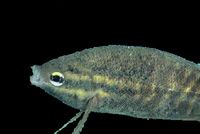
Marine Ich (Cryptocaryon)
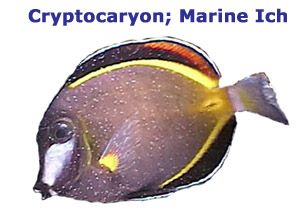
Often, I first Start with a Freshwater Dip (when possible): This dip is for 3 minutes minimum or 6 minutes maximum and should be in temperate and pH adjusted chlorine free freshwater. The use of Methylene Blue in this dip at double the recommended dose as per the bottle for in tank use is highly suggested. A dip is nearly 100% effective for destroying Cryptocaryon on marine fish as the osmotic pressure causes the parasite cells to burst.
Product Resources:
• Premium MethyBlu (Methylene Blue) from AAP (Recommended)
• Methylene Blue from AAP
This dip does not destroy Cryptocaryon in the water column of the aquarium but at least removes the infestation on the fish while other methods can be employed in the aquarium.
Despite some anecdotal comments I have read in a few forums, while a "dip" may be stressful, I have yet to loose a marine fish in 100s if not 1000s of freshwater dips of marine fish assuming the fish was not already "on its way out". Often even fish that were lying on the bottom with a Cryptocaryon or Oodinium infection would perk up after the dip.
Where I would not consider a dip worth the time is if you have a Reef Aquarium with many prize corals, clams, anemones, etc. and chasing around a few Percula Clowns is simply not worth the trouble and potential destruction of your "reef". In this case of just a few fish in a primarily reef tank, I would simply use some feeding methods such as Garlic, as well as improved Redox from a Level One or Two UV Sterilizer and hope for the best (which it likely will not be enough once an infection has gotten a foothold), and if not simply let the fish die and replace the fish after 6 weeks when the Cryptocaryon has died off from lack of a host.
Further Reference:
• Fish Baths; Dips
Product Resources:
• Premium MethyBlu (Methylene Blue) from AAP (Recommended)
• Methylene Blue from AAP
This dip does not destroy Cryptocaryon in the water column of the aquarium but at least removes the infestation on the fish while other methods can be employed in the aquarium.
Despite some anecdotal comments I have read in a few forums, while a "dip" may be stressful, I have yet to loose a marine fish in 100s if not 1000s of freshwater dips of marine fish assuming the fish was not already "on its way out". Often even fish that were lying on the bottom with a Cryptocaryon or Oodinium infection would perk up after the dip.
Where I would not consider a dip worth the time is if you have a Reef Aquarium with many prize corals, clams, anemones, etc. and chasing around a few Percula Clowns is simply not worth the trouble and potential destruction of your "reef". In this case of just a few fish in a primarily reef tank, I would simply use some feeding methods such as Garlic, as well as improved Redox from a Level One or Two UV Sterilizer and hope for the best (which it likely will not be enough once an infection has gotten a foothold), and if not simply let the fish die and replace the fish after 6 weeks when the Cryptocaryon has died off from lack of a host.
Further Reference:
• Fish Baths; Dips
Marine Treatment
Hyposalinity Method: A low salinity of 1.009 specific gravity causes most of the Cryptocaryon tomonts to rupture, killing them. This is the method that I have used in the past with so-so results, HOWEVER I found that I was not lowering the specific gravity (salinity) enough as I only lowered the specific gravity to 1.015, which I later found to be too high to work correctly. I have since established that one must lower specific gravity to 1.009 for this method to achieve better results.
'Higher' boney marine fish maintain their osmotic concentration at about one quarter to one third that of sea water. In normal sea water, these fish have a tendency to lose water from their gills due to osmosis and also in their urine. Fish have to drink a lot of water to make up for the loss, however, as the water contains a lot of salt (35%) they must remove the excess salt from their system. The sodium and chloride ions are secreted by the gills and magnesium and sulphates are excreted in urine. This is an active process and requires energy much like the energy required to keep warm blooded animals warm.
When fish are under stress, one of the processes that is affected is ion regulation. This means they have difficulty adjusting the concentration of ions such as sodium, chloride, etc. Lowering the salinity of the tank water makes the concentration of ions closer to that of the fish internal fluids and reduces the fish efforts to maintain the correct concentrations.
Further Reference:
• Aquarium Answers, Osmoregulation
This method is best carried out in a separate tank if sharks, ray, or any other invertebrates are present as Sharks and rays may not survive hyposalinity due to their unique method of osmoregulation. They have similar concentrations of salts to higher boney fish however, they also have very high concentrations of organic compounds which give their internal fluids the same osmotic concentration as sea water.
As for marine invertebrates, these generally have the same osmotic concentration as the surrounding water.
If you have a fish only or a FOWLR tank you may treat with this method in the display tank, keeping in mind that any copepods or other invertebrate life forms living in the live rock may be killed by this method. However, the bacteria in the live rock will survive and you may save some of these life forms in the live rock by moving some of these life forms along with selected live rock to a separate holding aquarium during this treatment.
For best results, this method should be employed for 4–6 week period (although some have reported success in half this time). It is VERY important that pH and alkalinity be monitored during this period and maintained to prevent additional stress.
You should enter this hyposalinity treatment slowly from your specific gravity of 1.019 -1.025 to 1.009 over a 48-hour period using RO/DI or even de-chlorinated tap water and/or water changes using low saltwater mixes (such as 1.005 salt mixes).
PLEASE note that the freshwater used to replace the saltwater is often too low in alkalinity (KH) and minerals and this can add to the stress of the fish (especially sensitive fish such as sharks/rays), so it is imperative that this water have added carbonates and minerals to ensure that in trying to kill the ich infestation, you do not add to osmoregulation problems for the fish. Products such as SeaChem Marine Buffer can be useful for this.
Product Resource:
• Marine Buffer for Carbonates and Minerals, Alkalinity
Please read these articles for more about this issue:
• AQUARIUM CHEMISTRY; Alkalinity, Calcium, pH, more
• Aquarium Answers; Osmoregulation in Fish
When treatment is finished the fish should be returned via high salt mix water changes (such as a water change with a specific gravity of 1.030) over an even longer period of 72 hours.
Medication/Treatment Methods: Copper is still the most effective medication for treatment of Marine Ich/Cryptocaryon I have found for moderate to serious infestations. Unfortunately, it is NOT AT ALL SAFE for ANY invertebrate and can also add to the stress of fish dealing with a serious Cryptocaryon infestation that it increases fish death.
As well, removing many copper treatments such as Mardel CopperSafe is often difficult from tanks with coral sand, rock, etc. since these copper solutions are readily absorbed and then slowly leech out. This results in the aquarium keeper's inability to add back delicate invertebrates for some time after finishing treatment (often months).
As an alternative, SeaChem Cupramine is safer for the fish, and is much more easily removed once finished with treatment simply with carbon. However, Cupramine also often requires more dosing and is less stable than Copper Safe. Be careful with any chelated copper product (such as Copper Safe), as while very stable, these can often destroy your bio filter and build up quickly to toxic levels.
My suggestion if you are thinking of copper for a serious infestation of Crptocaryon, especially when an isolation/hospital tank is available is to start with AAP Marex combined with AAP Greenex which often will knock it down much more quickly than any copper treatment (with less stress to fish) but has lower long-term effectiveness. Then after spots are gone, to run carbon and change water to remove AAP Marex and then treat with AAP/SeaChem Cupramine.
Correct levels: The therapeutic range for Cupramine is 0.35-0.5mg/L (.35 - .50 ppm). Reference:
• Dosing Cupramine
• How to read the API copper test kit Color Card
Product References:
• SeaChem Cupramine from AAP
• AAP Marex Oodinium/Brooklynella Treatment
'Higher' boney marine fish maintain their osmotic concentration at about one quarter to one third that of sea water. In normal sea water, these fish have a tendency to lose water from their gills due to osmosis and also in their urine. Fish have to drink a lot of water to make up for the loss, however, as the water contains a lot of salt (35%) they must remove the excess salt from their system. The sodium and chloride ions are secreted by the gills and magnesium and sulphates are excreted in urine. This is an active process and requires energy much like the energy required to keep warm blooded animals warm.
When fish are under stress, one of the processes that is affected is ion regulation. This means they have difficulty adjusting the concentration of ions such as sodium, chloride, etc. Lowering the salinity of the tank water makes the concentration of ions closer to that of the fish internal fluids and reduces the fish efforts to maintain the correct concentrations.
Further Reference:
• Aquarium Answers, Osmoregulation
This method is best carried out in a separate tank if sharks, ray, or any other invertebrates are present as Sharks and rays may not survive hyposalinity due to their unique method of osmoregulation. They have similar concentrations of salts to higher boney fish however, they also have very high concentrations of organic compounds which give their internal fluids the same osmotic concentration as sea water.
As for marine invertebrates, these generally have the same osmotic concentration as the surrounding water.
If you have a fish only or a FOWLR tank you may treat with this method in the display tank, keeping in mind that any copepods or other invertebrate life forms living in the live rock may be killed by this method. However, the bacteria in the live rock will survive and you may save some of these life forms in the live rock by moving some of these life forms along with selected live rock to a separate holding aquarium during this treatment.
For best results, this method should be employed for 4–6 week period (although some have reported success in half this time). It is VERY important that pH and alkalinity be monitored during this period and maintained to prevent additional stress.
You should enter this hyposalinity treatment slowly from your specific gravity of 1.019 -1.025 to 1.009 over a 48-hour period using RO/DI or even de-chlorinated tap water and/or water changes using low saltwater mixes (such as 1.005 salt mixes).
PLEASE note that the freshwater used to replace the saltwater is often too low in alkalinity (KH) and minerals and this can add to the stress of the fish (especially sensitive fish such as sharks/rays), so it is imperative that this water have added carbonates and minerals to ensure that in trying to kill the ich infestation, you do not add to osmoregulation problems for the fish. Products such as SeaChem Marine Buffer can be useful for this.
Product Resource:
• Marine Buffer for Carbonates and Minerals, Alkalinity
Please read these articles for more about this issue:
• AQUARIUM CHEMISTRY; Alkalinity, Calcium, pH, more
• Aquarium Answers; Osmoregulation in Fish
When treatment is finished the fish should be returned via high salt mix water changes (such as a water change with a specific gravity of 1.030) over an even longer period of 72 hours.
Medication/Treatment Methods: Copper is still the most effective medication for treatment of Marine Ich/Cryptocaryon I have found for moderate to serious infestations. Unfortunately, it is NOT AT ALL SAFE for ANY invertebrate and can also add to the stress of fish dealing with a serious Cryptocaryon infestation that it increases fish death.
As well, removing many copper treatments such as Mardel CopperSafe is often difficult from tanks with coral sand, rock, etc. since these copper solutions are readily absorbed and then slowly leech out. This results in the aquarium keeper's inability to add back delicate invertebrates for some time after finishing treatment (often months).
As an alternative, SeaChem Cupramine is safer for the fish, and is much more easily removed once finished with treatment simply with carbon. However, Cupramine also often requires more dosing and is less stable than Copper Safe. Be careful with any chelated copper product (such as Copper Safe), as while very stable, these can often destroy your bio filter and build up quickly to toxic levels.
My suggestion if you are thinking of copper for a serious infestation of Crptocaryon, especially when an isolation/hospital tank is available is to start with AAP Marex combined with AAP Greenex which often will knock it down much more quickly than any copper treatment (with less stress to fish) but has lower long-term effectiveness. Then after spots are gone, to run carbon and change water to remove AAP Marex and then treat with AAP/SeaChem Cupramine.
Correct levels: The therapeutic range for Cupramine is 0.35-0.5mg/L (.35 - .50 ppm). Reference:
• Dosing Cupramine
• How to read the API copper test kit Color Card
Product References:
• SeaChem Cupramine from AAP
• AAP Marex Oodinium/Brooklynella Treatment
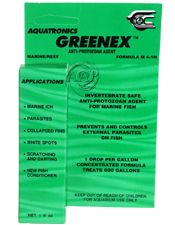
Malachite Green is relatively safe for saltwater fish, FOWLR tanks, and some invertebrates such as crabs and even some anemones, but definitely NOT for cephalopods. Malachite Green is not as effective a treatment as it is in freshwater applications for ich infestations, however when combined with Quinine Hydrochloride, malachite green can be more effective (although still not as effective as copper, but also much safer). You can find the Malachite Green/Quinine Hydrochloride combination in this treatment: “AAP Greenex”.
There is a marine version of the “Medicated Wonder Shells” which only contains Malachite Green, this product is only mildly effective for marine ich (Cryptocaryon) depending on conditions and whether other remedies such as dips also being employed (which cannot increase effectiveness. Combining with a 1/2 dose of AAP Greenex can increase effectiveness.
Product Resources:
• Greenex Cryptocaryon Treatment from AAP
• Medicated Wonder Shells. Marine Version
Quinine Sulfate or Hydrochloride is also relatively safe for most fish, but not most invertebrates when used at therapeutic doses by itself (combined with Malachite Green it can be safer while still reasonably effective). Metronidazole can also be used for marine ich infestations and is safe for many invertebrates (NOT ALL! So use with caution), but again is a relatively effective ich (Cryptocaryon) treatment for ONLY mild infestations. This is better combined with dips and/or treatments such as Medicated Marine Wonder Shells or ParaGuard for more moderate to severe infestations.
I have achieved some success using Metronidazole in established aquariums (when quarantine tanks were not an option) when all water parameters were optimal and usually combined with baths and dips as well.
Product Resources:
• Metronidazole from AAP
Similar to the Quinine Hydrochloride is Chloroquine Phosphate, which is made more effective when combined with Pyrimethamine as found in the product AAP Marex. While AAP Marex is one of the truly more effective treatments for Oodinium/Brooklynella, it is still not as effective as a properly dosed copper treatment. HOWEVER, combining with Greenex improves results to near copper treatment results without the issues that copper brings of purging it from your system.
Product Resource:
• AAP Marex Oodinium/Brooklynella Treatment
An organic treatment that again has shown some effectiveness is Kordon’s Herbal Ich Attack which uses patented organic naphthoquinones. Again, as noted with other medications treatments, combining with dips, Medicated Marine Wonder Shells (which can be safely combined) can increase effectiveness of Herbal Ich Attack and/or Metronidazole.
Product Resource:
• Herbal Ich Attack from AAP
An alternative treatment that we are currently experimenting with, so I admit some skepticism (but I have found few reliable reviews) is a product called “No More Sick Fish”. This product is quite pricey, but also requires small treatment doses. Some tests do confirm relative safety to corals such as Xenia. Another aspect I am skeptical of is that the company will not release the ingredient list, which most reputable companies such as SeaChem will. At this point in time I would only say to use at your own risk, as although it does seem to test out safe for many invertebrates, its effectiveness for Cryptocaryon (Marine Ich) is still questionable until all controlled tests are finished.
The use of a hospital/quarantine tank is still the most effective and safe way to treat a Cryptocaryon infestation. I recommend using a seasoned “Sponge Filter that is kept somewhere in your main display tank, ready for use if the need arises or with a continuously running quarantine tank. If kept in a main tank Sponge Filters will not raise nitrates if properly rinsed on regular basis. Another idea is to use a piece or two of live rock from your main tank along with an air stone for circulation around the live rock and hospital tank.
Product Resource:
• Hydro Sponge Patented High Performance Sponge Filters
In your quarantine tank, copper sulfate kept at .20-.25 ppm (a Copper test kit is recommended when copper is employed for Cryptocaryon treatment) is still the most effective way to treat in Cryptocaryon saltwater, but copper (especially chelated) can be hard to remove from your system once used and is deadly to invertebrates. I personally only recommend treating with copper in an isolation/quarantine tank except in relatively simple fish ONLY tanks.
In the case of a reef tank, I recommend removing all fish to a separate tank for treatment with copper, then leave the live rock and other inhabitants without fish for at least 3-4 weeks so as to allow the Cryptocaryon to die off as these parasites go thru their lifecycle.
Product Resource:
• API Freshwater & Saltwater Copper Test Kit
Other excellent options in a quarantine tank include Sea Chem ParaGuard, Medicated Wonder Shells as well as many other similar products.
Readers likely have now picked up on a continuing theme in the Marine Ich/Crytocaryon Medication Treatment Section; and that is that there is no truly effective medication treatment other than stabilized copper treatments for more serious Cryptocaryon infestations and that either combinations of treatments, the addition of UV Sterilization (which even at level 2 Sterilization is still not 100% for this often-frustrating disease).
The end result is often Hyposalinity is often the best treatment for marine aquariums that are used for anything other than fish ONLY tanks that have moderate to serious Marine Ich infestations.
There is a marine version of the “Medicated Wonder Shells” which only contains Malachite Green, this product is only mildly effective for marine ich (Cryptocaryon) depending on conditions and whether other remedies such as dips also being employed (which cannot increase effectiveness. Combining with a 1/2 dose of AAP Greenex can increase effectiveness.
Product Resources:
• Greenex Cryptocaryon Treatment from AAP
• Medicated Wonder Shells. Marine Version
Quinine Sulfate or Hydrochloride is also relatively safe for most fish, but not most invertebrates when used at therapeutic doses by itself (combined with Malachite Green it can be safer while still reasonably effective). Metronidazole can also be used for marine ich infestations and is safe for many invertebrates (NOT ALL! So use with caution), but again is a relatively effective ich (Cryptocaryon) treatment for ONLY mild infestations. This is better combined with dips and/or treatments such as Medicated Marine Wonder Shells or ParaGuard for more moderate to severe infestations.
I have achieved some success using Metronidazole in established aquariums (when quarantine tanks were not an option) when all water parameters were optimal and usually combined with baths and dips as well.
Product Resources:
• Metronidazole from AAP
Similar to the Quinine Hydrochloride is Chloroquine Phosphate, which is made more effective when combined with Pyrimethamine as found in the product AAP Marex. While AAP Marex is one of the truly more effective treatments for Oodinium/Brooklynella, it is still not as effective as a properly dosed copper treatment. HOWEVER, combining with Greenex improves results to near copper treatment results without the issues that copper brings of purging it from your system.
Product Resource:
• AAP Marex Oodinium/Brooklynella Treatment
An organic treatment that again has shown some effectiveness is Kordon’s Herbal Ich Attack which uses patented organic naphthoquinones. Again, as noted with other medications treatments, combining with dips, Medicated Marine Wonder Shells (which can be safely combined) can increase effectiveness of Herbal Ich Attack and/or Metronidazole.
Product Resource:
• Herbal Ich Attack from AAP
An alternative treatment that we are currently experimenting with, so I admit some skepticism (but I have found few reliable reviews) is a product called “No More Sick Fish”. This product is quite pricey, but also requires small treatment doses. Some tests do confirm relative safety to corals such as Xenia. Another aspect I am skeptical of is that the company will not release the ingredient list, which most reputable companies such as SeaChem will. At this point in time I would only say to use at your own risk, as although it does seem to test out safe for many invertebrates, its effectiveness for Cryptocaryon (Marine Ich) is still questionable until all controlled tests are finished.
The use of a hospital/quarantine tank is still the most effective and safe way to treat a Cryptocaryon infestation. I recommend using a seasoned “Sponge Filter that is kept somewhere in your main display tank, ready for use if the need arises or with a continuously running quarantine tank. If kept in a main tank Sponge Filters will not raise nitrates if properly rinsed on regular basis. Another idea is to use a piece or two of live rock from your main tank along with an air stone for circulation around the live rock and hospital tank.
Product Resource:
• Hydro Sponge Patented High Performance Sponge Filters
In your quarantine tank, copper sulfate kept at .20-.25 ppm (a Copper test kit is recommended when copper is employed for Cryptocaryon treatment) is still the most effective way to treat in Cryptocaryon saltwater, but copper (especially chelated) can be hard to remove from your system once used and is deadly to invertebrates. I personally only recommend treating with copper in an isolation/quarantine tank except in relatively simple fish ONLY tanks.
In the case of a reef tank, I recommend removing all fish to a separate tank for treatment with copper, then leave the live rock and other inhabitants without fish for at least 3-4 weeks so as to allow the Cryptocaryon to die off as these parasites go thru their lifecycle.
Product Resource:
• API Freshwater & Saltwater Copper Test Kit
Other excellent options in a quarantine tank include Sea Chem ParaGuard, Medicated Wonder Shells as well as many other similar products.
Readers likely have now picked up on a continuing theme in the Marine Ich/Crytocaryon Medication Treatment Section; and that is that there is no truly effective medication treatment other than stabilized copper treatments for more serious Cryptocaryon infestations and that either combinations of treatments, the addition of UV Sterilization (which even at level 2 Sterilization is still not 100% for this often-frustrating disease).
The end result is often Hyposalinity is often the best treatment for marine aquariums that are used for anything other than fish ONLY tanks that have moderate to serious Marine Ich infestations.
Prevention: For saltwater fish, prevention is still the best cure. “UV Sterilization” is a helpful and important piece of the Cryptocaryon prevention puzzle, but it should not be the only part. In most instances UV Sterilization aids in Cryptocaryon prevention more by aiding in the maintenance of a healthy environment, in particular; REDOX. Studies in the 1990s bear theirs out with a 20-25% lower incidence in disease in controlled tests.
Level two Sterilization can be even more effective, but it still should not be the only method of Cryptocaryon prevention, as although Crytocaryon will be killed that passes through a UV operating at level 2, there is NO WAY to guarantee that all cryptocaryon will pass through the UV Sterilizer, and in fact often many cysts will fall to the bottom out of reach from the UV. HENCE, Level 1 UV Sterilization should be your standard/goal ALONG with OTHER means of prevention!
References:
• How UV Sterilization Works, Myths, Facts
• Aquarium Redox Maintenance
• UV Sterilization Flow Rate Table
• Aquarium Disease Prevention; Based on Long Term Tests and Observations
A quarantine tank for new fish and/or hospital tank for sick fish are also beneficial. If a quarantine/hospital tank is available (a bare tank with a "seasoned" sponge filter), a treatment with Methylene Blue and or copper is advisable.
Product Resource:
• Aquarium Sponge Filters
Keeping your tank slightly on the hypo-salinity side at 1.019- 1.021 will also somewhat lessen the chance of Cryptocaryon and aid in treatment or prevention as well. However, this is more effective for Oodinium prevention and treatment than with Cryptocaryon unless copper is also added at .25 ppm to this quarantine tank. I should also note that this is based on observations, not controlled tests.
The Hyposalinty method is also very useful as a means of prevention by treating new arrival this way generally in a quarantine tank in either partial Hyposalinity such as 1.015 (Along with other methods such as Methylene Blue and Copper Sulfate/Formalin) or full Hyposalinity of 1.009. This method can also be used for new arrivals in the display tank assuming no invertebrates or rays/sharks are present and you follow correct acclimation procedures.
A 5 minute freshwater dip is an effective means of eradicating Cryptocaryon (and more so with marine Oodinium) on fish. This can be used in conjunction with the above treatment methods. This is the MINIMUM preventative I have always performed with new fish about to be introduced to a display aquarium, assuming a quarantine was not available or practical.
In a dip, I adjust pH (so as reduce more osmotic stress than need be) and add Methylene Blue (at double in recommended tank strength as per the bottle). I will use a specific gravity of 1.001 for the saltwater fish.
Product Resource:
• Methylene Blue from AAP
This dip should be no less than 3 minutes and no more than 5 minutes to be effective. This is very effective in removing oodinium and to a slightly lesser extent, Cryptocaryon directly from the fish (including gills). Do not be alarmed if the fish ‘lays down’ and acts dead, this is a common initial reaction, and the fish will usually perk up a minute or two into the dip. How this works is that the cell membrane of the Cryptocaryon cyst cannot withstand the change in osmotic pressure as well as the fish and will burst, that is why the minimum three minutes is a must.
It is important with this method if being used as part of a treatment (not preventative), to either treat the tank or remove the fish (place them in a separate aquarium) and allow the display tank to be without fish for at least three weeks for the Cryptocaryon to die off without a host. I often use this method when also treating with Metronidazole in the main tank.
A 30 minute bath is also a useful saltwater fish treatment for diseases such as Cryptocaryon. This is best used in conjunction with the other recommended treatments above as by itself is not likely to affect a full cure. I would make sure to adjust pH so that there is no pH shock. For saltwater I would add Methylene Blue at double normal tank treatment strength then Dilute the saltwater to 1.015 (making sure your pH stays up by adding any buffers necessary before adding fish).
For further information as to Hospital tanks, Dips, & baths, please see this article (in the hospital/quarantine tank section): Aquarium Disease Prevention; Quarantine/Hospital Tanks, Baths, Dips.
Consider the use of Garlic preparations in fish food, such as SeaChem Garlic Guard as part of your Cryptocaryon prevention regimen, as while I have not found this to be a effective in most instances by itself, it MAY be another helpful preventative when taken with other methods, including optimum water conditions.
Product Resource:
• SeaChem Garlic Guard, for Ich Prevention
Level two Sterilization can be even more effective, but it still should not be the only method of Cryptocaryon prevention, as although Crytocaryon will be killed that passes through a UV operating at level 2, there is NO WAY to guarantee that all cryptocaryon will pass through the UV Sterilizer, and in fact often many cysts will fall to the bottom out of reach from the UV. HENCE, Level 1 UV Sterilization should be your standard/goal ALONG with OTHER means of prevention!
References:
• How UV Sterilization Works, Myths, Facts
• Aquarium Redox Maintenance
• UV Sterilization Flow Rate Table
• Aquarium Disease Prevention; Based on Long Term Tests and Observations
A quarantine tank for new fish and/or hospital tank for sick fish are also beneficial. If a quarantine/hospital tank is available (a bare tank with a "seasoned" sponge filter), a treatment with Methylene Blue and or copper is advisable.
Product Resource:
• Aquarium Sponge Filters
Keeping your tank slightly on the hypo-salinity side at 1.019- 1.021 will also somewhat lessen the chance of Cryptocaryon and aid in treatment or prevention as well. However, this is more effective for Oodinium prevention and treatment than with Cryptocaryon unless copper is also added at .25 ppm to this quarantine tank. I should also note that this is based on observations, not controlled tests.
The Hyposalinty method is also very useful as a means of prevention by treating new arrival this way generally in a quarantine tank in either partial Hyposalinity such as 1.015 (Along with other methods such as Methylene Blue and Copper Sulfate/Formalin) or full Hyposalinity of 1.009. This method can also be used for new arrivals in the display tank assuming no invertebrates or rays/sharks are present and you follow correct acclimation procedures.
A 5 minute freshwater dip is an effective means of eradicating Cryptocaryon (and more so with marine Oodinium) on fish. This can be used in conjunction with the above treatment methods. This is the MINIMUM preventative I have always performed with new fish about to be introduced to a display aquarium, assuming a quarantine was not available or practical.
In a dip, I adjust pH (so as reduce more osmotic stress than need be) and add Methylene Blue (at double in recommended tank strength as per the bottle). I will use a specific gravity of 1.001 for the saltwater fish.
Product Resource:
• Methylene Blue from AAP
This dip should be no less than 3 minutes and no more than 5 minutes to be effective. This is very effective in removing oodinium and to a slightly lesser extent, Cryptocaryon directly from the fish (including gills). Do not be alarmed if the fish ‘lays down’ and acts dead, this is a common initial reaction, and the fish will usually perk up a minute or two into the dip. How this works is that the cell membrane of the Cryptocaryon cyst cannot withstand the change in osmotic pressure as well as the fish and will burst, that is why the minimum three minutes is a must.
It is important with this method if being used as part of a treatment (not preventative), to either treat the tank or remove the fish (place them in a separate aquarium) and allow the display tank to be without fish for at least three weeks for the Cryptocaryon to die off without a host. I often use this method when also treating with Metronidazole in the main tank.
A 30 minute bath is also a useful saltwater fish treatment for diseases such as Cryptocaryon. This is best used in conjunction with the other recommended treatments above as by itself is not likely to affect a full cure. I would make sure to adjust pH so that there is no pH shock. For saltwater I would add Methylene Blue at double normal tank treatment strength then Dilute the saltwater to 1.015 (making sure your pH stays up by adding any buffers necessary before adding fish).
For further information as to Hospital tanks, Dips, & baths, please see this article (in the hospital/quarantine tank section): Aquarium Disease Prevention; Quarantine/Hospital Tanks, Baths, Dips.
Consider the use of Garlic preparations in fish food, such as SeaChem Garlic Guard as part of your Cryptocaryon prevention regimen, as while I have not found this to be a effective in most instances by itself, it MAY be another helpful preventative when taken with other methods, including optimum water conditions.
Product Resource:
• SeaChem Garlic Guard, for Ich Prevention
Freshwater Ich Myths
Here are a few truths and myths about FW ich (ick) treatments.
Chemical treatments will destroy biological nitrifying bacteria - Myth & Truth: Malachite Green, Formalin and Copper sulfate DO NOT harm nitrifying bacteria. Methylene blue can harm nitrifying bacteria in full doses.
Salt is a natural treatment - Myth and Truth: Salt is sodium chloride (NaCl) a chemical treatment with such side effects on freshwater fish as loss of internal chemical balance and dehydration. Some will call Sodium chloride natural, but by that definition, so is NH3 (ammonia). Usnic Acid and Pepper better fit the description of natural organic treatments. Please understand I am not knocking salt, just some reasoning behind the use. In fact, it is an important electrolyte that is useful any time most fish are stressed by disease.
Malachite Green is extremely toxic - Myth & Truth: Older versions of Malachite Green that contain zinc are definitely more toxic, especially for scale-less fish, but the newer zinc free formulas found in most ich medications today are 97% zinc free and are only more poisonous to scale-less fish in high doses (and Triple sulfa buffers this mild effect even more). As well using Malachite Green in acid environments and without mineral cations present also increases toxicity considerably. Unfortunately, many posers as aquatic experts have not done their homework here.
For more about Malachite Green (including so-called carcinogenic properties), please see this article:
“Aquarium and Pond Medications; Chemical treatments including Malachite Green”.
For information about FRESHWATER VELVET (Piscinoodinium pillulare), As well as Costia (Ichtyobodo) follow this link (this article is from Aquarium Answers): "Freshwater Velvet - (Piscinoodinium pillulare) & Costia (Ichtyobodo Necatrix)".
Chemical treatments will destroy biological nitrifying bacteria - Myth & Truth: Malachite Green, Formalin and Copper sulfate DO NOT harm nitrifying bacteria. Methylene blue can harm nitrifying bacteria in full doses.
Salt is a natural treatment - Myth and Truth: Salt is sodium chloride (NaCl) a chemical treatment with such side effects on freshwater fish as loss of internal chemical balance and dehydration. Some will call Sodium chloride natural, but by that definition, so is NH3 (ammonia). Usnic Acid and Pepper better fit the description of natural organic treatments. Please understand I am not knocking salt, just some reasoning behind the use. In fact, it is an important electrolyte that is useful any time most fish are stressed by disease.
Malachite Green is extremely toxic - Myth & Truth: Older versions of Malachite Green that contain zinc are definitely more toxic, especially for scale-less fish, but the newer zinc free formulas found in most ich medications today are 97% zinc free and are only more poisonous to scale-less fish in high doses (and Triple sulfa buffers this mild effect even more). As well using Malachite Green in acid environments and without mineral cations present also increases toxicity considerably. Unfortunately, many posers as aquatic experts have not done their homework here.
For more about Malachite Green (including so-called carcinogenic properties), please see this article:
“Aquarium and Pond Medications; Chemical treatments including Malachite Green”.
For information about FRESHWATER VELVET (Piscinoodinium pillulare), As well as Costia (Ichtyobodo) follow this link (this article is from Aquarium Answers): "Freshwater Velvet - (Piscinoodinium pillulare) & Costia (Ichtyobodo Necatrix)".
Saltwater Ick Myths
Here are a few myths about Marine Ich (Crytocaryon): Cleaner Shrimp and Fish; Cleaner wrasse have not been shown to eat this parasite at all. I have never seen a Cryptocaryon infestation stopped by the use of Cleaner Wrasse or Shrimp, nor have I read any documented scientific evidence to prove this urban myth.
UV Sterilization, this is a subject where often otherwise good aquarists and articles go astray. It is often pointed out that they are ineffective at reducing the numbers of free-swimming stages of these parasites.
While this may be partially true (at low flow rates of under 10 gph per watt, they can kill this stage), this is not the primary reason for using a UV Sterilizer in an aquarium. Rather for Redox reduction and thus the immunity of the fish so as to help with other treatments and prevention methods.
There is growing research outside the aquarium community to prove this as well (such a researcher from Asia that I am in communication with that has made some interesting break throughs in human treatment in blood using UVC to improve Redox reduction to fight disease).
Further Reference:
• Redox Reduction, Balance for Aquarium Fish Health
The fact is, & this does not even count newer research to back this up, that in controlled tests, tanks with TRUE level 1 UV Sterilizers Properly installed, the incidence of Cryptocaryon was lower and treatment response was quicker than in tanks without these devices!
One statement that worries me about this hobby that I read in another article is this: “For me, a UV filter is just a "feel good" device and leads hobbyists into a false sense of security”. This statement is so blatantly false I will simply refer the reader to research this subject more starting with this article:
"UV Sterilization; Facts & Information".
Cryptocaryon is always in the tank: This is unfortunately also a widely held view just as the previous myths are. Cryptocaryon is an introduced single cell parasite, that may give this appearance of being always present as many anecdotal aquarists will note that when their tank chills or they add a new fish that there is an outbreak, however this parasite had to be initially introduced which is why quarantine or at least dips/baths are so important.
As well, often many treatments including the methods I have noted above are not always 100%, so it is quite possible after initial introduction of Cryptocaryon for a later outbreak to occur, especially when stressors are applied to an aquarium (which is why maintaining water quality including Redox balance is so essential).
UV Sterilization, this is a subject where often otherwise good aquarists and articles go astray. It is often pointed out that they are ineffective at reducing the numbers of free-swimming stages of these parasites.
While this may be partially true (at low flow rates of under 10 gph per watt, they can kill this stage), this is not the primary reason for using a UV Sterilizer in an aquarium. Rather for Redox reduction and thus the immunity of the fish so as to help with other treatments and prevention methods.
There is growing research outside the aquarium community to prove this as well (such a researcher from Asia that I am in communication with that has made some interesting break throughs in human treatment in blood using UVC to improve Redox reduction to fight disease).
Further Reference:
• Redox Reduction, Balance for Aquarium Fish Health
The fact is, & this does not even count newer research to back this up, that in controlled tests, tanks with TRUE level 1 UV Sterilizers Properly installed, the incidence of Cryptocaryon was lower and treatment response was quicker than in tanks without these devices!
One statement that worries me about this hobby that I read in another article is this: “For me, a UV filter is just a "feel good" device and leads hobbyists into a false sense of security”. This statement is so blatantly false I will simply refer the reader to research this subject more starting with this article:
"UV Sterilization; Facts & Information".
Cryptocaryon is always in the tank: This is unfortunately also a widely held view just as the previous myths are. Cryptocaryon is an introduced single cell parasite, that may give this appearance of being always present as many anecdotal aquarists will note that when their tank chills or they add a new fish that there is an outbreak, however this parasite had to be initially introduced which is why quarantine or at least dips/baths are so important.
As well, often many treatments including the methods I have noted above are not always 100%, so it is quite possible after initial introduction of Cryptocaryon for a later outbreak to occur, especially when stressors are applied to an aquarium (which is why maintaining water quality including Redox balance is so essential).
More References:
• Oceanography, a View of the Earth by M Grant Gross
• Colorni A. 1987. Biology of Cryptocaryon irritants and strategies for its control. Aquaculture 67(1-2):236-237.
• Oceanography, a View of the Earth by M Grant Gross
• Colorni A. 1987. Biology of Cryptocaryon irritants and strategies for its control. Aquaculture 67(1-2):236-237.