

Freshwater Aquarium Care | Basics | Maintenance
Aquarium
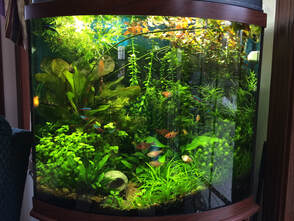
Please also read the companion article to this one:
Freshwater Aquarium Set Up Suggestions
Start with as large an aquarium as you can afford (even for bettas).
The very BASIC principle is to have 1 inch of NARROW bodied fish per WELL FILTERED actual gallon of water is a starting point, but not very accurate. This also only applies to a standard rectangular aquarium.
Goldfish have a higher impact on the bio load with more body mass per inch (being grazers they ounce per ounce produce more waste), so I would triple this with them, in fact for long term goldfish health, one goldfish per 8-10 gallons is best (One goldfish per 30 liters).
Obviously longer fish need more tank width and length. I would decrease the amount of fish proportional to the gallons in a tall aquarium or hexagon aquarium.
Remember, many fish purchased can grow much larger than your original purchase size (ex: goldfish), so keep this in mind too.
To figure your tank size in gallons get your tank length, height, and width in inches then apply this formula (multiple all INSIDE dimensions up to where you expect the water level to be):
L x H x W = X: Then divide X by 231
This gives you exact gallons of the aquarium/tank. In round tanks or unusual shapes you will have to extrapolate.
Consider substrate & large decor too by placing these in a 5 gallon bucket and using a measuring device such as a 2 quart pitcher figure displacement. For instance if a 5 gallon bucket filled with substrate and rocks will only accept 2 gallons of water, then take 3 gallons from the total tank/aquarium volume.
To convert gallons to liters multiply by 3.785
(Ex. a 20 gallon tank = 75 liters).
What is much more important in determining how many fish you should add to your aquarium are these factors:
The amount of surface area relative to the gallons of water the aquarium holds. I have observed many tall narrow aquariums over the years of my maintenance service where the filtration and other factors were equal to comparable sized and stocked rectangular aquariums, that general fish health and longevity were lower.
Type of fish, such as fish that naturally produce more waste (partly due to the type of food they eat) such as goldfish which are grazers with less efficient digestive systems. As noted earlier with goldfish one fish per 8+ gallons is suggested.
Also a fish, such as an Arowana, that stays primarily on the surface will need a disproportionately large aquarium (I recommend 200 + gallons for just one Arowana).
Body mass per inch/centimeter. The actual weight of a fish has more bearing on the aquariums capacity than the length. Many high capacity bio-filters such as the Fluidized Sand Filter actually are rated by weight of the bio load with the #1500 model rated for 30 lbs. of fish or other inhabitants.
For instance, you cannot compare a heavy bodied cichlid for instance to a narrow bodied tetra of similar length. AS well a tiny Bamboo Shrimp with very little weight is going to have very minimal impact on the bio load and thus the capacity of the aquarium.
Product Resource:
FSB Premium Aquarium Bio Filters
Filtration, a properly filtered aquarium (good bio filtration, good mechanical filtration, and good circulation) with multiple filters is important. Good bio filtration (such as Sponge or Fluidized Sand Filters) with well maintained filters can go a long way in allowing an otherwise small aquarium to hold more fish or a large tank maintain a healthy "Monster Fish Tank".
Maintenance schedule that includes regular efficient water changes.
Well maintained water chemistry, including GH (mineral ions), KH and Redox not just low ammonia, nitrites, and nitrates. In other words, a Redox that moves up in down with large changes in ORP likely indicates an aquarium with too high a bio-load.
References:
Aquarium Redox
Aquarium Bio-Load
Redox ORP Meter
New or experienced aquarist; a new aquarist needs to start with a much less crowded aquarium.
After proper feeding, good cleaning routines (20% water changes with a gravel vacuum once per week or two), proper feeding routines, good filtrations; If after all these are checked off and you still have nitrates that struggle to stay below 40-50 ppm, you probably have an over stocked aquarium (especially if there are live plants!). Also a kH and pH that starts out at proper levels, but then drops quickly after water changes and/or addition of stabilizing chemicals/buffers can indicate over stocking (as well as other problems such as mulm buildup).
Find a good Aquarium or Pet Store. Look at their fish and see how well they are taken care.
If the store has central filtering system, be careful, as if one fish is sick in one aquarium it can be spread to all aquariums.
Never buy fish from an aquarium with sick fish.
In the aquarium stores I set up I never placed more than two aquariums on one system so if there was a disease outbreak it was easier to isolate.
We also had UV Sterilizers on ALL systems.
This is not to say that if you find a good dealer with a central system to not buy from them, just keep in mind if you see a tank of sick fish, the whole store may have been exposed.
Many large retailers have central systems for their convenience, NOT YOURS.
Finally as to tank size: this is often a controversial subject among aquarist, especially well intentioned advanced aquarists. The bigger an aquarium you can afford, maintain and have space for, the better for many good reasons, BUT I have kept MANY aquariums under a variety of conditions and monitored them in controlled experiments and often a small aquarium can work for what many might consider over crowded conditions, provided excellent filtration, cleaning maintenance, circulation, feeding procedures (and quality food), chemistry, etc.
For example, I can state categorically that a 10 gallon aquarium with (2) 2 inch goldfish that is well maintained with a hang on the back (power) and a sponge filter will have vastly better water parameters than a 20 gallon with the same goldfish that is poorly maintained with a corner bubbler filter.
Product Reference:
AAP Tidal Premium HOB Filters
AAP Premium Aquarium Sponge Filters
Here is an Aquarium Answers Post Dealing with this subject in a more factual way:
Aquarium Size and Fish Stunting
Freshwater Aquarium Set Up Suggestions
Start with as large an aquarium as you can afford (even for bettas).
The very BASIC principle is to have 1 inch of NARROW bodied fish per WELL FILTERED actual gallon of water is a starting point, but not very accurate. This also only applies to a standard rectangular aquarium.
Goldfish have a higher impact on the bio load with more body mass per inch (being grazers they ounce per ounce produce more waste), so I would triple this with them, in fact for long term goldfish health, one goldfish per 8-10 gallons is best (One goldfish per 30 liters).
Obviously longer fish need more tank width and length. I would decrease the amount of fish proportional to the gallons in a tall aquarium or hexagon aquarium.
Remember, many fish purchased can grow much larger than your original purchase size (ex: goldfish), so keep this in mind too.
To figure your tank size in gallons get your tank length, height, and width in inches then apply this formula (multiple all INSIDE dimensions up to where you expect the water level to be):
L x H x W = X: Then divide X by 231
This gives you exact gallons of the aquarium/tank. In round tanks or unusual shapes you will have to extrapolate.
Consider substrate & large decor too by placing these in a 5 gallon bucket and using a measuring device such as a 2 quart pitcher figure displacement. For instance if a 5 gallon bucket filled with substrate and rocks will only accept 2 gallons of water, then take 3 gallons from the total tank/aquarium volume.
To convert gallons to liters multiply by 3.785
(Ex. a 20 gallon tank = 75 liters).
What is much more important in determining how many fish you should add to your aquarium are these factors:
The amount of surface area relative to the gallons of water the aquarium holds. I have observed many tall narrow aquariums over the years of my maintenance service where the filtration and other factors were equal to comparable sized and stocked rectangular aquariums, that general fish health and longevity were lower.
Type of fish, such as fish that naturally produce more waste (partly due to the type of food they eat) such as goldfish which are grazers with less efficient digestive systems. As noted earlier with goldfish one fish per 8+ gallons is suggested.
Also a fish, such as an Arowana, that stays primarily on the surface will need a disproportionately large aquarium (I recommend 200 + gallons for just one Arowana).
Body mass per inch/centimeter. The actual weight of a fish has more bearing on the aquariums capacity than the length. Many high capacity bio-filters such as the Fluidized Sand Filter actually are rated by weight of the bio load with the #1500 model rated for 30 lbs. of fish or other inhabitants.
For instance, you cannot compare a heavy bodied cichlid for instance to a narrow bodied tetra of similar length. AS well a tiny Bamboo Shrimp with very little weight is going to have very minimal impact on the bio load and thus the capacity of the aquarium.
Product Resource:
FSB Premium Aquarium Bio Filters
Filtration, a properly filtered aquarium (good bio filtration, good mechanical filtration, and good circulation) with multiple filters is important. Good bio filtration (such as Sponge or Fluidized Sand Filters) with well maintained filters can go a long way in allowing an otherwise small aquarium to hold more fish or a large tank maintain a healthy "Monster Fish Tank".
Maintenance schedule that includes regular efficient water changes.
Well maintained water chemistry, including GH (mineral ions), KH and Redox not just low ammonia, nitrites, and nitrates. In other words, a Redox that moves up in down with large changes in ORP likely indicates an aquarium with too high a bio-load.
References:
Aquarium Redox
Aquarium Bio-Load
Redox ORP Meter
New or experienced aquarist; a new aquarist needs to start with a much less crowded aquarium.
After proper feeding, good cleaning routines (20% water changes with a gravel vacuum once per week or two), proper feeding routines, good filtrations; If after all these are checked off and you still have nitrates that struggle to stay below 40-50 ppm, you probably have an over stocked aquarium (especially if there are live plants!). Also a kH and pH that starts out at proper levels, but then drops quickly after water changes and/or addition of stabilizing chemicals/buffers can indicate over stocking (as well as other problems such as mulm buildup).
Find a good Aquarium or Pet Store. Look at their fish and see how well they are taken care.
If the store has central filtering system, be careful, as if one fish is sick in one aquarium it can be spread to all aquariums.
Never buy fish from an aquarium with sick fish.
In the aquarium stores I set up I never placed more than two aquariums on one system so if there was a disease outbreak it was easier to isolate.
We also had UV Sterilizers on ALL systems.
This is not to say that if you find a good dealer with a central system to not buy from them, just keep in mind if you see a tank of sick fish, the whole store may have been exposed.
Many large retailers have central systems for their convenience, NOT YOURS.
Finally as to tank size: this is often a controversial subject among aquarist, especially well intentioned advanced aquarists. The bigger an aquarium you can afford, maintain and have space for, the better for many good reasons, BUT I have kept MANY aquariums under a variety of conditions and monitored them in controlled experiments and often a small aquarium can work for what many might consider over crowded conditions, provided excellent filtration, cleaning maintenance, circulation, feeding procedures (and quality food), chemistry, etc.
For example, I can state categorically that a 10 gallon aquarium with (2) 2 inch goldfish that is well maintained with a hang on the back (power) and a sponge filter will have vastly better water parameters than a 20 gallon with the same goldfish that is poorly maintained with a corner bubbler filter.
Product Reference:
AAP Tidal Premium HOB Filters
AAP Premium Aquarium Sponge Filters
Here is an Aquarium Answers Post Dealing with this subject in a more factual way:
Aquarium Size and Fish Stunting
Substrate
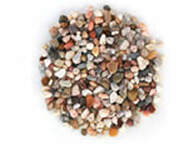
For the average aquarium I recommend 2-3” of #3 or pea sized gravel. This allows for less build up of hydrogen sulfide producing anaerobic bacteria. The down side to larger gravel is that it will allow for more waste particle or eaten food to accumulate. With proper maintenance though, waste accumulation should not be a major problem.
Sand is good for heavily planted aquariums, as it provides a better anchor for the roots and even more important sand traps nutrients and symbiotic bacteria needed by plant roots.
If used for live plants, I recommend about ½” #00 or #1 sand followed by 2-1/2” of medium (#3) gravel, with substrates such as SeaChem Flourite or Eco Complete mixed in around plant roots. These two products can be substituted totally for gravel or sand (Although that can get pricey).
Product Resource:
SeaChem Flourite- Planted Aquarium Substrate
If your aquarium is going to be only lightly or moderately planted, I recommend sand only in the area around the plant roots and #3 size gravel elsewhere (otherwise you may develop Hydrogen Sulfide producing anaerobic bacteria).
Consider mixing different types of natural or colored gravels to achieve a look you like.
For hospital, breeding, or heavily populated temporary holding tanks; no sand or gravel is best. This allows for less waste build up, less possibility of waste matter or substrate absorbing medication in a hospital tank, and less rotting organic sludge in a holding tank.
For a little more info about substrate, please read this article:
Aquarium Gravel, Substrates; Which size?
Sand is good for heavily planted aquariums, as it provides a better anchor for the roots and even more important sand traps nutrients and symbiotic bacteria needed by plant roots.
If used for live plants, I recommend about ½” #00 or #1 sand followed by 2-1/2” of medium (#3) gravel, with substrates such as SeaChem Flourite or Eco Complete mixed in around plant roots. These two products can be substituted totally for gravel or sand (Although that can get pricey).
Product Resource:
SeaChem Flourite- Planted Aquarium Substrate
If your aquarium is going to be only lightly or moderately planted, I recommend sand only in the area around the plant roots and #3 size gravel elsewhere (otherwise you may develop Hydrogen Sulfide producing anaerobic bacteria).
Consider mixing different types of natural or colored gravels to achieve a look you like.
For hospital, breeding, or heavily populated temporary holding tanks; no sand or gravel is best. This allows for less waste build up, less possibility of waste matter or substrate absorbing medication in a hospital tank, and less rotting organic sludge in a holding tank.
For a little more info about substrate, please read this article:
Aquarium Gravel, Substrates; Which size?
Filter & Pumps
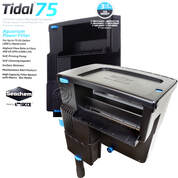
I always recommend two filters minimum per aquarium for redundancy (in case one filter fails) and for improved biological (nitrifying) filtration.
Air Pumps and power heads/circulation pumps can also be added to maintain good circulation & aeration, as well as to move water to existing filters.
Combined Suggested Aquarium Turnover Rates (per hours):
5 times for an average non-planted freshwater aquarium
2-5 times for an average planted freshwater aquarium
2-3 times Betta or Fish Fry Grow-Out aquariums
6-10 times for high bio load aquarium such as a "Monster Fish" aquarium
The size of your filters are also determined by other filters present in your aquarium as well as your aquarium "bio load" (number and size of fish and other inhabitants kept in an aquarium).
As an example in a 50 gallon aquarium with an average bio load of 40-45 small Platties; if you prefer a canister filter, a AAP Canister Filer would work fine by itself (although I still recommend another filter for redundancy), however this same filter would work fine in a 75 gallon aquarium assuming a light bio load or if another filter is present to assume part of the load such as a Hydro Sponge 3 Filter
Product Resources:
AAP Hydro Sponge #3 Aquarium Filter
Air Pumps and power heads/circulation pumps can also be added to maintain good circulation & aeration, as well as to move water to existing filters.
Combined Suggested Aquarium Turnover Rates (per hours):
5 times for an average non-planted freshwater aquarium
2-5 times for an average planted freshwater aquarium
2-3 times Betta or Fish Fry Grow-Out aquariums
6-10 times for high bio load aquarium such as a "Monster Fish" aquarium
The size of your filters are also determined by other filters present in your aquarium as well as your aquarium "bio load" (number and size of fish and other inhabitants kept in an aquarium).
As an example in a 50 gallon aquarium with an average bio load of 40-45 small Platties; if you prefer a canister filter, a AAP Canister Filer would work fine by itself (although I still recommend another filter for redundancy), however this same filter would work fine in a 75 gallon aquarium assuming a light bio load or if another filter is present to assume part of the load such as a Hydro Sponge 3 Filter
Product Resources:
AAP Hydro Sponge #3 Aquarium Filter
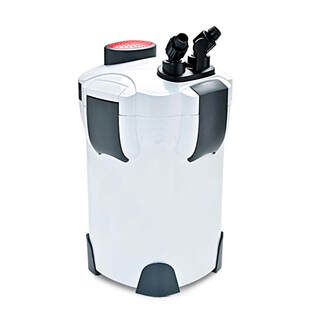
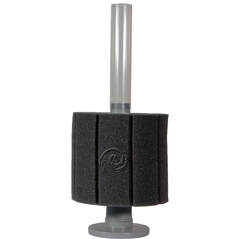
A Sponge Filter is an excellent compliment to most filters as the sponge filter can extend the tank size capacity of most filters they are used in conjunction with.
What is not always recognized by many (especially due of the cut and paste nature of the Internet), IS the fact (as per extensive controlled tests) that a well designed Sponge Filter can be the primary filter in ANY SIZE aquarium.
These tests showed a sponge filter exceeding all equivalent sized Power Filters (such as a Hydro Sponge #5 exceeding an AquaClear 110 for a 75 gallon aquarium for aerobic bio filtration).
Only a Fluidized Filter exceeds Sponge Filter efficiency when compared "apples to apples" models.
Product Resources:
AAP Hydro Sponge #5 Aquarium Filter
AAP Premium Fluidized Bio Filters
This article is a MUST READ:
Sponge Filtration- Facts & Information
Taking the aerobic bio filtration a step further, a Fluidized Sand Bed Filter can actually outperform most any high priced canister filter such as the Fluval FX5 and a Fluidized Sand Bed Filter and/or Premium Sponge Filter make a much less complicated alternative to messy canister filters (especially for those who find canister filters simply a pain to mess with).
Reference:
Aquarium Filtration: Fluidized Filters
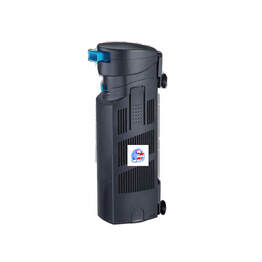
For a small aquarium, a combination of a "Hang On the Back" (HOB) power filter (such as the SunSun Economy HOB Filter) and a Sponge Filter.
Or a sponge filter and an internal power filter (such as the AAP Internal Power Filters) as another potential combination.
You want to make sure and rinse your sponge or cartridge out in used aquarium water to maintain your beneficial bacteria for bio filtration. Another note about the HOB filter is that they are far more efficient as bio filters if used with a sponge pre filter such a filter max.
The SunSun 702 series is more than an economy filter in that it is similar to more pricey HOB filters (such as the Tetra EX) with its motor design that pulls water in rather than one that pushes water out which makes priming easier and also does not have the tendency to get carbon or other particulates stuck in the impeller.
Product Resources:
Internal Power Filters
Internal Power Filters with UV
SeaChem Tidal Aquarium HOB FilterFor a mid size (or really any size) aquarium, you might consider a premium HOB Filter such as the AAP Tidal or Rena SuperClean Filter as well as the before mentioned Sponge filter for added redundancy.
Other HOB filters worthy of note are the Aqua Clear, Whisper, and Tetra EX series filters (which also have a motor that draws water in rather than pushes it out).
Product Resources:
AAP/SeaChem Tidal Premium HOB Filters
AAP Canister Filter Resource
For larger aquariums, a combination of a Fluidized and/or Canister Filter and an Internal Filter for cross circulation.
As for canister filters, I recommend AAP, Rena Filstar, Eheim, SunSun. While popular I do NOT recommend Fluvals as they have poor head pressure, high flow by rates and an un-reliable impeller based on my statistics which are based on using literally 100s.
Other filters of note include the wet/dry.
For Filter (& water pump) circulation, I recommend a minimum of a combined flow rate that turns over an aquarium a minimum of 5-6 times per hour, however 8-10 times would be better (although part of this can be simple circulation pumps), especially for fish such as goldfish.
As an example, I would recommend HOB (hang on the back power filter) of 150 gph plus a sponge filter that is moving 200 gph for a combined total of 350 gph for a 50 gallon aquarium (this is a turnover rate of 7 times per hour).
Adding circulation pumps such as a Seio Propeller Pump or an air-stone can also add to circulation, however I still recommend at least 5-6 times per hour through a filter and the remainder of circulation via simple circulation pumps, air stones, or similar.
Product Resource:
Seio Aquarium Propeller Water Pump
What is not always recognized by many (especially due of the cut and paste nature of the Internet), IS the fact (as per extensive controlled tests) that a well designed Sponge Filter can be the primary filter in ANY SIZE aquarium.
These tests showed a sponge filter exceeding all equivalent sized Power Filters (such as a Hydro Sponge #5 exceeding an AquaClear 110 for a 75 gallon aquarium for aerobic bio filtration).
Only a Fluidized Filter exceeds Sponge Filter efficiency when compared "apples to apples" models.
Product Resources:
AAP Hydro Sponge #5 Aquarium Filter
AAP Premium Fluidized Bio Filters
This article is a MUST READ:
Sponge Filtration- Facts & Information
Taking the aerobic bio filtration a step further, a Fluidized Sand Bed Filter can actually outperform most any high priced canister filter such as the Fluval FX5 and a Fluidized Sand Bed Filter and/or Premium Sponge Filter make a much less complicated alternative to messy canister filters (especially for those who find canister filters simply a pain to mess with).
Reference:
Aquarium Filtration: Fluidized Filters
For a small aquarium, a combination of a "Hang On the Back" (HOB) power filter (such as the SunSun Economy HOB Filter) and a Sponge Filter.
Or a sponge filter and an internal power filter (such as the AAP Internal Power Filters) as another potential combination.
You want to make sure and rinse your sponge or cartridge out in used aquarium water to maintain your beneficial bacteria for bio filtration. Another note about the HOB filter is that they are far more efficient as bio filters if used with a sponge pre filter such a filter max.
The SunSun 702 series is more than an economy filter in that it is similar to more pricey HOB filters (such as the Tetra EX) with its motor design that pulls water in rather than one that pushes water out which makes priming easier and also does not have the tendency to get carbon or other particulates stuck in the impeller.
Product Resources:
Internal Power Filters
Internal Power Filters with UV
SeaChem Tidal Aquarium HOB FilterFor a mid size (or really any size) aquarium, you might consider a premium HOB Filter such as the AAP Tidal or Rena SuperClean Filter as well as the before mentioned Sponge filter for added redundancy.
Other HOB filters worthy of note are the Aqua Clear, Whisper, and Tetra EX series filters (which also have a motor that draws water in rather than pushes it out).
Product Resources:
AAP/SeaChem Tidal Premium HOB Filters
AAP Canister Filter Resource
For larger aquariums, a combination of a Fluidized and/or Canister Filter and an Internal Filter for cross circulation.
As for canister filters, I recommend AAP, Rena Filstar, Eheim, SunSun. While popular I do NOT recommend Fluvals as they have poor head pressure, high flow by rates and an un-reliable impeller based on my statistics which are based on using literally 100s.
Other filters of note include the wet/dry.
For Filter (& water pump) circulation, I recommend a minimum of a combined flow rate that turns over an aquarium a minimum of 5-6 times per hour, however 8-10 times would be better (although part of this can be simple circulation pumps), especially for fish such as goldfish.
As an example, I would recommend HOB (hang on the back power filter) of 150 gph plus a sponge filter that is moving 200 gph for a combined total of 350 gph for a 50 gallon aquarium (this is a turnover rate of 7 times per hour).
Adding circulation pumps such as a Seio Propeller Pump or an air-stone can also add to circulation, however I still recommend at least 5-6 times per hour through a filter and the remainder of circulation via simple circulation pumps, air stones, or similar.
Product Resource:
Seio Aquarium Propeller Water Pump
Four Types of Filtration | Care of these Filter Types
Biological- the removal of nitrogenous waste (ammonia, etc.), which is the most important type.
Care: Rinse with de-chlorinated water (or used aquarium water) every two to six weeks depending upon flow through media. Change only when media can no longer be rinsed reasonably clean.
A common mistake with basic aquarium set ups this simple single cartridge only filters (especially the simple single cartridge filter kits sold at Walmart, PetsMart, etc.), is to throw way the cartridge during routine maintenance. Unfortunately if this is the sole filter, every time the filter cartridge is thrown out, the majority of the essential Aerobic Autotrophic nitrifying bacteria is thrown away too.
Better is to have second cartridge seeding for at least two weeks near the filter intake or exhaust and then to use this as a replacement.
MUCH BETTER is to have either a Sponge Pre-Filter on your filter intake which will preserve this beneficial bacteria OR to have a second (or even the primary) filter that is a "stand alone" Sponge Filter.
With either of these sponge filters, rinsing with de-chlorinated water will preserve your important bio filtration colonies and constant & dangerous ammonia/nitrite spikes will be a thing of the past!
Product References:
ATI Sponge Filters
ATI Filter Max Sponge Pre-Filters
Mechanical- the removal of larger debris (organic and inorganic) before it can go through the nitrogen cycle (organic) by means of filter fiber, sponges or other similar media.
Care: Change or rinse every two to six weeks depending upon condition of filter media (how fast it "clogs, etc.)
Chemical- The removal of chemical contamination via carbon, zeolite or many other products. This becomes less important in a healthy, established aquarium. Carbon is often overused in healthy well established aquariums. If I even use carbon, I will generally use only one teaspoon per 5-10 gallons. I do add more and change it more often in tanks treated with medication or a new aquarium.
Carbon is often not 100% necessary in established aquariums especially tanks with regular water changes and plants. I generally only use carbon to remove chemicals after treatment then remove the carbon. You can also leave old carbon to become a nitrifying bacterial colony. This point about carbon also lends credibility to Sponge Filters which are often considered poor filters due to the fact they provide no chemical filtration, this is based on poor information as to the need for carbon filtration.
Further Reference:
Use of Carbon in Aquariums, Ponds
Care: Change the carbon every 4-6 weeks depending upon water parameters carbon is being used to improve. Carbon may need to be changed or "refreshed" after each treatment with medications (not water conditioners)
Germicidal- The use of UVC or ozone to kill disease pathogens and control the Redox potential (though ozone generators do NOT improve Redox Balance).
Care: Change your UV Bulb every six months.
Further References:
Use of UV Sterilization for Aquariums
UV Replacement Bulbs
Air Pumps:
If an air pump is used for added circulation or to power a filter such as a Sponge Filter, placement of this pump can make quite a difference in its longevity.
Placement above the water level, even with the most inexpensive air pumps DOES make a difference in the life span of the pump.
I have had many a 'cheap' pump last 4-5 years when placed above the water level and 'better' air pumps last less than a year when placed under the aquarium.
If not possible adding a check valve is a must, as well looping the tubing about three times at the top of the tank can help.
Without taking these measures, a pump below the water level can also back siphon water during a power failure or simply if the pumps fails.
Additional control of air flow can be done with airline control valves and Ts. Use of both T and valves can allow for bleeding off of air to prevent damage to the air pump by just using a valve to lower air volume.
Sources for Air Pumps:
Million Air & Fusion Aquarium Pumps
For Suggested Freshwater Aquarium Filter set ups (depending upon the aquarium size, please see this article):
Freshwater Aquarium Set Up Suggestions
Biological- the removal of nitrogenous waste (ammonia, etc.), which is the most important type.
Care: Rinse with de-chlorinated water (or used aquarium water) every two to six weeks depending upon flow through media. Change only when media can no longer be rinsed reasonably clean.
A common mistake with basic aquarium set ups this simple single cartridge only filters (especially the simple single cartridge filter kits sold at Walmart, PetsMart, etc.), is to throw way the cartridge during routine maintenance. Unfortunately if this is the sole filter, every time the filter cartridge is thrown out, the majority of the essential Aerobic Autotrophic nitrifying bacteria is thrown away too.
Better is to have second cartridge seeding for at least two weeks near the filter intake or exhaust and then to use this as a replacement.
MUCH BETTER is to have either a Sponge Pre-Filter on your filter intake which will preserve this beneficial bacteria OR to have a second (or even the primary) filter that is a "stand alone" Sponge Filter.
With either of these sponge filters, rinsing with de-chlorinated water will preserve your important bio filtration colonies and constant & dangerous ammonia/nitrite spikes will be a thing of the past!
Product References:
ATI Sponge Filters
ATI Filter Max Sponge Pre-Filters
Mechanical- the removal of larger debris (organic and inorganic) before it can go through the nitrogen cycle (organic) by means of filter fiber, sponges or other similar media.
Care: Change or rinse every two to six weeks depending upon condition of filter media (how fast it "clogs, etc.)
Chemical- The removal of chemical contamination via carbon, zeolite or many other products. This becomes less important in a healthy, established aquarium. Carbon is often overused in healthy well established aquariums. If I even use carbon, I will generally use only one teaspoon per 5-10 gallons. I do add more and change it more often in tanks treated with medication or a new aquarium.
Carbon is often not 100% necessary in established aquariums especially tanks with regular water changes and plants. I generally only use carbon to remove chemicals after treatment then remove the carbon. You can also leave old carbon to become a nitrifying bacterial colony. This point about carbon also lends credibility to Sponge Filters which are often considered poor filters due to the fact they provide no chemical filtration, this is based on poor information as to the need for carbon filtration.
Further Reference:
Use of Carbon in Aquariums, Ponds
Care: Change the carbon every 4-6 weeks depending upon water parameters carbon is being used to improve. Carbon may need to be changed or "refreshed" after each treatment with medications (not water conditioners)
Germicidal- The use of UVC or ozone to kill disease pathogens and control the Redox potential (though ozone generators do NOT improve Redox Balance).
Care: Change your UV Bulb every six months.
Further References:
Use of UV Sterilization for Aquariums
UV Replacement Bulbs
Air Pumps:
If an air pump is used for added circulation or to power a filter such as a Sponge Filter, placement of this pump can make quite a difference in its longevity.
Placement above the water level, even with the most inexpensive air pumps DOES make a difference in the life span of the pump.
I have had many a 'cheap' pump last 4-5 years when placed above the water level and 'better' air pumps last less than a year when placed under the aquarium.
If not possible adding a check valve is a must, as well looping the tubing about three times at the top of the tank can help.
Without taking these measures, a pump below the water level can also back siphon water during a power failure or simply if the pumps fails.
Additional control of air flow can be done with airline control valves and Ts. Use of both T and valves can allow for bleeding off of air to prevent damage to the air pump by just using a valve to lower air volume.
Sources for Air Pumps:
Million Air & Fusion Aquarium Pumps
For Suggested Freshwater Aquarium Filter set ups (depending upon the aquarium size, please see this article):
Freshwater Aquarium Set Up Suggestions
Heaters & Warm Weather Cooling
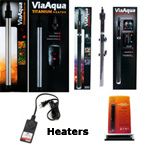
Most tropical fish do well at a temperature between 76 and 80 degrees Fahrenheit. (Discus prefer warmer).
Goldfish do not need a heater.
I recommend 25 watts for every 10 degrees of ambient temperature you need to raise your aquarium temperature.
Example: If your home is 68 degrees and you have a 40 gallon aquarium, to reach a temperature of 78 degrees you would need a 100 watt heater.
Also remember that bettas are still basically tropical fish too, so if they are kept in a bowl try and keep them in a warm area of your house, preferably above 70 F.
A light does not pass for a heater, you cannot leave your light on 24/7 (an exception would be an Infrared reptile lamp, which are great for bettas).
If your temperature fluctuates between night and day, even though you have the correct wattage heater, you may have an “Automatic” heater vs. a “Thermostatic” heater.
Usually the cheaper clip on the back are automatic heaters; these respond to a setting (two contacts that are tightened for more heat), not by temperature. These heaters generally turn on and off at the same rate whether it is summer or winter (which is why they need seasonal adjustments).
The best heater will have a separate temperature probe such as most Digital Titanium heaters.
For some examples of Thermostatic Heater, including Titanium, please see:
Aquarium Heaters
For more about aquarium heaters, please see this more in depth article:
Aquarium Heaters; Information & Review
Cooling- Sometimes cooling a tank in the warm summer months can be an issue, and most freshwater aquarists cannot afford an expensive chiller (which can cost $500 +). In many applications, even a an air conditioner is not a viable option.
A few suggestions include floating frozen 2 liter plastic pop bottles in the aquarium and/or the use of a wet towel draped over the tank with a fan aimed at this towel along with an open lid if viable depending upon fish kept (not viable for Arowanas for instance since they will jump out), this works similar to human perspiration or an evaporative cooler (do not cover lights or anything that would still trap the heat trying to escape via evaporation).
The wet towel/fan method is more efficient for larger aquariums and tends to have less temperature swings, however sometime the frozen bottle method is needed for quicker lowering of temperature; as well both methods can be combined.
In fact the wet towel method was provided by an old timer in the hobby quite some time ago after I mentioned I was using fans with an open top and he stated that the use of a wet towel greatly increases the efficiency of the fan, especially if it is not viable to leave the top open. In fact, if it were an either or situation; wet towel or fan only, the wet towel is more effective.
I often had clients leave a wet towel & fan on their tank before leaving for work, then add a frozen bottle when they come home.
Other options can simply be to add a small room air conditioner and set it at a high setting of 78 F. This can often be cheaper than both the purchase and operating cost of an aquarium chiller in my experience.
Finally, another method that has worked for me is an air pump placed in a mini refrigerator (or any refrigerator nearby), then running a couple air stones or sponge filters with lines coming from the refrigerator.
Goldfish do not need a heater.
I recommend 25 watts for every 10 degrees of ambient temperature you need to raise your aquarium temperature.
Example: If your home is 68 degrees and you have a 40 gallon aquarium, to reach a temperature of 78 degrees you would need a 100 watt heater.
Also remember that bettas are still basically tropical fish too, so if they are kept in a bowl try and keep them in a warm area of your house, preferably above 70 F.
A light does not pass for a heater, you cannot leave your light on 24/7 (an exception would be an Infrared reptile lamp, which are great for bettas).
If your temperature fluctuates between night and day, even though you have the correct wattage heater, you may have an “Automatic” heater vs. a “Thermostatic” heater.
Usually the cheaper clip on the back are automatic heaters; these respond to a setting (two contacts that are tightened for more heat), not by temperature. These heaters generally turn on and off at the same rate whether it is summer or winter (which is why they need seasonal adjustments).
The best heater will have a separate temperature probe such as most Digital Titanium heaters.
For some examples of Thermostatic Heater, including Titanium, please see:
Aquarium Heaters
For more about aquarium heaters, please see this more in depth article:
Aquarium Heaters; Information & Review
Cooling- Sometimes cooling a tank in the warm summer months can be an issue, and most freshwater aquarists cannot afford an expensive chiller (which can cost $500 +). In many applications, even a an air conditioner is not a viable option.
A few suggestions include floating frozen 2 liter plastic pop bottles in the aquarium and/or the use of a wet towel draped over the tank with a fan aimed at this towel along with an open lid if viable depending upon fish kept (not viable for Arowanas for instance since they will jump out), this works similar to human perspiration or an evaporative cooler (do not cover lights or anything that would still trap the heat trying to escape via evaporation).
The wet towel/fan method is more efficient for larger aquariums and tends to have less temperature swings, however sometime the frozen bottle method is needed for quicker lowering of temperature; as well both methods can be combined.
In fact the wet towel method was provided by an old timer in the hobby quite some time ago after I mentioned I was using fans with an open top and he stated that the use of a wet towel greatly increases the efficiency of the fan, especially if it is not viable to leave the top open. In fact, if it were an either or situation; wet towel or fan only, the wet towel is more effective.
I often had clients leave a wet towel & fan on their tank before leaving for work, then add a frozen bottle when they come home.
Other options can simply be to add a small room air conditioner and set it at a high setting of 78 F. This can often be cheaper than both the purchase and operating cost of an aquarium chiller in my experience.
Finally, another method that has worked for me is an air pump placed in a mini refrigerator (or any refrigerator nearby), then running a couple air stones or sponge filters with lines coming from the refrigerator.
Water Conditioning
If tap water is used it will have to be treated to remove chlorine or even chloramines and heavy metals.
Products such as "Weco DeChlor" for basic chlorine removal and "Jungle Start Right" which can remove chlorine as well as some metals and also break the ammonia/ chlorine bond in chloramines and remove the chlorine but both leave the ammonia IF present.
“SeaChem Prime”, Amquel Plus, Ammo Lock or similar products are good to use in municipalities where chloramines are used in tap water.
SeaChem Prime or Amquel Plus are excellent first choice products to use when ammonia and nitrite levels are an issue, as these do not interfere with the cycling process as other products can when used properly.
These can help with natural slime coat generation and are also temporary Redox Reducers which can aid in oxidative stress.
More about Redox:
Aquarium Redox
If ammonia/nitrites are not an issue, and especially with new fish or fish recovering from disease, AAP Res-Q is a must use water conditioner. This is the product I always had on hand in my professional aquarium maintenance route. AAP Res-Q is far superior to all similar slime coat products such as Stress Coat as the product produces a much better adhering slime and also has medications embedded to act as a medicated bandage.
Product Resources:
AAP Res-Q Premium Water Conditioner (& mild disease preventative)
SeaChem Prime
RO (Reverse Osmosis) water can be used IF minor elements and electrolytes are added. NEVER use straight RO water or even worse, distilled water.
For MUCH more information about tap water, please read this article:
“What should I know about Tap Water for my Aquarium? From Chlorine and Chloramines to Phosphates”
Product Resource:
TMC New Technology RO Aquarium Filter Systems
Aquarium Salt is also commonly added to freshwater aquariums as a disease preventative, slime coat stimulant, or simply due to possible requirements by certain freshwater fish such as Livebearers or African Cichlids to have salt present the water.
For more about the use of salt in freshwater aquariums, as the use there of often is recommended as a cure all for everything or totally panned, neither of which view is correct based on the science behind correct use:
Use of Salt in Freshwater Aquariums
Generally 1 tablespoon per 5 gallons (35 liters) of water for a community tank is what works best.
However this amount may be increased to double this for many livebearers such as mollies (please note that mollies need much more than salt, such as calcium and other elements).
I recommend reading this article for more information:
Mollies in Aquariums; Including Importance of Correct Water Chemistry
It should also be noted that some catfish (such as Cory Cats) are very sensitive to salt and care should be given in use of salt when these fish are present.
Salts (and not just NaCl) do not evaporate and only small amounts are depleted by normal life processes of aquarium inhabitants, so salt should only be added back during water changes and ONLY for the amount of water removed (changed) to prevent accumulation.
Here is one source for an advanced salt that includes other essential elements:
SeaChem Freshwater Aquarium Salt
Aquarium Water Top Off for Evaporation (including ATO):
Evaporation of aquarium water is a constant issue for any aquarium, but much more so open top aquariums and/or aquariums with sumps.
Most often, the use of tap/well water is perfectly fine and even chlorine is not an issue with very small top offs in closed aquariums (not so much chloramines).
The bigger problems arise in aquariums with large evaporation, especially Amazon or similar bio-topes or planted aquariums where build up of certain minerals could be problematic with well/tap water use. Generally RO or DI water (not home water softener water) is excellent for this use in these more specific systems. However with many fish such as livebearers, East African Cichlids , and similar, I would not be concerned.
Reference why not to use home/office water softener in aquarium:
Softened Water- Home/Office Water Softeners Use
Products such as SeaChem Replenish or AAP Regular Wonder Shells are recommended in the reservoir water used for toping off. For an AAP Wonder Shell, just 1/4 dose per water volume is all that is needed and even then, my experience has shown these dissolve very slowly when an ATO system is utilized.
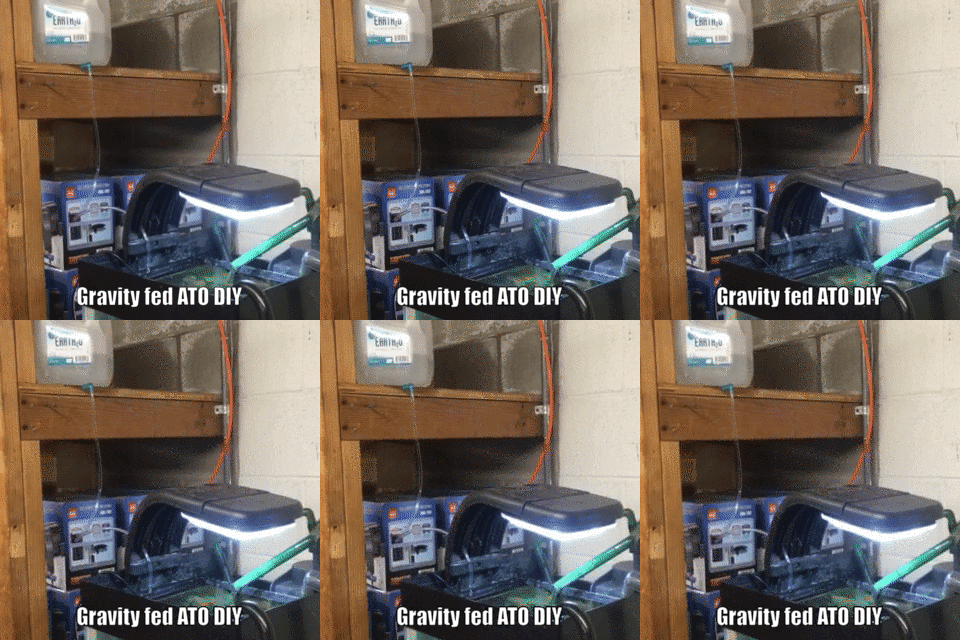
DIY Gravity Aquarium Automatic Top Off (ATO):
As for Automatic Top Off Systems (ATO), there are many ways to do this from simple floats (like used in toilets reservoirs), the Hydor Smart Level and similar electronic ATO systems, or simple gravity fed ATO reservoirs that use a simple air line valve to control input of water placed above the aquarium,, often hidden and out of the way.
In the average aquarium, I prefer the later DIY reservoir, as I have rarely had issues other than keeping the valve from clogging from deposits (usually this is a problem with tap/well water). While I like many Hydor products, I cannot recommend their Smart Level ATO due to too many failures reported by persons I trust, not to mention the high price.
Products such as "Weco DeChlor" for basic chlorine removal and "Jungle Start Right" which can remove chlorine as well as some metals and also break the ammonia/ chlorine bond in chloramines and remove the chlorine but both leave the ammonia IF present.
“SeaChem Prime”, Amquel Plus, Ammo Lock or similar products are good to use in municipalities where chloramines are used in tap water.
SeaChem Prime or Amquel Plus are excellent first choice products to use when ammonia and nitrite levels are an issue, as these do not interfere with the cycling process as other products can when used properly.
These can help with natural slime coat generation and are also temporary Redox Reducers which can aid in oxidative stress.
More about Redox:
Aquarium Redox
If ammonia/nitrites are not an issue, and especially with new fish or fish recovering from disease, AAP Res-Q is a must use water conditioner. This is the product I always had on hand in my professional aquarium maintenance route. AAP Res-Q is far superior to all similar slime coat products such as Stress Coat as the product produces a much better adhering slime and also has medications embedded to act as a medicated bandage.
Product Resources:
AAP Res-Q Premium Water Conditioner (& mild disease preventative)
SeaChem Prime
RO (Reverse Osmosis) water can be used IF minor elements and electrolytes are added. NEVER use straight RO water or even worse, distilled water.
For MUCH more information about tap water, please read this article:
“What should I know about Tap Water for my Aquarium? From Chlorine and Chloramines to Phosphates”
Product Resource:
TMC New Technology RO Aquarium Filter Systems
Aquarium Salt is also commonly added to freshwater aquariums as a disease preventative, slime coat stimulant, or simply due to possible requirements by certain freshwater fish such as Livebearers or African Cichlids to have salt present the water.
For more about the use of salt in freshwater aquariums, as the use there of often is recommended as a cure all for everything or totally panned, neither of which view is correct based on the science behind correct use:
Use of Salt in Freshwater Aquariums
Generally 1 tablespoon per 5 gallons (35 liters) of water for a community tank is what works best.
However this amount may be increased to double this for many livebearers such as mollies (please note that mollies need much more than salt, such as calcium and other elements).
I recommend reading this article for more information:
Mollies in Aquariums; Including Importance of Correct Water Chemistry
It should also be noted that some catfish (such as Cory Cats) are very sensitive to salt and care should be given in use of salt when these fish are present.
Salts (and not just NaCl) do not evaporate and only small amounts are depleted by normal life processes of aquarium inhabitants, so salt should only be added back during water changes and ONLY for the amount of water removed (changed) to prevent accumulation.
Here is one source for an advanced salt that includes other essential elements:
SeaChem Freshwater Aquarium Salt
Aquarium Water Top Off for Evaporation (including ATO):
Evaporation of aquarium water is a constant issue for any aquarium, but much more so open top aquariums and/or aquariums with sumps.
Most often, the use of tap/well water is perfectly fine and even chlorine is not an issue with very small top offs in closed aquariums (not so much chloramines).
The bigger problems arise in aquariums with large evaporation, especially Amazon or similar bio-topes or planted aquariums where build up of certain minerals could be problematic with well/tap water use. Generally RO or DI water (not home water softener water) is excellent for this use in these more specific systems. However with many fish such as livebearers, East African Cichlids , and similar, I would not be concerned.
Reference why not to use home/office water softener in aquarium:
Softened Water- Home/Office Water Softeners Use
Products such as SeaChem Replenish or AAP Regular Wonder Shells are recommended in the reservoir water used for toping off. For an AAP Wonder Shell, just 1/4 dose per water volume is all that is needed and even then, my experience has shown these dissolve very slowly when an ATO system is utilized.
DIY Gravity Aquarium Automatic Top Off (ATO):
As for Automatic Top Off Systems (ATO), there are many ways to do this from simple floats (like used in toilets reservoirs), the Hydor Smart Level and similar electronic ATO systems, or simple gravity fed ATO reservoirs that use a simple air line valve to control input of water placed above the aquarium,, often hidden and out of the way.
In the average aquarium, I prefer the later DIY reservoir, as I have rarely had issues other than keeping the valve from clogging from deposits (usually this is a problem with tap/well water). While I like many Hydor products, I cannot recommend their Smart Level ATO due to too many failures reported by persons I trust, not to mention the high price.
Cycling
Your aquarium will not be at peak biological filtration for 6 weeks (or more).
To start your biological filtration, there are many cycling products available, many such as “Cycle” by Hagen are made with Heterotrophic Bacteria instead of the proper Autotrophic nitrifying bacteria. My success with these products is mixed at best.
A better cycling product would be SeaChem Stability which is a blend of synergistic blend of aerobic (including encapsulated oxygen) and facultative bacteria.
Even then this product should not be depended upon as the sole means of nitrogen cycling, ONLY AS AN AID!
Product Resource:
SeaChem Stability
I prefer to add gravel and/or used filter sponge or cartridge from another well established aquarium.
This method of adding seasoned filter media is much faster in establishing a bio filter (you still have to take it slow), and provides all the necessary bacteria.
The only negative is rare possibility of adding disease pathogens to your aquarium, but I have rarely encountered this problem.
We used this method for our Aquarium Maintenance route for years and never lost a fish to Ammonia or nitrite poisoning.
If you add plants (many such as hornwort remove nitrogenous waste directly), you can stock somewhat faster as the plants will remove ammonia too, but also usurp the establishment of nitrifying bacterial colonies.
Another method is fishless cycling include adding fish food to bring your ammonia to about 4-5 ppm or the use of un-scented ammonia where it is added into the aquarium (3-5 drops per gallon pure ammonia) so as to bring your ammonia level to 4-5 ppm. It then takes about 2-6 weeks for the aquarium to cycle.
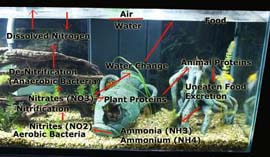
Cycling is what is referred to as the Nitrogen cycle.
Waste (nitrogenous) from the fish is broken down first from ammonia (NH3, the most toxic) to nitrites (NO2, less toxic) to nitrates (NO3, least toxic- but high amounts can stunt fish growth and lower disease resistance).
At a pH of 6.5, NH3 (ammonia) converts to NH4 (ammonia) which is basically non-toxic to most fish (many ammonia removing chemicals such as Prime utilize a similar ion change, as they do not actually remove ammonia).
If you have plants in your aquarium many will directly consume the ammonia (especially hornwort), thus rendering the NO2 (nitrite) part of the nitrogen cycle null. The danger here is if your pH climbs above 6.5 the ammonia can change to much more toxic NH3 and the aerobic bacteria needed for nitrite consumption will be sparse.
Aquarium cycling is a VERY important topic (more so for a beginner) and I highly recommend reading the FULL article below about The Aquarium Nitrogen Cycle.
This article will go into MUCH greater depth about all aspects of cycling and explain the truths and myths as well:
Aquarium Nitrogen Cycle and Cycling
To start your biological filtration, there are many cycling products available, many such as “Cycle” by Hagen are made with Heterotrophic Bacteria instead of the proper Autotrophic nitrifying bacteria. My success with these products is mixed at best.
A better cycling product would be SeaChem Stability which is a blend of synergistic blend of aerobic (including encapsulated oxygen) and facultative bacteria.
Even then this product should not be depended upon as the sole means of nitrogen cycling, ONLY AS AN AID!
Product Resource:
SeaChem Stability
I prefer to add gravel and/or used filter sponge or cartridge from another well established aquarium.
This method of adding seasoned filter media is much faster in establishing a bio filter (you still have to take it slow), and provides all the necessary bacteria.
The only negative is rare possibility of adding disease pathogens to your aquarium, but I have rarely encountered this problem.
We used this method for our Aquarium Maintenance route for years and never lost a fish to Ammonia or nitrite poisoning.
If you add plants (many such as hornwort remove nitrogenous waste directly), you can stock somewhat faster as the plants will remove ammonia too, but also usurp the establishment of nitrifying bacterial colonies.
Another method is fishless cycling include adding fish food to bring your ammonia to about 4-5 ppm or the use of un-scented ammonia where it is added into the aquarium (3-5 drops per gallon pure ammonia) so as to bring your ammonia level to 4-5 ppm. It then takes about 2-6 weeks for the aquarium to cycle.
Cycling is what is referred to as the Nitrogen cycle.
Waste (nitrogenous) from the fish is broken down first from ammonia (NH3, the most toxic) to nitrites (NO2, less toxic) to nitrates (NO3, least toxic- but high amounts can stunt fish growth and lower disease resistance).
At a pH of 6.5, NH3 (ammonia) converts to NH4 (ammonia) which is basically non-toxic to most fish (many ammonia removing chemicals such as Prime utilize a similar ion change, as they do not actually remove ammonia).
If you have plants in your aquarium many will directly consume the ammonia (especially hornwort), thus rendering the NO2 (nitrite) part of the nitrogen cycle null. The danger here is if your pH climbs above 6.5 the ammonia can change to much more toxic NH3 and the aerobic bacteria needed for nitrite consumption will be sparse.
Aquarium cycling is a VERY important topic (more so for a beginner) and I highly recommend reading the FULL article below about The Aquarium Nitrogen Cycle.
This article will go into MUCH greater depth about all aspects of cycling and explain the truths and myths as well:
Aquarium Nitrogen Cycle and Cycling
Chemistry & Test Kits
First, please note that this section is a VERY brief and basic outline of freshwater aquarium chemistry. For any aquarium keeper looking to go beyond just very basic aquarium keeping, please read these articles:
The above noted Nitrogen Cycle Article
Aquarium Chemistry
The above article has a basic suggestions section near the end that is worth reading.
Osmoregulation in Fish; Minerals; Use of RO, Soft Water for Aquarium
Next, it is generally helpful to know your new water source parameters (tap water, etc. used for filling your aquarium). This will help you make what is generally only minor adjustments to your chemistry with buffers and mineral supplements.
Keeping exact GH, KH, & especially pH is for advanced fish keeping and should not be attempted until an aquarium keeper has a clear understanding of aquarium chemistry as well outlined in the above reference "Aquarium Chemistry" article.
As an example, the use of products such as "pH down" should NEVER be used
Summary of "Numbers" to Maintain:
Ammonia/Nitrites- 0
Very toxic even at low levels, should be kept at or near 0
Product Resource:
Aquarium Test Kits- Ammonia
Please see this article for more about lowering ammonia/nitrite and preventing high aquarium ammonia/nitrite:
Aquarium Nitrogen Cycle- High Ammonia/Nitrite Problems
Nitrates- under 40-50 ppm (lower yet is always better)
Reference this article for information about controlling Nitrates:
Aquarium Nitrate Control
Product Resource:
Nitrate Test Kit from AAP
GH- this is best above 100 ppm for 90% of FW fish and above 200 for over 60%
Product Resource:
GH Test Kit from AAP
GH is also the parameter ESSENTIAL positive mineral ions (Cat-ions) are found in, and fish kept in water with inadequate mineral cations can suffer health problems over the long term.
Wonder Shells, SeaChem Replenish, and to some degree Aragonite & crushed coral can help with important mineral cations (although crushed coral does not dissolve at a rapid enough rate to help as well).
Reference:
Aquarium Chemistry- Depletion of Positive Mineral Ions
Product Resource:
Wonder Shells; Unique Version ONLY from American Aquarium
pH- Stable is most important, but for general community tanks a 6.8-7.8 falls within most fish tolerances as long as there is pH stability since the pH scale is logarithmic and sudden changes can be deadly.
As well, pH depends very much on the fish you are keeping.
Discus prefer under a ph below 7.0, while Mbuna African cichlids prefer above 8.0, but again I want emphasize "stability" over the actual pH "number".
As well KH along with GH are often more important than many aquarium keepers realize (KH affects pH stability). If you manage your KH levels to where they should be, your pH should fall into range. (It will not always be the same, but will be in the proper range when GH and KH are properly managed.)
Please see this article for more on the subject of pH:
Aquarium Chemistry- pH
Product Resource:
pH Test Kits from AAP
KH- VERY important for pH stability which is why I this is a more important test than pH in my experience and knowledge of aquarium chemistry.
Sea Chem Buffers and to some degree Aragonite can help maintain a high KH & pH when you desire an aquarium with a higher pH/KH especially where tap or well water is very acidic.
It is noteworthy that Buffers are generally best tested via KH, not pH, otherwise using buffers for exact pH maintenance can result in dangerous pH chasing.
For a lower pH in aquariums where the tap water used is very high (usually 7.8 or above), I have used blends of RO (Reverse Osmosis) water and tap water.
The ratio varies with the tap water pH, KH, & GH and the water conditions I want to achieve.
With advanced Discus aquariums, it can be 100% RO water assuming the water is properly re-mineralized with products such as SeaChem Replenish; RO Water Mineralizer.
Then to maintain these conditions I use peat in my filters.
Product Resource:
SeaChem Replenish from AAP
Another method for lowering pH is crushed almond husk or Pillow Moss.
This actually works quite well for this purpose.
ZooMed Frog Moss is actually pillow moss and can be used in aquarium filters for this purpose.
Product Resource:
Pillow/Frog Moss
Note that GH does not directly affect pH.
Also note that calcium is also important for fish metabolism and fish health and healing (along with other essential electrolytes/minerals found in "GH").
With the above method of using RO (or DI) water in a blend with tap water and peat, I have still been able to maintain a a low but still healthy KH and GH level.
Caution- Soft Water Use: water that originates from a home or office water softener that uses sodium (salt) should Never be used in any aquarium.
As well use of so-called Drinking Water or 100% Reverse Osmosis water should only be used by a more advance aquarium keeper that knows how to properly re-mineral this water (for those that know how, the water quality will be top notch).
Please read why the use of Soft Water has dangerous implications for your fish:
Use of Soft Water for Aquarium- Dangers
Suggested Test Kits-
It is always best to have as many different test kits (that apply to a freshwater aquarium) as you can afford.
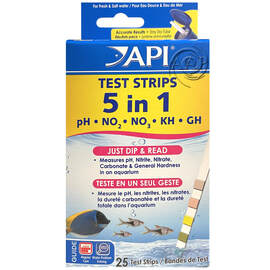
Test Strips- although generally not as accurate are still very useful for quick readings that are STILL ACCURATE ENOUGH (provided stored dry) for a beginner or intermediate aquarist to get a very good barometer of aquatic health.
The 5 in 1 Test Strips provide 5 key aquarium parameters including the important yet often missed KH and GH test. Although the ammonia test is missing, the nitrite test is often a good enough parameter for established aquariums (past the cycling process).
As well for ammonia, I MUCH PREFER the SeaChem Ammonia Alert since it tests ONLY for toxic NH3 versus both NH# and non toxic NH4 as with 95% of all other aquarium tests. This product is also quick and easy to read the way it simply sit inside the aquarium.
My bottom line recommendation is the combination of the 5 in 1 & Ammonia Alert for most freshwater aquarium keepers if you were to choose just two tests (BTW, I never recommend the Master Test Kits!)
Product Resources:
5 in 1 Test Strips from AAP
SeaChem Ammonia Alert
For a more in depth article and explanation about Aquarium Test Kits, please follow this link:
AQUARIUM TEST KITS- what they are used for and their importance.
The above noted Nitrogen Cycle Article
Aquarium Chemistry
The above article has a basic suggestions section near the end that is worth reading.
Osmoregulation in Fish; Minerals; Use of RO, Soft Water for Aquarium
Next, it is generally helpful to know your new water source parameters (tap water, etc. used for filling your aquarium). This will help you make what is generally only minor adjustments to your chemistry with buffers and mineral supplements.
Keeping exact GH, KH, & especially pH is for advanced fish keeping and should not be attempted until an aquarium keeper has a clear understanding of aquarium chemistry as well outlined in the above reference "Aquarium Chemistry" article.
As an example, the use of products such as "pH down" should NEVER be used
Summary of "Numbers" to Maintain:
Ammonia/Nitrites- 0
Very toxic even at low levels, should be kept at or near 0
Product Resource:
Aquarium Test Kits- Ammonia
Please see this article for more about lowering ammonia/nitrite and preventing high aquarium ammonia/nitrite:
Aquarium Nitrogen Cycle- High Ammonia/Nitrite Problems
Nitrates- under 40-50 ppm (lower yet is always better)
Reference this article for information about controlling Nitrates:
Aquarium Nitrate Control
Product Resource:
Nitrate Test Kit from AAP
GH- this is best above 100 ppm for 90% of FW fish and above 200 for over 60%
Product Resource:
GH Test Kit from AAP
GH is also the parameter ESSENTIAL positive mineral ions (Cat-ions) are found in, and fish kept in water with inadequate mineral cations can suffer health problems over the long term.
Wonder Shells, SeaChem Replenish, and to some degree Aragonite & crushed coral can help with important mineral cations (although crushed coral does not dissolve at a rapid enough rate to help as well).
Reference:
Aquarium Chemistry- Depletion of Positive Mineral Ions
Product Resource:
Wonder Shells; Unique Version ONLY from American Aquarium
pH- Stable is most important, but for general community tanks a 6.8-7.8 falls within most fish tolerances as long as there is pH stability since the pH scale is logarithmic and sudden changes can be deadly.
As well, pH depends very much on the fish you are keeping.
Discus prefer under a ph below 7.0, while Mbuna African cichlids prefer above 8.0, but again I want emphasize "stability" over the actual pH "number".
As well KH along with GH are often more important than many aquarium keepers realize (KH affects pH stability). If you manage your KH levels to where they should be, your pH should fall into range. (It will not always be the same, but will be in the proper range when GH and KH are properly managed.)
Please see this article for more on the subject of pH:
Aquarium Chemistry- pH
Product Resource:
pH Test Kits from AAP
KH- VERY important for pH stability which is why I this is a more important test than pH in my experience and knowledge of aquarium chemistry.
Sea Chem Buffers and to some degree Aragonite can help maintain a high KH & pH when you desire an aquarium with a higher pH/KH especially where tap or well water is very acidic.
It is noteworthy that Buffers are generally best tested via KH, not pH, otherwise using buffers for exact pH maintenance can result in dangerous pH chasing.
For a lower pH in aquariums where the tap water used is very high (usually 7.8 or above), I have used blends of RO (Reverse Osmosis) water and tap water.
The ratio varies with the tap water pH, KH, & GH and the water conditions I want to achieve.
With advanced Discus aquariums, it can be 100% RO water assuming the water is properly re-mineralized with products such as SeaChem Replenish; RO Water Mineralizer.
Then to maintain these conditions I use peat in my filters.
Product Resource:
SeaChem Replenish from AAP
Another method for lowering pH is crushed almond husk or Pillow Moss.
This actually works quite well for this purpose.
ZooMed Frog Moss is actually pillow moss and can be used in aquarium filters for this purpose.
Product Resource:
Pillow/Frog Moss
Note that GH does not directly affect pH.
Also note that calcium is also important for fish metabolism and fish health and healing (along with other essential electrolytes/minerals found in "GH").
With the above method of using RO (or DI) water in a blend with tap water and peat, I have still been able to maintain a a low but still healthy KH and GH level.
Caution- Soft Water Use: water that originates from a home or office water softener that uses sodium (salt) should Never be used in any aquarium.
As well use of so-called Drinking Water or 100% Reverse Osmosis water should only be used by a more advance aquarium keeper that knows how to properly re-mineral this water (for those that know how, the water quality will be top notch).
Please read why the use of Soft Water has dangerous implications for your fish:
Use of Soft Water for Aquarium- Dangers
Suggested Test Kits-
It is always best to have as many different test kits (that apply to a freshwater aquarium) as you can afford.
Test Strips- although generally not as accurate are still very useful for quick readings that are STILL ACCURATE ENOUGH (provided stored dry) for a beginner or intermediate aquarist to get a very good barometer of aquatic health.
The 5 in 1 Test Strips provide 5 key aquarium parameters including the important yet often missed KH and GH test. Although the ammonia test is missing, the nitrite test is often a good enough parameter for established aquariums (past the cycling process).
As well for ammonia, I MUCH PREFER the SeaChem Ammonia Alert since it tests ONLY for toxic NH3 versus both NH# and non toxic NH4 as with 95% of all other aquarium tests. This product is also quick and easy to read the way it simply sit inside the aquarium.
My bottom line recommendation is the combination of the 5 in 1 & Ammonia Alert for most freshwater aquarium keepers if you were to choose just two tests (BTW, I never recommend the Master Test Kits!)
Product Resources:
5 in 1 Test Strips from AAP
SeaChem Ammonia Alert
For a more in depth article and explanation about Aquarium Test Kits, please follow this link:
AQUARIUM TEST KITS- what they are used for and their importance.
Basic Lighting
For the average freshwater aquarium, lighting is not as important a consideration as it is for a planted freshwater aquarium or reef aquarium.
However, there is some evidence (not conclusive) that good lighting aids in Correct Redox which is a water parameter that has an definite effect on fish health.
A "proper" light for your aquarium does often make a difference as far as algae. In fact, often too much blue light spectrum can contribute to algae growth. Generally you will do best for algae as well as Redox with a 6500K light.
References:
Aquarium Redox
Aquarium Algae- Brown Diatom
These same 6400 K high output CFL aquarium lights can also be purchased separately and used in standard incandescent aquarium (or other) light fixtures as pictured to the left.
A popular newer technology is the LED Aquarium light fixture.
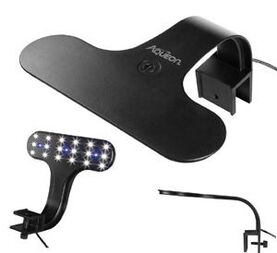
If you need an entry LED light, especially for community or low/medium light planted aquariums for the basic model and one for high light plants for the upgraded model, this AAP/Aqueon LED might be a good fit. These are about as efficient as many other entry level LEDs (such as Finnex & Fluval) without the price and slick marketing.
Product Resource:
AAP/Aqueon Freshwater Aquarium LED Clip-On Light
For the highest output of useful light energy, the AAP AquaGro Colour Plus (excellent to bring out colors) and even more so the GroBeam LED Aquarium light are by far the leaders among all lights (including MOST ALL other LEDs) except maybe Metal Halides, but this may be cost prohibitive to many basic freshwater aquarium keepers.
Product Resource:
Aquarium LED Lighting- GroBeams & Colour Plus
Finally, good ole fashioned T8 & T12 aquarium lights such as the Aquarilux by Penn Plax that are available in lengths from 12 to 48 inches are still practical for a basic FW aquarium application.
Coralife, Hagen and Zoomed make comparable aquarium lights, all of which are useful for bringing out the colors of the fish, albeit lacking in lumens per output, PAR, and other lighting benefits (that are still helpful for a fish only aquarium).
I would NOT recommend standard incandescent light bulbs (which are unfortunately still sold in many aquarium supply outlets) and STRONGLY recommend the use of the self ballasted CFL aquarium lights that will fit into these incandescent fixtures.
As well, not all CFL you may see available in hardware stores, Walmart, etc are equal, the vast majority are of under 4500 K and not adequate for aquariums.
Product Resource:
Self Ballasted CFL Lights- 6400K
Cool White lights also are NOT appropriate for aquariums due to poor lumens per watt, incorrect PAR and Kelvin output which can result in growth of Cyanobacteria or Brown Diatom Algae.
Hardware Store/Walmart Grow-Light bulbs can be an inexpensive alternative and have a better PAR than most inexpensive bulbs, however even these have a low lumen per watt output and are not quite the bargain they may seem when this is considered.
Please reference this article for more about Aquarium lighting from basics to advanced (also see the basic freshwater section in the summary near the end):
AQUARIUM LIGHTING- Researched and current information about aquatic lights.
However, there is some evidence (not conclusive) that good lighting aids in Correct Redox which is a water parameter that has an definite effect on fish health.
A "proper" light for your aquarium does often make a difference as far as algae. In fact, often too much blue light spectrum can contribute to algae growth. Generally you will do best for algae as well as Redox with a 6500K light.
References:
Aquarium Redox
Aquarium Algae- Brown Diatom
These same 6400 K high output CFL aquarium lights can also be purchased separately and used in standard incandescent aquarium (or other) light fixtures as pictured to the left.
A popular newer technology is the LED Aquarium light fixture.
If you need an entry LED light, especially for community or low/medium light planted aquariums for the basic model and one for high light plants for the upgraded model, this AAP/Aqueon LED might be a good fit. These are about as efficient as many other entry level LEDs (such as Finnex & Fluval) without the price and slick marketing.
Product Resource:
AAP/Aqueon Freshwater Aquarium LED Clip-On Light
For the highest output of useful light energy, the AAP AquaGro Colour Plus (excellent to bring out colors) and even more so the GroBeam LED Aquarium light are by far the leaders among all lights (including MOST ALL other LEDs) except maybe Metal Halides, but this may be cost prohibitive to many basic freshwater aquarium keepers.
Product Resource:
Aquarium LED Lighting- GroBeams & Colour Plus
Finally, good ole fashioned T8 & T12 aquarium lights such as the Aquarilux by Penn Plax that are available in lengths from 12 to 48 inches are still practical for a basic FW aquarium application.
Coralife, Hagen and Zoomed make comparable aquarium lights, all of which are useful for bringing out the colors of the fish, albeit lacking in lumens per output, PAR, and other lighting benefits (that are still helpful for a fish only aquarium).
I would NOT recommend standard incandescent light bulbs (which are unfortunately still sold in many aquarium supply outlets) and STRONGLY recommend the use of the self ballasted CFL aquarium lights that will fit into these incandescent fixtures.
As well, not all CFL you may see available in hardware stores, Walmart, etc are equal, the vast majority are of under 4500 K and not adequate for aquariums.
Product Resource:
Self Ballasted CFL Lights- 6400K
Cool White lights also are NOT appropriate for aquariums due to poor lumens per watt, incorrect PAR and Kelvin output which can result in growth of Cyanobacteria or Brown Diatom Algae.
Hardware Store/Walmart Grow-Light bulbs can be an inexpensive alternative and have a better PAR than most inexpensive bulbs, however even these have a low lumen per watt output and are not quite the bargain they may seem when this is considered.
Please reference this article for more about Aquarium lighting from basics to advanced (also see the basic freshwater section in the summary near the end):
AQUARIUM LIGHTING- Researched and current information about aquatic lights.
Live Plants

Live plants are desirable in my opinion, but many artificial plants can look quite realistic when properly arranged or used in conjunction with live plants.
For a beginner, live plants can be more difficult depending upon the plant species and fish kept.
The benefits of live plants are they are great at nitrate removal and keep a natural balance to the aquarium, removing CO2 and adding oxygen (only during daylight).
Hornwort is an excellent plant for nitrate removal (and even ammonia removal), and is relatively easy to grow. Banana plants (when available) are also a very easy plant.
Be careful with many fish that will “mow down” your plants such as: Silver Dollars, most African cichlids, and even goldfish.
For healthy plants I suggest a substrate of #00 sand mixed with products such as SeaChem Flourite or Eco Complete about 3-5 cm deep with a layer of #3 gravel on top about 2 cm deep.
This combination works well for plant roots, ease of vacuuming the top layer ONLY (where plant roots are), and for better bio filtration.
You can substitute Flourite with a sandy top soil (although usually not as good a source of iron), by preparing the soil thus; Gather sandy top soil, add water with a 10/1 bleach solution, mix for a couple of minutes, then rinse (with a de-chlorinator for first rinse) until the water runs relatively clear.
The sand that is left is what you mix with your plant roots, please note that although an inexpensive route to go, this ‘homemade plant substrate is not as good as Commercially prepared plant substrates such as Eco-Complete.
Product Resource:
SeaChem Flourite
It is important to note that dying plants can add to your ammonia, nitrite, nitrate and even kH problems (production of nitric acid through decay), so is important to keep your plants healthy.
For healthy plants you will need-
Planted Aquarium
PROPER LIGHTING: 3-4 watts per gallon is quite outdated now, especially with the high end LED Aquarium Lights now available, as there is a lot more that goes into the equation than this (I am not referring to the many low end LEDs that have flooded the market via Amazon, etc, so do not make the mistake of comparing apples to oranges).
A couple of important lighting parameters are useful light energy (PUR) & light spectrum/ Kelvin temperature.
Photosynthesis takes place at the blue end and even more so at the red end of the Nanometer curve (420 nm blue and 670 nm red). A bulb in the 5500- 6700 K range is generally best for plants. The Lux that reaches the plants is also important.
It is also noteworthy that while the term PAR is thrown around a lot, while it is definitely important, PUR is much more important and for this reason many lower quality lights do not publish their PUR spectrograms.
For a more in depth article about lighting please reference:
AQUARIUM LIGHTING, Kelvin, PUR, and more
Including sections such as: "PUR, Useful Light Energy"
SUBSTRATE for a healthy root structure:
This is provided by a good sandy base and careful cleaning so as to not disturb this. The roots are support symbiotic bacteria that aid in Nitrate assimilation and other processes.
BIO AVAILABLE CARBON and a Proper gas exchange:
Moderate surface agitation where gasses such as Oxygen and CO2 are added/ subtracted from the aquarium.
You can add to the bio available carbon and CO2 levels through a product called Sea Chem Flourish Excel, a CO2 generator, or by powdering some Ammo Carb (for carbon and Iron) into a fine powder and gently adding this with finger tips around the plants. (The first two methods are more effective)
This is where there is a lot of misunderstanding, the key is bio available. This why I find the Flourish Excel a useful albeit basic product as this is bio-available organic carbon.
Product Resource:
SeaChem Flourish Excel
PROPER NUTRIENTS OR ‘FERTS’:
You will need a Nitrate level between 15-40 ppm, iron (best in the soil, which is where the laterite helps), LOW phosphate levels to help plants compete better with algae, and many other trace elements that should be present from fish waste with a proper feeding regimen.
Some Plants to Have:
Hornwort (Ceratophyllum demersun)
Java Moss (Vesicularia dubyana)
Dwarf Anubias (Anubias nana)
Java Fern (Microsorum pteropus)
Water Sprite (Ceratopteris thalictroides)
FOR MY FULL PLANTED AQUARIUM ARTICLE, please follow this link:
Aquarium Plant Care- Substrate, Ferts, CO2, Lighting, Plants, more
For a beginner, live plants can be more difficult depending upon the plant species and fish kept.
The benefits of live plants are they are great at nitrate removal and keep a natural balance to the aquarium, removing CO2 and adding oxygen (only during daylight).
Hornwort is an excellent plant for nitrate removal (and even ammonia removal), and is relatively easy to grow. Banana plants (when available) are also a very easy plant.
Be careful with many fish that will “mow down” your plants such as: Silver Dollars, most African cichlids, and even goldfish.
For healthy plants I suggest a substrate of #00 sand mixed with products such as SeaChem Flourite or Eco Complete about 3-5 cm deep with a layer of #3 gravel on top about 2 cm deep.
This combination works well for plant roots, ease of vacuuming the top layer ONLY (where plant roots are), and for better bio filtration.
You can substitute Flourite with a sandy top soil (although usually not as good a source of iron), by preparing the soil thus; Gather sandy top soil, add water with a 10/1 bleach solution, mix for a couple of minutes, then rinse (with a de-chlorinator for first rinse) until the water runs relatively clear.
The sand that is left is what you mix with your plant roots, please note that although an inexpensive route to go, this ‘homemade plant substrate is not as good as Commercially prepared plant substrates such as Eco-Complete.
Product Resource:
SeaChem Flourite
It is important to note that dying plants can add to your ammonia, nitrite, nitrate and even kH problems (production of nitric acid through decay), so is important to keep your plants healthy.
For healthy plants you will need-
Planted Aquarium
PROPER LIGHTING: 3-4 watts per gallon is quite outdated now, especially with the high end LED Aquarium Lights now available, as there is a lot more that goes into the equation than this (I am not referring to the many low end LEDs that have flooded the market via Amazon, etc, so do not make the mistake of comparing apples to oranges).
A couple of important lighting parameters are useful light energy (PUR) & light spectrum/ Kelvin temperature.
Photosynthesis takes place at the blue end and even more so at the red end of the Nanometer curve (420 nm blue and 670 nm red). A bulb in the 5500- 6700 K range is generally best for plants. The Lux that reaches the plants is also important.
It is also noteworthy that while the term PAR is thrown around a lot, while it is definitely important, PUR is much more important and for this reason many lower quality lights do not publish their PUR spectrograms.
For a more in depth article about lighting please reference:
AQUARIUM LIGHTING, Kelvin, PUR, and more
Including sections such as: "PUR, Useful Light Energy"
SUBSTRATE for a healthy root structure:
This is provided by a good sandy base and careful cleaning so as to not disturb this. The roots are support symbiotic bacteria that aid in Nitrate assimilation and other processes.
BIO AVAILABLE CARBON and a Proper gas exchange:
Moderate surface agitation where gasses such as Oxygen and CO2 are added/ subtracted from the aquarium.
You can add to the bio available carbon and CO2 levels through a product called Sea Chem Flourish Excel, a CO2 generator, or by powdering some Ammo Carb (for carbon and Iron) into a fine powder and gently adding this with finger tips around the plants. (The first two methods are more effective)
This is where there is a lot of misunderstanding, the key is bio available. This why I find the Flourish Excel a useful albeit basic product as this is bio-available organic carbon.
Product Resource:
SeaChem Flourish Excel
PROPER NUTRIENTS OR ‘FERTS’:
You will need a Nitrate level between 15-40 ppm, iron (best in the soil, which is where the laterite helps), LOW phosphate levels to help plants compete better with algae, and many other trace elements that should be present from fish waste with a proper feeding regimen.
Some Plants to Have:
Hornwort (Ceratophyllum demersun)
Java Moss (Vesicularia dubyana)
Dwarf Anubias (Anubias nana)
Java Fern (Microsorum pteropus)
Water Sprite (Ceratopteris thalictroides)
FOR MY FULL PLANTED AQUARIUM ARTICLE, please follow this link:
Aquarium Plant Care- Substrate, Ferts, CO2, Lighting, Plants, more
Fish Acclimation
Once you have removed your chlorine (if necessary) adjusted your temperature, checked basic water parameters (kH, pH, Ammonia), you can start with a few fish.
It is best to wait at least 1-2 days for the first fish after initial set-up. Float the bag your new fish came in for 10 minutes, then open the bag and add a small amount of water.
After 5 more minutes add some more water, and continue this process for about 30 minutes.
After 30 minutes, gently remove your fish without adding ANY of the bag water to your aquarium to prevent disease transfer.
Also reference this more in depth article:
Aquarium Disease Prevention- Acclimation
It is best to wait at least 1-2 days for the first fish after initial set-up. Float the bag your new fish came in for 10 minutes, then open the bag and add a small amount of water.
After 5 more minutes add some more water, and continue this process for about 30 minutes.
After 30 minutes, gently remove your fish without adding ANY of the bag water to your aquarium to prevent disease transfer.
Also reference this more in depth article:
Aquarium Disease Prevention- Acclimation
Feeding
I recommend feeding high quality fish and plant based foods. Quality ingredients include: spirulina, Whole Menhaden Fish Meal, FD Brine Shrimp, shrimp meal, Vitamin C & E, lobster shell.
Fish cannot digest proteins from beef well, and fish get most their energy requirements from fats.
In fact as per energy, almost EVERY commercial fish food has too high energy levels which can lead to fatty liver issues and lower disease resistance. One of the few that meets proven energy levels and fiber minimums is Clay Neighbor's AAP Custom Fish Food (despite good marketing, NorthFin New Life Spectrum and others do NOT meet these standards).
Some quality foods include:
Spirulina 20
Ocean Nutrition
Hikari
Aqua Master
AAP Custom by Fish Food Guru Clay Neighbors.
For beginners feed your fish two to three times per day what they will consume in three minutes. This is a very basic rule and more applies to small fish and goldfish.
This does not apply well to large fish, as I have seen Oscars and similar fish consume far more than they need in three minutes.
Also large predators often only need to be fed once every day or two. I think the rule of feeding a fish based on their eye size better for large fish.
Bettas in cool bowls will often only need a couple of pellets per day, Bettas in warmer (over 76 F) tanks or bowls or being prepped for breeding should be fed a varied diet twice per day.
Feeding foods high in poor quality proteins can increase your nitrate levels, as an essential ingredient in protein is nitrogen, and if unusable by the fish, it is excreted, entering into the nitrogen cycle.
Just as importantly as to how much is how, I recommend with pellets in particular, but even with flakes to soak your food in water for 5 minutes prior to feeding. This softens the pellet, but more importantly prevents air from being released in the digestive tract and causing gas and infections.
For more information about correct feeding:
QUALITY FISH FOOD- Optimum Ingredients/Analysis for Fish Nutrition
Fish cannot digest proteins from beef well, and fish get most their energy requirements from fats.
In fact as per energy, almost EVERY commercial fish food has too high energy levels which can lead to fatty liver issues and lower disease resistance. One of the few that meets proven energy levels and fiber minimums is Clay Neighbor's AAP Custom Fish Food (despite good marketing, NorthFin New Life Spectrum and others do NOT meet these standards).
Some quality foods include:
Spirulina 20
Ocean Nutrition
Hikari
Aqua Master
AAP Custom by Fish Food Guru Clay Neighbors.
For beginners feed your fish two to three times per day what they will consume in three minutes. This is a very basic rule and more applies to small fish and goldfish.
This does not apply well to large fish, as I have seen Oscars and similar fish consume far more than they need in three minutes.
Also large predators often only need to be fed once every day or two. I think the rule of feeding a fish based on their eye size better for large fish.
Bettas in cool bowls will often only need a couple of pellets per day, Bettas in warmer (over 76 F) tanks or bowls or being prepped for breeding should be fed a varied diet twice per day.
Feeding foods high in poor quality proteins can increase your nitrate levels, as an essential ingredient in protein is nitrogen, and if unusable by the fish, it is excreted, entering into the nitrogen cycle.
Just as importantly as to how much is how, I recommend with pellets in particular, but even with flakes to soak your food in water for 5 minutes prior to feeding. This softens the pellet, but more importantly prevents air from being released in the digestive tract and causing gas and infections.
For more information about correct feeding:
QUALITY FISH FOOD- Optimum Ingredients/Analysis for Fish Nutrition
Cleaning
You should try and have a schedule of changing 20% (or more) of your water every week.
I recommend using a Gravel Vacuum; you need not remove the fish while using a gravel vacuum. Make sure the water you add back in is the same temperature and ph, and has no chlorine or chloramines.
For established aquariums you can go longer between changes, especially well planted aquariums.
Use the Nitrate levels as a gauge, if your Nitrates exceed 40 ppm (depending upon your fish tolerances), change water.
Product Resource:
Lees Gravel Vacuum
For our expanded article on aquarium cleaning, please see this article:
AQUARIUM CLEANING- Reasons and Methods for Water Changes
I recommend using a Gravel Vacuum; you need not remove the fish while using a gravel vacuum. Make sure the water you add back in is the same temperature and ph, and has no chlorine or chloramines.
For established aquariums you can go longer between changes, especially well planted aquariums.
Use the Nitrate levels as a gauge, if your Nitrates exceed 40 ppm (depending upon your fish tolerances), change water.
Product Resource:
Lees Gravel Vacuum
For our expanded article on aquarium cleaning, please see this article:
AQUARIUM CLEANING- Reasons and Methods for Water Changes
Smelly Water
Generally there are three basic “Smell Problems”.
Rotten Egg: This is Hydrogen Sulfide. Make sure you do not have anaerobic activity under rocks or other areas oxygen cannot reach, this can also happen in fine sand (without plants) more than 1-2” thick, I recommend #3 gravel or pea sized gravel when there are no plants. Also canister filters that are turned off for more than a few hours, and then switched back on can produce this.
Ammonia smell: This basically means your aquarium is not Cycled properly, you have poor filtration, and/or the aquarium fish are being over fed.
Either way you have high ammonia. Prime can help de-toxify the ammonia, then change water, add filtration if needed, and follow other procedures outlined in our article:
Aquarium Nitrogen Cycle- Dealing with High Ammonia.
Dirty aquarium smell: This simply may be over aeration at the surface of the aquarium allowing the “aquarium smell” to be expelled into the room.
Proper cleaning procedures/frequency or Redox balance also may be a problem.
Addition of these products may help (more than one may be needed):
Carbon- Premium Pelletized
SeaChem Purigen
Algone- Purifies Water, Enzymes break down proteins
If water parameters are good, a Wonder Shell may simply help for this.
Product Resource:
Wonder Shell- Unique Aquarium Mineral Block from AAP
Rotten Egg: This is Hydrogen Sulfide. Make sure you do not have anaerobic activity under rocks or other areas oxygen cannot reach, this can also happen in fine sand (without plants) more than 1-2” thick, I recommend #3 gravel or pea sized gravel when there are no plants. Also canister filters that are turned off for more than a few hours, and then switched back on can produce this.
Ammonia smell: This basically means your aquarium is not Cycled properly, you have poor filtration, and/or the aquarium fish are being over fed.
Either way you have high ammonia. Prime can help de-toxify the ammonia, then change water, add filtration if needed, and follow other procedures outlined in our article:
Aquarium Nitrogen Cycle- Dealing with High Ammonia.
Dirty aquarium smell: This simply may be over aeration at the surface of the aquarium allowing the “aquarium smell” to be expelled into the room.
Proper cleaning procedures/frequency or Redox balance also may be a problem.
Addition of these products may help (more than one may be needed):
Carbon- Premium Pelletized
SeaChem Purigen
Algone- Purifies Water, Enzymes break down proteins
If water parameters are good, a Wonder Shell may simply help for this.
Product Resource:
Wonder Shell- Unique Aquarium Mineral Block from AAP
Green Water
Green water is free floating algae.
The main causes are:
High waste particulate matter in the water column (DOC), which over crowding, over feeding and also important here is improper feeding (poor quality food that is mostly passed thru the fish, usually non aquatic amino acids an too much cereal are the culprits here)
Intense or incorrect lighting; the use of household standard light bulbs or cool white Fluorescents can contribute to poor lighting that encourages “pea soup” water. Also placement of the aquarium at or near a window can also be a major contributing factor to this problem.
Poor water parameters as per "Nutrients":
Nutrients such as Nitrates and phosphates to high, lowering these two organics wastes often can make a large difference in green water control.
Often over-feeding or feeding a poor quality food, which results in more nutrients in the water column. Try feeding a better quality highly digestible fish food such as Clay Neighbors AAP Custom
Occasionally, water chemistry such as GH or KH too low (best above 100 and 50 ppm respectively for ALL freshwater fish), a falling/unstable pH, as well as an unstable Redox Balance.
This usually goes with the high waste particulate problem and can affect kH & pH and more importantly Aquarium Redox (which measures the water oxidation and reduction potential).
Reference:
Aquarium Redox
Aquarium Chemistry
Corrective Measures:
20% water change (or more) using a Gravel Vacuum or a Sludge Remover between water changes; both are important to remove nitrogenous waste producing mulm than often accumulates under rocks or Under Gravel Filter plates
Green Water Clear with UV Sterilizer
Add a UV Sterilizer:
Usually 100% effective for this problem when a quality unit is properly installed but not always cost effective for small aquariums. However a UV Sterilizer is worth mentioning, not just for sterilization, but for Redox which plays a role in fish immune health too.
Product Resource:
Aquarium True UV Sterilizers
Internal UV Sterilizer Pumps
Possible UV Sterilizers for small aquariums include:
Vecton 8 Watt UV
The best UV at ANY price with its extremely high UVC dwell times.
AAP Submersible UV Filter
AAP Compact Sterilizers
AAP Internal UV Filter Pumps
A simple "plug and go" UV Filter that while not of the efficiency of the Vecton or even the Terminator, are still effective and VERY simple to install & operate.
Since a UV Sterilizer is almost 100% effective in the eradication of green (pea soup) water, if you can afford this option, I would use one.
The main causes are:
High waste particulate matter in the water column (DOC), which over crowding, over feeding and also important here is improper feeding (poor quality food that is mostly passed thru the fish, usually non aquatic amino acids an too much cereal are the culprits here)
Intense or incorrect lighting; the use of household standard light bulbs or cool white Fluorescents can contribute to poor lighting that encourages “pea soup” water. Also placement of the aquarium at or near a window can also be a major contributing factor to this problem.
Poor water parameters as per "Nutrients":
Nutrients such as Nitrates and phosphates to high, lowering these two organics wastes often can make a large difference in green water control.
Often over-feeding or feeding a poor quality food, which results in more nutrients in the water column. Try feeding a better quality highly digestible fish food such as Clay Neighbors AAP Custom
Occasionally, water chemistry such as GH or KH too low (best above 100 and 50 ppm respectively for ALL freshwater fish), a falling/unstable pH, as well as an unstable Redox Balance.
This usually goes with the high waste particulate problem and can affect kH & pH and more importantly Aquarium Redox (which measures the water oxidation and reduction potential).
Reference:
Aquarium Redox
Aquarium Chemistry
Corrective Measures:
20% water change (or more) using a Gravel Vacuum or a Sludge Remover between water changes; both are important to remove nitrogenous waste producing mulm than often accumulates under rocks or Under Gravel Filter plates
Green Water Clear with UV Sterilizer
Add a UV Sterilizer:
Usually 100% effective for this problem when a quality unit is properly installed but not always cost effective for small aquariums. However a UV Sterilizer is worth mentioning, not just for sterilization, but for Redox which plays a role in fish immune health too.
Product Resource:
Aquarium True UV Sterilizers
Internal UV Sterilizer Pumps
Possible UV Sterilizers for small aquariums include:
Vecton 8 Watt UV
The best UV at ANY price with its extremely high UVC dwell times.
AAP Submersible UV Filter
AAP Compact Sterilizers
AAP Internal UV Filter Pumps
A simple "plug and go" UV Filter that while not of the efficiency of the Vecton or even the Terminator, are still effective and VERY simple to install & operate.
Since a UV Sterilizer is almost 100% effective in the eradication of green (pea soup) water, if you can afford this option, I would use one.
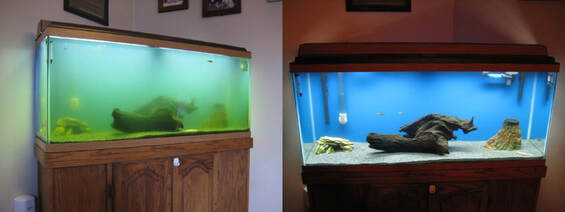
AAP Compact Internal self contained Submersible UV Sterilizer Filter/Pump, it is a VERY simple UV Sterilizer suggestion for those who do not desire to mess with plumbing, but still want a moderate quality UV Sterilizer, unlike so many of the very low end models now available in places like Amazon.
Also be aware that Amazon and others are now selling similar models (often with the same model number), but "cheapened" by not providing the important pre-filter, without corrections to flow rate for the proper dwell time, and even with low quality medium pressure UV bulbs that are considerably less effective!!!
See this article comparing higher cost low pressure UV Bulbs and lower cost medium pressure UV Bulbs:
Actual UV-C Emission from a UV Bulb
Reduce your fish numbers
Cut back on feeding and improve food quality (No TetraMin). Better choices: Hikari, SeaChem Nutri-Diet, Aqua Master, & especially Spirulina 20 just to name a few.
For more about proper feeding, please read this article:
Quality Fish Food; What ingredients are needed for proper fish nutrition, growth and health.
Increase circulation and dissolved oxygen.
Make sure your aquarium Nitrates are at least below 40 ppm and your aquarium phosphates are as close to 0 as possible.
Consider products such as Algone which is an excellent bio aid to nitrate control and thus many causes of green water.
As well SeaChem Purigen is another effective method for nitrate control and thus water clarity (it is a good compliment to Algone).
Also Phos-Zorb may help if phosphates are a cause/problem.
Sometimes it is simply a mater of improving your bio filtration by improving the quality of bio filter media.
Instead of the Bio Rings, balls, pads, and sponges that come with many filters, considering adding and/or replacing some of this with AAP Matrix or Aquarium Volcanic Rock. Both of these are very porous and can perform aerobic bio filtration at a much higher capacity than other more commonly used filter medium. As well these products can do something most standard bio filter media cannot do and that is perform bio de-nitrification which removes nitrates.
The end results is less "food" for green algae.
Product Resources:
Algone
utilizes Nitrate fixating microorganisms which incorporate excess nitrogen into the cellular mass, while bioactive enzymes assimilate nitrogen from the water column.
SeaChem Purigen
Controls ammonia, nitrites and often hard to control nitrates by removing nitrogenous organic waste.
Matrix from AAP
High porosity bio media that provides efficient bio filtration for the removal of nitrogenous waste
Volcanic Rock for Aquarium or Pond Filters
Economical high bio capacity filter media, 2nd only to Matrix, but at a much lower cost too
Also Read:
Aquarium Nitrate Control
Move your tank to a different location if near a window or other bright lights (being next to a window is often major contributing factor).
Improve lighting to 6400 K lights or maybe higher kelvin temperature. If low quality lights are an issue, utilize better lights such as the T2 Aquarium Lights, Premium LED Lights, or the Compact Fluorescent Aquarium Lights.
Please note that even good aquatic lights loose much of their lumen output outside of the visible light spectrum within 6-12 months (except for Premium LEDs such as the TMC line), & even more so after a year.
So if your aquarium light is not the best light spectrum (6000-8000K) or is more than a year old changing it is a good idea.
Add poly filter pads to your filter (these can be cut an placed in front of a filter cartridge in such HOB filters such as a Whisper or SunSun, as well as the foam blocks of Aqua Clears).
Product Resource:
Uncut Poly Filter Pads
See this article for more about poly filter pads and other filter media:
Aquatic Filter Media
Although not a major/common cause of Green Water:
Maintenance of Positive mineral ions (Electrolytes) such as magnesium and calcium.
Maintain a GH of at least 100 ppm and KH at least 50 (depending on fish kept). Wonder Shells are useful for this, so is aragonite in the filter.
Magnets can be added to your filter or water lines (place away from the impeller in HOB or similar filter). This is actually more effective than many may think, although this method is best used in conjunction with other methods noted here. Magnets work by removing iron from the water that free floating algae need for photosynthesis. I do NOT recommend using magnets in tanks with live plants, although green water is often less of a problem in these tanks.
Add aquatic plants to compete with the free floating algae for nutrients, light (please see the article about plants a couple paragraphs below).
Add copper or products such as "Medicated Wonder Shells" that contain Copper and Methylene Blue that kill free floating algae, however even if this corrects the problem, this more addresses the symptoms than the cause from my experience.
Finally if water changes are not removing enough organic debris from your substrate (this is a last ditch effort IMO), consider washing 50% of your gravel (or even 100% if you have healthy establish gravel that can be moved from another aquarium to this one after finishing).
Also be aware that Amazon and others are now selling similar models (often with the same model number), but "cheapened" by not providing the important pre-filter, without corrections to flow rate for the proper dwell time, and even with low quality medium pressure UV bulbs that are considerably less effective!!!
See this article comparing higher cost low pressure UV Bulbs and lower cost medium pressure UV Bulbs:
Actual UV-C Emission from a UV Bulb
Reduce your fish numbers
Cut back on feeding and improve food quality (No TetraMin). Better choices: Hikari, SeaChem Nutri-Diet, Aqua Master, & especially Spirulina 20 just to name a few.
For more about proper feeding, please read this article:
Quality Fish Food; What ingredients are needed for proper fish nutrition, growth and health.
Increase circulation and dissolved oxygen.
Make sure your aquarium Nitrates are at least below 40 ppm and your aquarium phosphates are as close to 0 as possible.
Consider products such as Algone which is an excellent bio aid to nitrate control and thus many causes of green water.
As well SeaChem Purigen is another effective method for nitrate control and thus water clarity (it is a good compliment to Algone).
Also Phos-Zorb may help if phosphates are a cause/problem.
Sometimes it is simply a mater of improving your bio filtration by improving the quality of bio filter media.
Instead of the Bio Rings, balls, pads, and sponges that come with many filters, considering adding and/or replacing some of this with AAP Matrix or Aquarium Volcanic Rock. Both of these are very porous and can perform aerobic bio filtration at a much higher capacity than other more commonly used filter medium. As well these products can do something most standard bio filter media cannot do and that is perform bio de-nitrification which removes nitrates.
The end results is less "food" for green algae.
Product Resources:
Algone
utilizes Nitrate fixating microorganisms which incorporate excess nitrogen into the cellular mass, while bioactive enzymes assimilate nitrogen from the water column.
SeaChem Purigen
Controls ammonia, nitrites and often hard to control nitrates by removing nitrogenous organic waste.
Matrix from AAP
High porosity bio media that provides efficient bio filtration for the removal of nitrogenous waste
Volcanic Rock for Aquarium or Pond Filters
Economical high bio capacity filter media, 2nd only to Matrix, but at a much lower cost too
Also Read:
Aquarium Nitrate Control
Move your tank to a different location if near a window or other bright lights (being next to a window is often major contributing factor).
Improve lighting to 6400 K lights or maybe higher kelvin temperature. If low quality lights are an issue, utilize better lights such as the T2 Aquarium Lights, Premium LED Lights, or the Compact Fluorescent Aquarium Lights.
Please note that even good aquatic lights loose much of their lumen output outside of the visible light spectrum within 6-12 months (except for Premium LEDs such as the TMC line), & even more so after a year.
So if your aquarium light is not the best light spectrum (6000-8000K) or is more than a year old changing it is a good idea.
Add poly filter pads to your filter (these can be cut an placed in front of a filter cartridge in such HOB filters such as a Whisper or SunSun, as well as the foam blocks of Aqua Clears).
Product Resource:
Uncut Poly Filter Pads
See this article for more about poly filter pads and other filter media:
Aquatic Filter Media
Although not a major/common cause of Green Water:
Maintenance of Positive mineral ions (Electrolytes) such as magnesium and calcium.
Maintain a GH of at least 100 ppm and KH at least 50 (depending on fish kept). Wonder Shells are useful for this, so is aragonite in the filter.
Magnets can be added to your filter or water lines (place away from the impeller in HOB or similar filter). This is actually more effective than many may think, although this method is best used in conjunction with other methods noted here. Magnets work by removing iron from the water that free floating algae need for photosynthesis. I do NOT recommend using magnets in tanks with live plants, although green water is often less of a problem in these tanks.
Add aquatic plants to compete with the free floating algae for nutrients, light (please see the article about plants a couple paragraphs below).
Add copper or products such as "Medicated Wonder Shells" that contain Copper and Methylene Blue that kill free floating algae, however even if this corrects the problem, this more addresses the symptoms than the cause from my experience.
Finally if water changes are not removing enough organic debris from your substrate (this is a last ditch effort IMO), consider washing 50% of your gravel (or even 100% if you have healthy establish gravel that can be moved from another aquarium to this one after finishing).
After getting green water problems under control, the AAP Green Water Disks are helpful in keeping green, brown & grey water under control.
Product Resource:
AAP Green Water Control
For more about algae control in Freshwater aquariums, please see the algae control section in the Planted Aquarium Article:
Planted Freshwater Aquariums- Algae Control
OR this Aquarium Answers Article about Algae:
Aquarium Algae Control
For Blue Green Algae problems [Cyanobacteria], please see this article:
Blue Green Algae (Cyanobacteria) in Aquariums- what it is and how to control it
Product Resource:
AAP Green Water Control
For more about algae control in Freshwater aquariums, please see the algae control section in the Planted Aquarium Article:
Planted Freshwater Aquariums- Algae Control
OR this Aquarium Answers Article about Algae:
Aquarium Algae Control
For Blue Green Algae problems [Cyanobacteria], please see this article:
Blue Green Algae (Cyanobacteria) in Aquariums- what it is and how to control it
White or Cloudy Water
A white or grey cloud is a bacterial bloom (Heterotrophs).
The main causes are:
A poorly cycled aquarium (usually new aquariums, with an excessive amount of undesirable heterotrophic bacteria)
Over feeding
Poor Filtration
Poor Circulation (resulting in low oxygen levels)
Over crowding
Poor water parameters.
References:
Aquarium Nitrogen Cycle
Aquarium Chemistry
Aquarium Redox Balance (Lack of healthy oxidation can lead to cloudy aquariums)
Too high a bio load (which can have many causes such as poor filtration, poor cleaning procedures, too many fish, over feeding and is basically a summary of some of the above problems)
Over population of Detritus Worms (also identified white worms or misidentified as Planaria) resulting from decaying matter, low oxygen content.
Reference:
Aquarium/Pond Parasites & Worms- Detritus Worms
Corrective Measures:
Change 20% of your water every other day until improved
Increase Aeration/Circulation.
More surface area is also helpful for gas exchange and is why I have observed more bacterial blooms in customer aquarium service calls with Hexagon Aquariums as these aquariums are often over crowded in proportion to the surface area.
Read my article about cycling and take corrective measures such as adding filter media and/or substrate from a healthy established aquarium.
Reference:
Aquarium Nitrogen Cycle- Cycling
Consider products such as "SeaChem Stability" which aids in establishing both aerobic & anaerobic bacteria in new tanks/ponds with its blend of synergistic blend of aerobic (including encapsulated oxygen) and facultative bacteria.
As well Stability is useful to add after a sudden increase in bio load of established aquariums
Product Resource:
SeaChem Stability- Aquarium Cycling Aid
Cut back on feeding and improve the quality of food and feeding method, as poor quality foods and/or over feeding produce more wastes that can lead to a cloudy aquarium, especially with a weak bio filter.
Refer to this article:
Quality Fish Food- Ingredients needed for Optimum Fish Nutrition, & Aquarium Environment Health
Add additional filters such as a AAP Hydro Sponge or FSB Filter and/or improve your filters such as by adding a Sponge Pre Filter to your HOB or Canister filter.
Often constantly cloudy aquariums are the result of poor bio filters.
Also follow proper aquarium filter cleaning procedures by only changing part of your media and rinsing the rest in non chlorinated water.
Product Resource:
Aquarium Pre-Filters from AAP
Remove Fish (or some of the fish), or lower over-all bio load
Add a UV Sterilizer, as noted earlier in this article, is generally 100% effective.
A true level one capable UV is not always cost effective for small aquariums, but is worth mentioning, not just for sterilization, but for Redox Potential if a better quality true level one UV sterilizer is used versus a basic UV Clarifier using a typical medium pressure UV lamp.
Also, based on my experience and tests, even with a good UV Sterilizer, if the failure of the UV lamp suddenly allows your aquarium to get cloudy, this often indicates an otherwise unhealthy aquarium that is too dependent upon the UV Sterilizer and other possible causes such as bio load and filtration (including filter cleaning practices) should be looked at more closely.
Make sure your ammonia and nitrites are 0, your GH is at least 100 ppm (depending on fish kept) and your Nitrates are below 40 ppm.
In established aquariums GH which is the source of electrolytes needed for Redox balance, which can drop and then occasionally be a source of cloudy water from my experience.
Consider Algone for natural control of organic pollutants via floculation and nitrate control.
SeaChem Purigen is an excellent choice for "water polishing".
Product Resources:
Algone- Clarifies Water; from AAP
SeaChem Purigen- Polishes Water to Unparalleled Clarity
If the “cloud” is the result of a heterotrophic bacteria cloud caused by overcrowding, or especially decomposition from rotting fish food, excess waste, or dead fish or other aquatic inhabitants that were not removed in a timely manner.
Please reference:
Aquarium Nitrogen Cycle; heterotrophic bacteria
The use of Potassium Permanganate found in products such as Jungle Clear Water may quickly solve this problem, however this often may be a temporary fix if other problems exist.
Please also read this article about the use and cautions of Potassium Permanganate use:
Aquarium Medications 3- Potassium Permanganate
Product Resource:
Potassium Permanganate- Jungle Water Clarifier
Sometimes particulates can be a problem in established aquariums, especially after cleanings and the use of products such as Crystal Clear may help (I do not recommend this in new aquariums under two weeks old).
Diatom filters, or even the Eheim Sludge Remover may help with cloudy water problems in established aquariums, especially if this occurs after water changes and if this is the case.
Product Resources:
AAP Crystal Clear- Aquatic Clarifier
Eheim Sludge Remover- Between Water Change Battery Gravel Vacuum System
After getting grey/cloudy water problems under control, the AAP Green Water Control Disks are helpful in keeping green, brown & grey water under control.
AAP Green Water Control
The main causes are:
A poorly cycled aquarium (usually new aquariums, with an excessive amount of undesirable heterotrophic bacteria)
Over feeding
Poor Filtration
Poor Circulation (resulting in low oxygen levels)
Over crowding
Poor water parameters.
References:
Aquarium Nitrogen Cycle
Aquarium Chemistry
Aquarium Redox Balance (Lack of healthy oxidation can lead to cloudy aquariums)
Too high a bio load (which can have many causes such as poor filtration, poor cleaning procedures, too many fish, over feeding and is basically a summary of some of the above problems)
Over population of Detritus Worms (also identified white worms or misidentified as Planaria) resulting from decaying matter, low oxygen content.
Reference:
Aquarium/Pond Parasites & Worms- Detritus Worms
Corrective Measures:
Change 20% of your water every other day until improved
Increase Aeration/Circulation.
More surface area is also helpful for gas exchange and is why I have observed more bacterial blooms in customer aquarium service calls with Hexagon Aquariums as these aquariums are often over crowded in proportion to the surface area.
Read my article about cycling and take corrective measures such as adding filter media and/or substrate from a healthy established aquarium.
Reference:
Aquarium Nitrogen Cycle- Cycling
Consider products such as "SeaChem Stability" which aids in establishing both aerobic & anaerobic bacteria in new tanks/ponds with its blend of synergistic blend of aerobic (including encapsulated oxygen) and facultative bacteria.
As well Stability is useful to add after a sudden increase in bio load of established aquariums
Product Resource:
SeaChem Stability- Aquarium Cycling Aid
Cut back on feeding and improve the quality of food and feeding method, as poor quality foods and/or over feeding produce more wastes that can lead to a cloudy aquarium, especially with a weak bio filter.
Refer to this article:
Quality Fish Food- Ingredients needed for Optimum Fish Nutrition, & Aquarium Environment Health
Add additional filters such as a AAP Hydro Sponge or FSB Filter and/or improve your filters such as by adding a Sponge Pre Filter to your HOB or Canister filter.
Often constantly cloudy aquariums are the result of poor bio filters.
Also follow proper aquarium filter cleaning procedures by only changing part of your media and rinsing the rest in non chlorinated water.
Product Resource:
Aquarium Pre-Filters from AAP
Remove Fish (or some of the fish), or lower over-all bio load
Add a UV Sterilizer, as noted earlier in this article, is generally 100% effective.
A true level one capable UV is not always cost effective for small aquariums, but is worth mentioning, not just for sterilization, but for Redox Potential if a better quality true level one UV sterilizer is used versus a basic UV Clarifier using a typical medium pressure UV lamp.
Also, based on my experience and tests, even with a good UV Sterilizer, if the failure of the UV lamp suddenly allows your aquarium to get cloudy, this often indicates an otherwise unhealthy aquarium that is too dependent upon the UV Sterilizer and other possible causes such as bio load and filtration (including filter cleaning practices) should be looked at more closely.
Make sure your ammonia and nitrites are 0, your GH is at least 100 ppm (depending on fish kept) and your Nitrates are below 40 ppm.
In established aquariums GH which is the source of electrolytes needed for Redox balance, which can drop and then occasionally be a source of cloudy water from my experience.
Consider Algone for natural control of organic pollutants via floculation and nitrate control.
SeaChem Purigen is an excellent choice for "water polishing".
Product Resources:
Algone- Clarifies Water; from AAP
SeaChem Purigen- Polishes Water to Unparalleled Clarity
If the “cloud” is the result of a heterotrophic bacteria cloud caused by overcrowding, or especially decomposition from rotting fish food, excess waste, or dead fish or other aquatic inhabitants that were not removed in a timely manner.
Please reference:
Aquarium Nitrogen Cycle; heterotrophic bacteria
The use of Potassium Permanganate found in products such as Jungle Clear Water may quickly solve this problem, however this often may be a temporary fix if other problems exist.
Please also read this article about the use and cautions of Potassium Permanganate use:
Aquarium Medications 3- Potassium Permanganate
Product Resource:
Potassium Permanganate- Jungle Water Clarifier
Sometimes particulates can be a problem in established aquariums, especially after cleanings and the use of products such as Crystal Clear may help (I do not recommend this in new aquariums under two weeks old).
Diatom filters, or even the Eheim Sludge Remover may help with cloudy water problems in established aquariums, especially if this occurs after water changes and if this is the case.
Product Resources:
AAP Crystal Clear- Aquatic Clarifier
Eheim Sludge Remover- Between Water Change Battery Gravel Vacuum System
After getting grey/cloudy water problems under control, the AAP Green Water Control Disks are helpful in keeping green, brown & grey water under control.
AAP Green Water Control
Yellow Water
Yellow water is generally a high amount of dissolved organics, often pH/KH lowering tannins.
Often with yellow water, your aquarium will test lower in KH and pH (50 ppm & -6.8 respectively), as well often nitrates are above 40 ppm. This again is a generalization though.
What is noteworthy is that yellow water is NOT necessarily an indicator of poor water quality or other issues.
In fact if your aquarium is primarily soft water fish such as Discus, the tannins generally used are going to make the water yellow, so yellow water is to be expected.
For fish such as Livebearers or especially Goldfish that prefer higher mineral/pH water, yellow water can be an indicator of the need for a water change and/or better filtration, especially chemical filtration.
Since Goldfish tend to have a larger impact on an aquariums bio load, increasing bio filtration and chemical filtration is often necessary.
Lowering 'Yellow' in water:
Water Change
Use Quality Carbon or increase amount of carbon used and frequency of change such as Nirox Carbon.
Product Resource:
Nirox Premium Carbon
Use of SeaChem Purigen, this product is especially useful for the removal of water yellowing tannins (often much better than carbon).
Product Resource:
Purigen, Controls Yellow Water; from AAP
Increase Bio Filtration, in particular Sponge and Fluidized Sand Bed Filters
Since yellow water is occasionally related to high nitrates, please also read this article:
Aquarium Nitrates
Often with yellow water, your aquarium will test lower in KH and pH (50 ppm & -6.8 respectively), as well often nitrates are above 40 ppm. This again is a generalization though.
What is noteworthy is that yellow water is NOT necessarily an indicator of poor water quality or other issues.
In fact if your aquarium is primarily soft water fish such as Discus, the tannins generally used are going to make the water yellow, so yellow water is to be expected.
For fish such as Livebearers or especially Goldfish that prefer higher mineral/pH water, yellow water can be an indicator of the need for a water change and/or better filtration, especially chemical filtration.
Since Goldfish tend to have a larger impact on an aquariums bio load, increasing bio filtration and chemical filtration is often necessary.
Lowering 'Yellow' in water:
Water Change
Use Quality Carbon or increase amount of carbon used and frequency of change such as Nirox Carbon.
Product Resource:
Nirox Premium Carbon
Use of SeaChem Purigen, this product is especially useful for the removal of water yellowing tannins (often much better than carbon).
Product Resource:
Purigen, Controls Yellow Water; from AAP
Increase Bio Filtration, in particular Sponge and Fluidized Sand Bed Filters
Since yellow water is occasionally related to high nitrates, please also read this article:
Aquarium Nitrates
Videos
|
|
|
|
|
|
|