
Marine Oodinium Disease
Brooklynella & Amyloodinium Ocellatum
Brooklynella & Amyloodinium Ocellatum
Marine Oodinium Basics
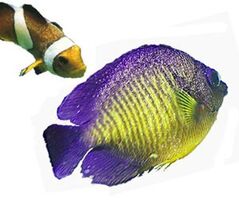
MARINE OODINIUM (Amyloodinium Ocellatum) a species of dinoflagellates; Also occasionally known as Coral Fish Disease or Saltwater Velvet.
Although closely related to freshwater velvet (Piscinoodinium pillulare), these two external parasites differ in that the marine variety (Amyloodinium Ocellatum) do not have chloroplasts to produce nutrients (via chlorophyll and light), thus Marine Oodinium does not take on the appearance of Velvet. This difference is not always recognized in treatment recommendations, even though the two diseases should often be treated differently.
Although closely related to freshwater velvet (Piscinoodinium pillulare), these two external parasites differ in that the marine variety (Amyloodinium Ocellatum) do not have chloroplasts to produce nutrients (via chlorophyll and light), thus Marine Oodinium does not take on the appearance of Velvet. This difference is not always recognized in treatment recommendations, even though the two diseases should often be treated differently.
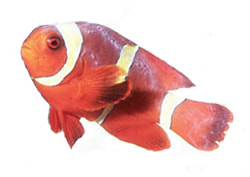
Oodinium is also sometimes mistaken for Brooklynella (& vice versa), as symptoms and disease progression are similar (and thankfully so is treatment, so do not stress on a certain diagnosis). In fact, the only relatively easy to discern difference is the heavy amount of slime that is produced by Brooklynella usually starting near the gills. The picture above shows a Maroon Clownfish with Brooklynella.
Oodinium is found world-wide in tropical/temperate waters, so those of you who have saltwater fish will most likely encounter this parasite, especially if good quarantine procedures are not followed and/or your livestock source does not practice such procedures. This is why prevention is also so very important (such as quarantine and/or fish baths/dips).
AMYLOODINIUM OCELLATUM BASICS: Oodinium has been a fast-moving killer in marine fish keeping for many years in the aquarium hobby. Oodinium is a parasitic dinoflagellate which can infect and kill many species of saltwater fish. Similar to Crytptocaryon in mode of transfer (Marine Ich and other external fish parasites), this Dinoflagellate is generally more dangerous in the confines of an aquarium, especially a small, overcrowded tank due to rapid re-infection.
Marine Oodinium (Amyloodinium) is present in a free-swimming and infective form in most ocean environments that wild fish are imported from. The Amyloodinium Dinoflagellate is extremely hardy and can withstand a wide variety of salinity (specific gravity) and temperature fluctuations. However, the number of infective organisms that are found in the water in any given area is very small. Unfortunately, these small numbers can quickly explode in the confines of an aquarium, and stress/low immunity seem to be more of a factor than with Cryptocaryon, so prevention is very important.
Oodinium is found world-wide in tropical/temperate waters, so those of you who have saltwater fish will most likely encounter this parasite, especially if good quarantine procedures are not followed and/or your livestock source does not practice such procedures. This is why prevention is also so very important (such as quarantine and/or fish baths/dips).
AMYLOODINIUM OCELLATUM BASICS: Oodinium has been a fast-moving killer in marine fish keeping for many years in the aquarium hobby. Oodinium is a parasitic dinoflagellate which can infect and kill many species of saltwater fish. Similar to Crytptocaryon in mode of transfer (Marine Ich and other external fish parasites), this Dinoflagellate is generally more dangerous in the confines of an aquarium, especially a small, overcrowded tank due to rapid re-infection.
Marine Oodinium (Amyloodinium) is present in a free-swimming and infective form in most ocean environments that wild fish are imported from. The Amyloodinium Dinoflagellate is extremely hardy and can withstand a wide variety of salinity (specific gravity) and temperature fluctuations. However, the number of infective organisms that are found in the water in any given area is very small. Unfortunately, these small numbers can quickly explode in the confines of an aquarium, and stress/low immunity seem to be more of a factor than with Cryptocaryon, so prevention is very important.
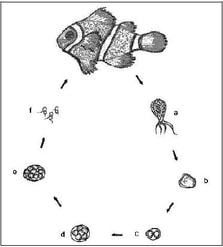
Similar to Cryptocaryon, Oodinium has 3 stages in its life cycle:
• The infective Dinospore, which is free-swimming.
• The attached Trophont, which is found on external surfaces in contact with environmental water.
• And the mature cyst/dividing Tomont. The mature cyst can release over 250 Dinospores which are free swimming and impossible to see with the naked eye. Since these Dinoflagellates do not have Chloroplasts like their freshwater cousins, they MUST have a host to survive.
Usually, these Dinospores can only live 48 hours to one week without a host. This does not mean a tank free of a full-blown infection for over a month is free of Oodinium as relatively healthy fish can be hosting them until ‘something goes wrong.
The gills (similar to Brooklynella) are where Oodinium Dinospores attack first due to the soft tissue that is easy to penetrate. The Dinospore attaches a filament into the host fish for feeding, becoming a Trophont.
After anywhere from 24 hours to a few days, the Trophonts cease feeding and form a Cyst to fall off and start a new cycle again.
All stages possess a cellulose cell wall that can make them difficult to treat, however the Dinospore stage is the most susceptible to treatment. There are treatments for the other stages, although less effective, I will discuss them a little further down.
Unlike Cryptocaryon and freshwater ich, the cell wall is not as thick and these parasites do not bury themselves nearly as deeply, which makes some topical treatments possible on the infected fish rather than just the free-swimming stage than with Cryptocaryon. The thinner cell wall also lends itself to more effective UV Sterilization too for prevention. The downside is that Oodinium often has a much faster life cycle and attacks the gills with much more furor than does Cryptocaryon or freshwater Ich (Ichthyophthirius).
• The infective Dinospore, which is free-swimming.
• The attached Trophont, which is found on external surfaces in contact with environmental water.
• And the mature cyst/dividing Tomont. The mature cyst can release over 250 Dinospores which are free swimming and impossible to see with the naked eye. Since these Dinoflagellates do not have Chloroplasts like their freshwater cousins, they MUST have a host to survive.
Usually, these Dinospores can only live 48 hours to one week without a host. This does not mean a tank free of a full-blown infection for over a month is free of Oodinium as relatively healthy fish can be hosting them until ‘something goes wrong.
The gills (similar to Brooklynella) are where Oodinium Dinospores attack first due to the soft tissue that is easy to penetrate. The Dinospore attaches a filament into the host fish for feeding, becoming a Trophont.
After anywhere from 24 hours to a few days, the Trophonts cease feeding and form a Cyst to fall off and start a new cycle again.
All stages possess a cellulose cell wall that can make them difficult to treat, however the Dinospore stage is the most susceptible to treatment. There are treatments for the other stages, although less effective, I will discuss them a little further down.
Unlike Cryptocaryon and freshwater ich, the cell wall is not as thick and these parasites do not bury themselves nearly as deeply, which makes some topical treatments possible on the infected fish rather than just the free-swimming stage than with Cryptocaryon. The thinner cell wall also lends itself to more effective UV Sterilization too for prevention. The downside is that Oodinium often has a much faster life cycle and attacks the gills with much more furor than does Cryptocaryon or freshwater Ich (Ichthyophthirius).
Identification
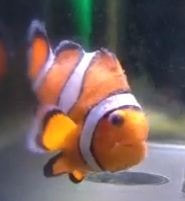
A fish infected with Oodinium will exhibit abnormal behavior, which can include these symptoms:
• Gasping at the water surface.
• Loss of color (even a slight loss of color among several aquarium inhabitants can be a good relatively early indicator).
• Scratching on tank objects (flashing), especially around the gills, since gills are where Amyloodinium infections first take hold.
• Constant swimming at the surface with spastic movements and trying to jump out.
• Not eating (Loss of appetite) is also a common symptom, although this unfortunately occurs within 24 hours of death.
• Swimming with mouth open.
• Sluggish behavior.
As the infection progresses, tiny white/opaque spots (trophonts) may be observed on the skin/fins as well as a mucous slime or coating, especially around the gill area. Often as the infestation progresses, the eyes will also cloud over, although by this time it is often too late (but not always, especially with aggressive dips!).
Confirmation of the parasite can be made by putting the live fish into a circular container and stroking it with a paint brush to cause the trophonts to dislodge, then removing the fish, stirring water in circular swirl, allowing water to settle, and then sampling the center of the container with an eye dropper/large-bore syringe, and verification under a microscope.
Unfortunately, this can be a fast moving and devastating disease, especially in small, overcrowded aquariums without UV Sterilization and with water parameters in less-than-ideal conditions. Oodinium kills via blockage of gill respiratory function, ingestion/destruction of gill/skin tissue resulting in decreased gill function and opening external surfaces up to secondary infections by various bacterial infections. Because of this rapid progression, immediate treatment (even if you are not totally sure of diagnosis) is VERY important. Oodinium can take out a tank of fish in less than half the time of Cryptocaryon!
• Gasping at the water surface.
• Loss of color (even a slight loss of color among several aquarium inhabitants can be a good relatively early indicator).
• Scratching on tank objects (flashing), especially around the gills, since gills are where Amyloodinium infections first take hold.
• Constant swimming at the surface with spastic movements and trying to jump out.
• Not eating (Loss of appetite) is also a common symptom, although this unfortunately occurs within 24 hours of death.
• Swimming with mouth open.
• Sluggish behavior.
As the infection progresses, tiny white/opaque spots (trophonts) may be observed on the skin/fins as well as a mucous slime or coating, especially around the gill area. Often as the infestation progresses, the eyes will also cloud over, although by this time it is often too late (but not always, especially with aggressive dips!).
Confirmation of the parasite can be made by putting the live fish into a circular container and stroking it with a paint brush to cause the trophonts to dislodge, then removing the fish, stirring water in circular swirl, allowing water to settle, and then sampling the center of the container with an eye dropper/large-bore syringe, and verification under a microscope.
Unfortunately, this can be a fast moving and devastating disease, especially in small, overcrowded aquariums without UV Sterilization and with water parameters in less-than-ideal conditions. Oodinium kills via blockage of gill respiratory function, ingestion/destruction of gill/skin tissue resulting in decreased gill function and opening external surfaces up to secondary infections by various bacterial infections. Because of this rapid progression, immediate treatment (even if you are not totally sure of diagnosis) is VERY important. Oodinium can take out a tank of fish in less than half the time of Cryptocaryon!
Treatment
The only truly effective treatment on the market in my opinion for Oodinium (or Brooklynella since treatment/prevention is very similar) is the product called "Marex" by AAP which contains Chloroquine Phospate and pyrimethamine.
Product Resource:
• AAP Marex Oodinium/Brooklynella Treatment (Coming soon!)
Some have had success with Organi-Cure, but this product is limited in my opinion & experience. A new product called “NoSickFish” shows some promise. Metronidazole has shown some limited effectiveness for Oodinium (Metronidazole works reasonably well for some cases of Cryptocaryon).
Probably the most popular and reasonably effective in tank, or better, hospital tank treatments available is Copper Sulfate at .15 -.20 ppm or Formalin. A copper test kit is a must when using copper for treatment. Unfortunately, Copper sulfate is not as effective in Marine Oodinium, as compared to freshwater Velvet. Partly due to the differences in the dinoflagellate. One difference is that Marine Oodinium does NOT contain Chloroplasts. I have however had slightly better results with "Ionic Copper".
It is noteworthy that Acriflavin is also not effective in the same way as it is for freshwater velvet (Piscinoodinium pillulare). Formalin based treatments such as Quick Cure or ParaGuard may also have limed effectiveness for Oodinium. Generally, formalin based formulas are more effective for Brooklynella. Of the two medications, Quick Cure or ParaGuard, I have found Quick Cure to be better for both Oodinium or Brooklynella (although for related freshwater infections such as "Ich", I prefer ParaGuard or even more "AAP Super Ich Plus").
When one considers the difficulty in treatment and the lack of any available truly effective treatment other than Marex, since "Marex" was not available for years; what it comes down to really is PREVENTION! It is noteworthy that AAP is now bringing bring back fresh Marex.
Certainly some of the tools I suggest for prevention such as a level one or level two capable UV Sterilizer or using a 10 micron filter are also useful for treatment. The popular method of darkening the aquarium almost always results in the infestation bouncing back!
Assuming you have done as much prevention as possible (or not) and still have an Oodinium outbreak, here are the steps I would recommend followed by steps to prevent further outbreaks and curtail the current outbreak (this is also assuming you have a display tank loaded with live rock and other organisms you would rather not see destroyed by the addition of copper):
[1] Remove the fish, all if possible.
[2] Prepare a freshwater dip: For this dip, I adjust pH (so as reduce more osmotic stress than need be) and add Methylene Blue (at double in tank strength), I will use a specific gravity of 1.001 for the saltwater fish.
Product Source:
• AAP Premium MethyBlu (more concentrated/effective than Kordon)
This dip should be no less than 3 minutes and no more than 5 minutes to be effective. This is very effective in removing Oodinium directly from the fish (including gills). Do not be alarmed if the fish ‘lays down’ and acts dead, this is a common initial reaction, and the fish will usually perk up a minute or two into the dip.
How this works is that the cell membrane of the Oodinium cyst cannot withstand the change in osmotic pressure as well as the fish and will burst, that is why the minimum three minutes is a must. I will also note that this dip is more effective for Oodinium than Cryptocaryon even though I recommend this for both infestations due to the fact that the Oodinium Cyst does not embed nearly as deep as the Cryptocaryon cyst does, allowing for a much more likely rupture of the parasite cell membrane due to osmotic pressure. The bottom line is this is a VERY effective procedure for Oodinium (& a slightly lesser degree for Brooklynella)!
For further information about Fish "Dips" and "Baths", please see this article:
• Fish Baths & Dips; Aquarium Answers
[3] Hospital/Quarantine Tanks: Even if you have to use sterile Rubbermade containers (or similar) with "seasoned" sponge filters for economic or space reasons (rather than actual glass or acrylic hospital tanks), I highly recommend the purchase.
Product Resource:
• Premium Highest Bio Capacity AAP Hydro Sponge Filters
As for this "seasoned" sponge filter, the best way to have this on hand is to plan ahead an always have a at least a small sponge filter running in either your main display tank, refugium, or sump (if you have the second two). This way you simply remove this filter and place it in your hospital (or quarantine tank too). The Hydro Sponge #2 works well for this in my experience.
Use these containers with at least TWO prepared with temperature adjusted pre-mixed saltwater. After each dip (minimum once per day is recommended), move the fish to a NEW hospital tank or container and dispose of the old water from the previous container. I recommend this procedure for 10-14 days. If possible still wait a full three weeks before returning to your display aquarium.
Since most marine fish keepers today keep some form of invertebrate, even if their tank is not a "full blown reef tank", the hospital tank is really a must to treat your fish while the display tank lays "fallow" with only the invertebrates for 6-8 weeks.
Hypo-salinity can be also used for treatment (often in combination with other methods I have often brought the specific gravity as low as 1.015 with mixed treatments), however specific gravity should be 1.009 to no higher than 1.010 to work correctly for the pure Hyposalinity method. I do NOT recommend using this method with anemones or coral present as these aquatic inhabitants do not handle this nearly as well as fish.
It is also noteworthy that although the pure Hypo-salinity method is effective for Cryptocaryon (marine ich), its effectiveness is more questionable for Oodinium (which my use of this method has also had varying results). This is in part due to the fact that Amyloodinium also flourishes in brackish water, however pure freshwater does kill the free swimming stages, but the use of straight freshwater is only safe as a dip or bath for marine fish.
For best results, this method should be employed for 4-6 week period. It is VERY important that pH and alkalinity be monitored during this period and maintained to prevent additional stress. You should enter this hyposalinity treatment slowly from your specific gravity of 1.019 -1.025 to 1.009 over a 48 hour period using RO/DI or even de-chlorinated tap water and/or water changes using low salt water mixes (such as 1.005 salt mixes).
PLEASE note that the freshwater used to replace the saltwater is often too low in alkalinity (KH) and minerals and this can add to the stress of the fish (especially sensitive fish such as sharks/rays), so it is imperative that this water have added carbonates and minerals to ensure that in trying to kill the ich infestation, you do not add to osmoregulation problems for the fish. Products such as SeaChem Marine Buffer can be useful for this.
Please read these articles for more about this issue:
• AQUARIUM GH, KH, Ph, MINERAL CATIONS/ELECTROLYTES
• Aquarium Answers; Osmoregulation
If you would rather not go through this process, treatment with copper sulfate for three weeks at .15 to .25 ppm in the display tank does still work (assuming you do not have any invertebrates or you remove them). Removing the copper, would take copper removal resins, lots of water changes, and time (carbon generally will not work).
Product Resource:
• AAP Marex Oodinium/Brooklynella Treatment (Coming soon!)
Some have had success with Organi-Cure, but this product is limited in my opinion & experience. A new product called “NoSickFish” shows some promise. Metronidazole has shown some limited effectiveness for Oodinium (Metronidazole works reasonably well for some cases of Cryptocaryon).
Probably the most popular and reasonably effective in tank, or better, hospital tank treatments available is Copper Sulfate at .15 -.20 ppm or Formalin. A copper test kit is a must when using copper for treatment. Unfortunately, Copper sulfate is not as effective in Marine Oodinium, as compared to freshwater Velvet. Partly due to the differences in the dinoflagellate. One difference is that Marine Oodinium does NOT contain Chloroplasts. I have however had slightly better results with "Ionic Copper".
It is noteworthy that Acriflavin is also not effective in the same way as it is for freshwater velvet (Piscinoodinium pillulare). Formalin based treatments such as Quick Cure or ParaGuard may also have limed effectiveness for Oodinium. Generally, formalin based formulas are more effective for Brooklynella. Of the two medications, Quick Cure or ParaGuard, I have found Quick Cure to be better for both Oodinium or Brooklynella (although for related freshwater infections such as "Ich", I prefer ParaGuard or even more "AAP Super Ich Plus").
When one considers the difficulty in treatment and the lack of any available truly effective treatment other than Marex, since "Marex" was not available for years; what it comes down to really is PREVENTION! It is noteworthy that AAP is now bringing bring back fresh Marex.
Certainly some of the tools I suggest for prevention such as a level one or level two capable UV Sterilizer or using a 10 micron filter are also useful for treatment. The popular method of darkening the aquarium almost always results in the infestation bouncing back!
Assuming you have done as much prevention as possible (or not) and still have an Oodinium outbreak, here are the steps I would recommend followed by steps to prevent further outbreaks and curtail the current outbreak (this is also assuming you have a display tank loaded with live rock and other organisms you would rather not see destroyed by the addition of copper):
[1] Remove the fish, all if possible.
[2] Prepare a freshwater dip: For this dip, I adjust pH (so as reduce more osmotic stress than need be) and add Methylene Blue (at double in tank strength), I will use a specific gravity of 1.001 for the saltwater fish.
Product Source:
• AAP Premium MethyBlu (more concentrated/effective than Kordon)
This dip should be no less than 3 minutes and no more than 5 minutes to be effective. This is very effective in removing Oodinium directly from the fish (including gills). Do not be alarmed if the fish ‘lays down’ and acts dead, this is a common initial reaction, and the fish will usually perk up a minute or two into the dip.
How this works is that the cell membrane of the Oodinium cyst cannot withstand the change in osmotic pressure as well as the fish and will burst, that is why the minimum three minutes is a must. I will also note that this dip is more effective for Oodinium than Cryptocaryon even though I recommend this for both infestations due to the fact that the Oodinium Cyst does not embed nearly as deep as the Cryptocaryon cyst does, allowing for a much more likely rupture of the parasite cell membrane due to osmotic pressure. The bottom line is this is a VERY effective procedure for Oodinium (& a slightly lesser degree for Brooklynella)!
For further information about Fish "Dips" and "Baths", please see this article:
• Fish Baths & Dips; Aquarium Answers
[3] Hospital/Quarantine Tanks: Even if you have to use sterile Rubbermade containers (or similar) with "seasoned" sponge filters for economic or space reasons (rather than actual glass or acrylic hospital tanks), I highly recommend the purchase.
Product Resource:
• Premium Highest Bio Capacity AAP Hydro Sponge Filters
As for this "seasoned" sponge filter, the best way to have this on hand is to plan ahead an always have a at least a small sponge filter running in either your main display tank, refugium, or sump (if you have the second two). This way you simply remove this filter and place it in your hospital (or quarantine tank too). The Hydro Sponge #2 works well for this in my experience.
Use these containers with at least TWO prepared with temperature adjusted pre-mixed saltwater. After each dip (minimum once per day is recommended), move the fish to a NEW hospital tank or container and dispose of the old water from the previous container. I recommend this procedure for 10-14 days. If possible still wait a full three weeks before returning to your display aquarium.
Since most marine fish keepers today keep some form of invertebrate, even if their tank is not a "full blown reef tank", the hospital tank is really a must to treat your fish while the display tank lays "fallow" with only the invertebrates for 6-8 weeks.
Hypo-salinity can be also used for treatment (often in combination with other methods I have often brought the specific gravity as low as 1.015 with mixed treatments), however specific gravity should be 1.009 to no higher than 1.010 to work correctly for the pure Hyposalinity method. I do NOT recommend using this method with anemones or coral present as these aquatic inhabitants do not handle this nearly as well as fish.
It is also noteworthy that although the pure Hypo-salinity method is effective for Cryptocaryon (marine ich), its effectiveness is more questionable for Oodinium (which my use of this method has also had varying results). This is in part due to the fact that Amyloodinium also flourishes in brackish water, however pure freshwater does kill the free swimming stages, but the use of straight freshwater is only safe as a dip or bath for marine fish.
For best results, this method should be employed for 4-6 week period. It is VERY important that pH and alkalinity be monitored during this period and maintained to prevent additional stress. You should enter this hyposalinity treatment slowly from your specific gravity of 1.019 -1.025 to 1.009 over a 48 hour period using RO/DI or even de-chlorinated tap water and/or water changes using low salt water mixes (such as 1.005 salt mixes).
PLEASE note that the freshwater used to replace the saltwater is often too low in alkalinity (KH) and minerals and this can add to the stress of the fish (especially sensitive fish such as sharks/rays), so it is imperative that this water have added carbonates and minerals to ensure that in trying to kill the ich infestation, you do not add to osmoregulation problems for the fish. Products such as SeaChem Marine Buffer can be useful for this.
Please read these articles for more about this issue:
• AQUARIUM GH, KH, Ph, MINERAL CATIONS/ELECTROLYTES
• Aquarium Answers; Osmoregulation
If you would rather not go through this process, treatment with copper sulfate for three weeks at .15 to .25 ppm in the display tank does still work (assuming you do not have any invertebrates or you remove them). Removing the copper, would take copper removal resins, lots of water changes, and time (carbon generally will not work).
Prevention
For me the most important aspect of this Oodinium is not getting an infestation in the first place.
Here are several practices that can help prevent this disease (the more of these procedures followed the better):
• Water parameters. This kind of goes without saying, however it is worth pointing out. No ammonia or nitrites, Nitrates under 20 ppm, Alkalinity over 240 ppm, Calcium 400- 450 ppm, Redox 100- 300 mV.
• Dips, Baths, or quarantine for new fish, THIS IS A MUST FOR PREVENTION! I recommend quarantine or if not possible a 30-minute bath, or at the very least a Dip; for more details about baths or quarantine please read this article: Aquarium Disease Prevention
• UV Sterilization: This is one of the more important aspects for Oodinium prevention (although not the only and certainly not a cure all). The key is a properly installed well-made unit, which sadly the market is now flooded primarily with cheap "Category C" units that can at best ONLY provide clarification, NOT true UV Sterilization (Category A or B UV Sterilizers). Unfortunately, most naysayers either have NOT performed controller tests using many aquariums or have used a commonly sold 'Category C' UV they purchased via eBay, Amazon or other discounter.
For more about UV Sterilization including how it works, please read this article: "Aquarium/Pond Ultra Violet Sterilization (How UVC works and more)".
One fact I can state quite categorically from my decades of experience, observations, and tests and is that while even the best Category A UV Sterilizer installed correctly cannot 100% prevent an Oodinium or Brooklynella infestation, what is true, is that these devices slow the progression down considerably, buying the fish owner time to treat before it is too late.
In tanks without properly installed UV Sterilizers the progression of Oodinium or Brooklynella was as quick as 48 hours from first symptom to death, while in tanks with properly installed UVs, this progression was often as long as 10-14 days!
Readers may notice I keep repeating "Properly Installed", the reason is in the vast majority of my "house calls" where a new client has called me out and they already have a UV Sterilizer, but claim it has been useless, they either have it installed incorrectly and/or have a junk UV such as a Jebo or many of the other under $50 junk UVs that have flooded the market (some of these even have brand names, but are still junk!); so please read the earlier mentioned UV Sterilization Article
Micron Filtration, especially when combined as part of the Pre-filtration going into a properly set up high dwell time UV Sterilizer. Since Oodinium dinoflagellates are quite small (as small as 9 microns), a 10-micron filter works bests. However, this also means you would need some more coarse pre-filtration prior to this to prevent quick clogging of the filters. When combined with the high dwell time UV Sterilizer, this can come about as close to eradicating the infestation within the water column as possible, but it is still NOT 100%.
A good source for your fish: This is important! Find a source you trust and stick with it, do not price shop unless you are sure of quality of the less expensive specimen. If your primary source for fish and other marine life has treated you well and sold you good stock, why shop around?
Good Maintenance practices, Follow regular and efficient cleaning procedures. For more about this subject, please read this article: "AQUARIUM CLEANING; Reasons and methods for water changes".
A good and balanced diet: Make sure your fish get what they need in their diet. Each species is unique and a generic food is generally not enough unless you have a tank of damsels. For instance make sure your Emperor angel has sponge in its diet. One fish food I would strongly recommend as part of your basic diet for most marine fish (not the only food though) is Spirulina 20.
For more about the benefits of Spirulina Algae, please read this article: "Spirulina Algae; the aquatic health benefits for Marine and other fish". There are other good staple food such as Hikari Marine S Micro Pellets.
Here are several practices that can help prevent this disease (the more of these procedures followed the better):
• Water parameters. This kind of goes without saying, however it is worth pointing out. No ammonia or nitrites, Nitrates under 20 ppm, Alkalinity over 240 ppm, Calcium 400- 450 ppm, Redox 100- 300 mV.
• Dips, Baths, or quarantine for new fish, THIS IS A MUST FOR PREVENTION! I recommend quarantine or if not possible a 30-minute bath, or at the very least a Dip; for more details about baths or quarantine please read this article: Aquarium Disease Prevention
• UV Sterilization: This is one of the more important aspects for Oodinium prevention (although not the only and certainly not a cure all). The key is a properly installed well-made unit, which sadly the market is now flooded primarily with cheap "Category C" units that can at best ONLY provide clarification, NOT true UV Sterilization (Category A or B UV Sterilizers). Unfortunately, most naysayers either have NOT performed controller tests using many aquariums or have used a commonly sold 'Category C' UV they purchased via eBay, Amazon or other discounter.
For more about UV Sterilization including how it works, please read this article: "Aquarium/Pond Ultra Violet Sterilization (How UVC works and more)".
One fact I can state quite categorically from my decades of experience, observations, and tests and is that while even the best Category A UV Sterilizer installed correctly cannot 100% prevent an Oodinium or Brooklynella infestation, what is true, is that these devices slow the progression down considerably, buying the fish owner time to treat before it is too late.
In tanks without properly installed UV Sterilizers the progression of Oodinium or Brooklynella was as quick as 48 hours from first symptom to death, while in tanks with properly installed UVs, this progression was often as long as 10-14 days!
Readers may notice I keep repeating "Properly Installed", the reason is in the vast majority of my "house calls" where a new client has called me out and they already have a UV Sterilizer, but claim it has been useless, they either have it installed incorrectly and/or have a junk UV such as a Jebo or many of the other under $50 junk UVs that have flooded the market (some of these even have brand names, but are still junk!); so please read the earlier mentioned UV Sterilization Article
Micron Filtration, especially when combined as part of the Pre-filtration going into a properly set up high dwell time UV Sterilizer. Since Oodinium dinoflagellates are quite small (as small as 9 microns), a 10-micron filter works bests. However, this also means you would need some more coarse pre-filtration prior to this to prevent quick clogging of the filters. When combined with the high dwell time UV Sterilizer, this can come about as close to eradicating the infestation within the water column as possible, but it is still NOT 100%.
A good source for your fish: This is important! Find a source you trust and stick with it, do not price shop unless you are sure of quality of the less expensive specimen. If your primary source for fish and other marine life has treated you well and sold you good stock, why shop around?
Good Maintenance practices, Follow regular and efficient cleaning procedures. For more about this subject, please read this article: "AQUARIUM CLEANING; Reasons and methods for water changes".
A good and balanced diet: Make sure your fish get what they need in their diet. Each species is unique and a generic food is generally not enough unless you have a tank of damsels. For instance make sure your Emperor angel has sponge in its diet. One fish food I would strongly recommend as part of your basic diet for most marine fish (not the only food though) is Spirulina 20.
For more about the benefits of Spirulina Algae, please read this article: "Spirulina Algae; the aquatic health benefits for Marine and other fish". There are other good staple food such as Hikari Marine S Micro Pellets.